Link Copied!
Napoleon Quotes (1769-1821)
Emperor, King















-100px.jpg)














-100px.png)




-100px.jpg)
About Napoleon
Napoléon Bonaparte (15 August 1769 – 5 May 1821) was a French military general who rose dramatically up the ranks of the French Army during the French Revolution, becoming the ruler of France as First Consul of the French Republic (11 November 1799 - 18 May 1804), and then Emperor of the French and King of Italy under the name Napoleon I (18 May 1804 - 6 April 1814, and again briefly from 20 March - 22 June 1815). He died in exile on the island of Saint Helena.
Best Napoleon Quotes
Shortest
Earliest
Explore our curated collection of the most famous and impactful Napoleon quotes.
“A prince should suspect everything.”
- Napoleon, Napoleon
“In war, luck is half in everything.”
- Napoleon, Napoleon

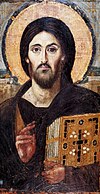
“Jesus Christ was the greatest republican.”
- Napoleon, Napoleon
“In France, only the impossible is admired.”
- Napoleon, Napoleon

In conversations recorded during his exile on St. Helena, Napoleon, surprisingly, expressed admiration for Islam, calling it "the finest of all" religions.
“The Mohammedan religion is the finest of all”


“As a rule it is circumstances that make men.”
- Napoleon, Napoleon
“Imagination governs the world.”
- Napoleon, Napoleon
“Policy and morals concur in repressing pillage.”
- Napoleon, Napoleon

“Immortality is the best recollection one leaves.”
- Napoleon, Memoirs of Napoleon



Marie-Madeleine Fourcade's 1968 book attributes "Un bon croquis vaut mieux qu'un long discours" to an unknown source, noting its similarity to the English proverb about pictures.
English Translation: "A good sketch is better than a long speech."
Original (French): "Un bon croquis vaut mieux qu'un long discours."
“Un bon croquis vaut mieux qu'un long discours.”
Original (French): "Un bon croquis vaut mieux qu'un long discours."

“Ability is nothing without opportunity.”
“Leave the Artillerymen alone, they are an obstinate lot.”
“Fanaticism must be put to sleep before it can be eradicated.”
- Napoleon, Napoleon

“What is the government? nothing, unless supported by opinion.”
- Napoleon, Political Aphorisms, Moral and Philosophical Thoughts

“In politics, an absurdity is not an impediment.”
- Napoleon, Napoleon
Reflecting on the disastrous Russian campaign, Napoleon's observation about the swift descent from grandeur to absurdity underscores the fragility of power and ambition.
“From the sublime to the ridiculous is but a step.”
“Orders and decorations are necessary in order to dazzle the people.”
- Napoleon, Political Aphorisms, Moral and Philosophical Thoughts
“Success is the most convincing talker in the world.”
- Napoleon, Napoleon
“Laws which are consistent in theory often prove chaotic in practice.”
- Napoleon, Napoleon

“It is rare that a legislature reasons. It is too quickly impassioned.”
- Napoleon, Napoleon

“Aristocracy is the spirit of the Old Testament, democracy of the New.”
- Napoleon, Napoleon

“Unite for the public safety, if you would remain an independent nation.”
“Parties weaken themselves by their fear of capable men.”
- Napoleon, Napoleon
“An army which cannot be reenforced is already defeated. ”
- Napoleon, Napoleon
“Those who are free from common prejudices acquire others.”
- Napoleon, Memoirs of Napoleon

“Malice delights to blacken the characters of prominent men.”
- Napoleon, Memoirs of Napoleon
“A Government protected by foreigners will never be accepted by a free people.”
- Napoleon, Political Aphorisms, Moral and Philosophical Thoughts
“The laws of circumstance are abolished by new circumstances.”
- Napoleon, Napoleon
“In war, groping tactics, half-way measures, lose everything.”
- Napoleon, Napoleon

“A great people may be killed, but they cannot be intimidated.”
- Napoleon, Political Aphorisms, Moral and Philosophical Thoughts
“Simpletons talk of the past, wise men of the present, and fools of the future.”
- Napoleon, Napoleon

“If you make everything difficult, the really hard things seem less so.”
- Napoleon, With Napoleon in Russia
“The great difficulty with politics is, that there are no established principles.”
- Napoleon, Napoleon

In exile on Elba in 1814, Napoleon Bonaparte warned Lord John Russell that Russia's expanded influence following Napoleon's defeat would ultimately threaten British control of India.
“England will repent of bringing the Russians so far: they will deprive her of India.”

“Sometimes a great example is necessary to all the public functionaries of the state.”
- Napoleon, Political Aphorisms, Moral and Philosophical Thoughts
“Ordinarily men exercise their memory much more than their judgment.”
- Napoleon, Napoleon

“We frustrate many designs against us by pretending not to see them.”
- Napoleon, Napoleon

“An army ought to be ready every moment to offer all the resistance of which it is capable.”
- Napoleon, Napoleon

“Courage cannot be counterfeited. It is one virtue that escapes hypocrisy.”
- Napoleon, Napoleon
“Our hour is marked, and no one can claim a moment of life beyond what fate has predestined.”
“Changing from the defensive to the offensive, is one of the most delicate operations in war.”
- Napoleon, Napoleon
“He who cannot look over a battlefield with a dry eye, causes the death of many men uselessly.”
- Napoleon, Napoleon
“Never depend on the multitude, full of instability and whims; always take precautions against it.”
- Napoleon, Napoleon
“There is nothing so imperious as feebleness which feels itself supported by force.”
- Napoleon, Napoleon


“A man who has no consideration for the needs of his men ought never to be given command.”
- Napoleon, Napoleon

“Money has no motherland; financiers are without patriotism and without decency; their sole object is gain.”
“I have gained the battle of Lutzen like the general-in-chief of the Army of Italy and of the Army of Egypt!”
“Necessity dominates inclination, will, and right.
Ch. II : Psychology and Morals”
Ch. II : Psychology and Morals”
- Napoleon, Napoleon

“How many seemingly impossible things have been accomplished by resolute men because they had to do, or die.”
- Napoleon, Napoleon
“To listen to the interests of all, marks an ordinary government; to foresee them, marks a great government.”
- Napoleon, Napoleon
“The greater the man, the less is he opinionative, he depends upon events and circumstances.”
- Napoleon, Political Aphorisms, Moral and Philosophical Thoughts
“One is more certain to influence men, to produce more effect on them, by absurdities than by sensible ideas.”
- Napoleon, Napoleon
“In order not to be astonished at obtaining victories, one ought not to think only of defeats.”
- Napoleon, Napoleon
“Whatever misanthropists may say, ingrates and the perverse are exceptions in the human species.”
- Napoleon, Napoleon
“In practical administration, experience is everything.
Ch. VII : Concerning Religion”
Ch. VII : Concerning Religion”
- Napoleon, Napoleon

“The secret of great battles consists in knowing how to deploy and concentrate at the right time.”
- Napoleon, Napoleon
Bonaparte used this Italian proverb during the first Italian campaign to underscore the Directoire's financial reliance on the Army of Italy's spoils.
English Translation: "The hand that gives is above the hand that receives."
Original (French): "The hand that gives is above the hand that takes. (La main qui donne est au-dessus de celle qui reçoit.)"
“The hand that gives is above the hand that takes. (La main qui donne est au-dessus de celle qui reçoit.)”
Original (French): "The hand that gives is above the hand that takes. (La main qui donne est au-dessus de celle qui reçoit.)"
“True character stands the test of emergencies. Do not be mistaken, it is weakness from which the awakening is rude.”
- Napoleon, Napoleon
“My maxim was, la carrière est ouverte aux talents, without distinction of birth or fortune.”
“A constitution should be framed so as not to impede the action of government, nor force the government to its violation.”
- Napoleon, Political Aphorisms, Moral and Philosophical Thoughts
“The man fitted for affairs and authority never considers individuals, but things and their consequences.”
- Napoleon, Napoleon

“The sentiment of national honor is never more than half extinguished in the French. It takes only a spark to re-kindle it.”
- Napoleon, Napoleon
Attributed to Napoleon, this cynical assertion about prioritizing personal advantage over ethical considerations, including cowardice, reveals a potentially ruthless side to his character.
“A cowardly act! What do I care about that? You may be sure that I should never fear to commit one if it were to my advantage.”
“Democracy may become frenzied, but it has feelings and can be moved. As for aristocracy, it is always cold and never forgives.”
- Napoleon, Napoleon
“You cannot drag a man's conscience before any tribunal, and no one is answerable for his religious opinions to any power on earth.”
- Napoleon, Napoleon
“Conscripts, for shame! It was on you that I was basing my hopes. I expected much from your young courage, and you are running away!”
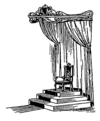
Echoing Louis XIV's "L'état c'est moi," Napoleon asserts his absolute authority, defining the throne not as mere regalia, but as his very personification.
“All authority is in the throne; and what is the throne? This wooden frame covered with velvet? No, I am the throne.”
“A King should sacrifice the best affections of his heart for the good of his country; no sacrifice should be above his determination.”
- Napoleon, Political Aphorisms, Moral and Philosophical Thoughts
“A congress of the powers is deceit agreed on between diplomats — it is the pen of Machiavelli combined with the scimitar of Mahomet.”
- Napoleon, Napoleon

“Charity and alms are recommended in every chapter of the Koran as being the most acceptable services, both to God and the Prophet.”
- Napoleon, Napoleon
“My most splendid campaign was that of March 20; not a single shot was fired.
Ch. IX : Sociology”
Ch. IX : Sociology”
- Napoleon, Napoleon

“It is often in the audacity, in the steadfastness, of the general that the safety and the conservation of his men is found.”
- Napoleon, Napoleon

“I am the instrument of providence, she will use me as long as I accomplish her designs, then she will break me like a glass.”
“Hereditary succession to the magistracy is absurd, as it tends to make a property of it; it is incompatible with the sovereignty of the people.”
- Napoleon, Political Aphorisms, Moral and Philosophical Thoughts

“A form of government that is not the result of a long sequence of shared experiences, efforts, and endeavors can never take root.”

“It is only with prudence, sagacity, and much dexterity that great aims are accomplished, and all obstacles surmounted. Otherwise nothing is accomplished.”
- Napoleon, Napoleon

Napoleon Bonaparte, defending his legitimacy after the French Revolution, contrasted his popular mandate with the Bourbon dynasty's aristocratic foundation, claiming to be the true king of the people.
“I did not usurp the crown. I picked it up from the gutter; the people placed it on my head. I was king of the people as the Bourbons are kings of the nobles”
“I see that everybody has lost their head since the infamous capitulation of Bailén. I realise that I must go there myself to get the machine working again.”
English Translation: "The word impossible is not French.
• Variant translation: You write to me that it is impossible; the word is not French."
Original (French): "Le mot impossible n'est pas français.
• Variant translation: You write to me that it is impossible; the word is not French."
“Le mot impossible n'est pas français.
Original (French): "Le mot impossible n'est pas français.
• Variant translation: You write to me that it is impossible; the word is not French."
• Variant translation: You write to me that it is impossible; the word is not French.”

“The religious zeal which animates priests, leads them to undertake labors and to brave perils which would be far beyond the powers of one in secular employment.”
- Napoleon, Napoleon

“That dependable courage, which in spite of the most sudden circumstances, nevertheless allows freedom of mind, of judgment and of decision, is exceedingly rare.”
- Napoleon, Napoleon
“Impatience is a great obstacle to success; he who treats everything with brusqueness gathers nothing, or only immature fruit which will never ripen.”
- Napoleon, Napoleon
“It must be recognized that the real truths of history are hard to discover. Happily, for the most part, they are rather matters of curiosity than of real importance.”
- Napoleon, Napoleon

“To plan to reserve cavalry for the finish of the battle, is to have no conception of the power of combined infantry and cavalry charges, either for attack or for defense.”
- Napoleon, Napoleon
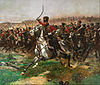
“War is a serious game in which a man risks his reputation, his troops, and his country. A sensible man will search himself to know whether or not he is fitted for the trade.”
- Napoleon, Napoleon

“Nothing is so contrary to military rules as to make the strength of your army known, either in the orders of the day, in proclamations, or in the newspapers.”
- Napoleon, Napoleon
“The existence of God is attested by everything that appeals to our imagination. And if our eye cannot reach Him it is because He has not permitted our intelligence to go so far.”
- Napoleon, Napoleon

“The praises of enemies are always to be suspected. A man of honor will not permit himself to be flattered by them, except when they are given after the cessation of hostilities.”
- Napoleon, Napoleon
“Gentleness, good treatment, honor the victor and dishonor the vanquished, who should remain aloof and owe nothing to pity — In war, audacity is the finest calculation of genius.”
- Napoleon, Napoleon
“There are only two forces that unite men — fear and interest. All great revolutions originate in fear, for the play of interests does not lead to accomplishment.”
- Napoleon, Napoleon

“Hand weapons were the main weapons of the ancients; it is with his short sword that the legionary conquered the world. It is with the Macedonian lance that Alexander conquered Asia.”

Attributed to an unknown source but likely crafted by US Congressman J.F.H. Claiborne, this powerful statement on the press rapidly spread across the globe in 1845.
“A journalist is a grumbler, a censurer, a giver of advice, a regent of sovereigns, a tutor of nations. Four hostile newspapers are more to be feared than an hundred thousand bayonets.”
“If the art of war were nothing but the art of avoiding risks, glory would become the prey of mediocre minds.... I have made all the calculations; fate will do the rest.”

“We are made weak both by idleness and distrust of ourselves. Unfortunate, indeed, is he who suffers from both. If he is a mere individual he becomes nothing; if he is a king he is lost.”
- Napoleon, Napoleon
“Man loves the marvelous. It has an irresistible charm for him. He is always ready to leave that with which he is familiar to pursue vain inventions. He lends himself to his own deception.”
- Napoleon, Napoleon
“Man achieves in life only by commanding the capabilities nature has given him, or by creating them within himself by education and by knowing how to profit by the difficulties encountered.”
- Napoleon, Napoleon
Facing threats to his power and the revolution he embodied, Napoleon declared his unwavering commitment to its defense, warning adversaries of the force he could unleash.
“They seek to destroy the Revolution by attacking my person: I will defend it for I am the Revolution, I myself! Henceforth they will look to it, for they will know of what we are capable.”
- Napoleon, The Consulate and The Empire
Attributed to Napoleon in 1817, this unverified statement reveals his belief that war with China would destabilize British power, potentially triggering an Indian revolution.
“If I were an Englishman, I should esteem the man who advised a war with China to be the greatest living enemy of my country. You would be beaten in the end, and perhaps a revolution in India would follow.”
“Waterloo will wipe out the memory of my forty victories; but that which nothing can wipe out is my Civil Code. That will live forever.”
“Destiny urges me to a goal of which I am ignorant. Until that goal is attained I am invulnerable, unassailable. When Destiny has accomplished her purpose in me, a fly may suffice to destroy me.”
- Napoleon, Napoleon
“In politics nothing is immutable. Events carry within them an invincible power. The unwise destroy themselves in resistance. The skillful accept events, take strong hold of them and direct them.”
- Napoleon, Napoleon
“In war, theory is all right so far as general principles are concerned; but in reducing general principles to practice there will always be danger. Theory and practice are the axis about which the sphere of accomplishment revolves.”
- Napoleon, Napoleon
A young, ambitious Napoleon Bonaparte, in dire need of funds, implores his uncle for money to pursue his dreams of glory in Paris.
“Send me 300 francs; that sum will enable me to go to Paris. There, at least, one can cut a figure and surmount obstacles. Everything tells me I shall succeed. Will you prevent me from doing so for the want of 100 crowns?”
“I do not believe it is in our nature to love impartially. We deceive ourselves when we think we can love two beings, even our own children, equally. There is always a dominant affection.
Ch. IV : Things Political”
Ch. IV : Things Political”
- Napoleon, Napoleon

“Many a one commits a reprehensible action, who is at bottom an honourable man, because man seldom acts upon natural impulse, but from some secret passion of the moment which lies hidden and concealed within the narrowest folds of his heart.”
- Napoleon, Political Aphorisms, Moral and Philosophical Thoughts
Napoleon Bonaparte, reflecting on the power of motivation, argues that tangible rewards and the pursuit of glory are far more effective in leading soldiers than abstract reasoning.
“You call these baubles, well, it is with baubles that men are led... Do you think that you would be able to make men fight by reasoning? Never. That is only good for the scholar in his study. The soldier needs glory, distinctions, and rewards.”
“I hope the time is not far off when I shall be able to unite all the wise and educated men of all the countries and establish a uniform regime based on the principles of the Quran which alone are true and which alone can lead men to happiness.”
Dictated during his exile on St. Helena, Napoleon's 1817 assessment praises Muhammad as a brilliant military and political leader who forged a nation.
“Muhammad was a great man, an intrepid soldier; with a handful of men he triumphed at the battle of Bender (sic); a great captain, eloquent, a great man of state, he revived his fatherland and created a new people and a new power in the middle of Arabia.”
“Our credulity is a part of the imperfection of our natures. It is inherent in us to desire to generalize, when we ought, on the contrary, to guard ourselves very carefully from this tendency.
Ch. VII : On War”
Ch. VII : On War”
- Napoleon, Napoleon
“All great events hang by a hair. The man of ability takes advantage of everything and neglects nothing that can give him a chance of success; whilst the less able man sometimes loses everything by neglecting a single one of those chances.”
“What are the conditions that make for the superiority of an army? Its internal organization, military habits in officers and men, the confidence of each in themselves; that is to say, bravery, patience, and all that is contained in the idea of moral means.”
- Napoleon, Napoleon
Camus highlights Napoleon's surprising admission – that intellectual power ultimately triumphs over military force, a sentiment at odds with his own legacy of conquest.
“‘Do you know,’ Napoleon once said to Fontanes, ‘what fills me most with wonder? The powerlessness of force to establish anything. There are only two powers in the world: the sword and the mind. In the end, the sword is always conquered by the mind.’”
“One must indeed be ignorant of the methods of genius to suppose that it allows itself to be cramped by forms. Forms are for mediocrity, and it is fortunate that mediocrity can act only according to routine. Ability takes its flight unhindered.”
- Napoleon, Napoleon
Written during Napoleon's exile, this passage reveals his admiration for Muhammad as a military leader and nation-builder, highlighting parallels to his own ambitions.
“Mahomet was a great man, an intrepid soldier; with a handful of men he triumphed at the battle of Bender [sic]; a great captain, eloquent, a great man of state, he revived his fatherland and created a new people and a new power in the middle of Arabia.”
“A commander in chief ought to say to himself several times a day: If the enemy should appear on my front, on my right, on my left, what would I do? And if the question finds him uncertain, he is not well placed, he is not as he should be, and he should remedy it.”
- Napoleon, Napoleon

“Peace ought to be the result of a system well considered, founded on the true interests of the different countries, honorable to each, and ought not to be either a capitulation or the result of a threat.
Ch. V : Concerning the Fine Arts”
Ch. V : Concerning the Fine Arts”
- Napoleon, Napoleon
“One must learn to forgive and not to hold a hostile, bitter attitude of mind, which offends those about us and prevents us from enjoying ourselves; one must recognize human shortcomings and adjust himself to them rather than to be constantly finding fault with them.”
- Napoleon, Napoleon
Napoleon, optimistic about Italian martial potential despite recent defeats, expresses confidence in their future under Suchet's command in this early 19th-century correspondence.
“Two of my Marshalls are racing to get under their orders the Italian troops; i leave it to Suchet who has better ambitions than Macdonald. The Italians will soon be recognized again as the first soldiers of Europe. I'm very proud of my brave Italian army.”
“The Allied Powers having proclaimed that the Emperor Napoleon is the sole obstacle to the re-establishment of peace in Europe, he, faithful to his oath, declares that he is ready to descend from the throne, to quit France, and even to relinquish life, for the good of his country.”
“The Princes of this house have abandoned their capital, not like soldiers of honour who cede to the circumstances and setbacks of the war, but like the perjured who are pursued by their own remorse.”

“The division of labor, which has brought such perfection in mechanical industries, is altogether fatal when applied to productions of the mind. All work of the mind is superior in proportion as the mind that produces it is universal.
Ch. VI : Administration”
Ch. VI : Administration”
- Napoleon, Napoleon

“In a battle, as in a siege, the art consists in concentrating very heavy fire on a particular point. The line of battle once established, the one who has the ability to concentrate an unlooked for mass of artillery suddenly and unexpectedly on one of these points is sure to carry the day.”
- Napoleon, Napoleon
“The issue of a battle is the result of an instant, of a thought. There is the advance, with its various combinations, the battle is joined, the struggle goes on a certain time, the decisive moment presents itself, a spark of genius discloses it, and the smallest body of reserves accomplish victory.”
- Napoleon, Napoleon
“The great mass of society are far from being depraved; for if a large majority were criminal or inclined to break the laws, where would the force or power be to prevent or constrain them? And herein is the real blessing of civilization, because this happy result has its origin in her bosom, growing out of her very nature.”
- Napoleon, Napoleon

“Among so many conflicting ideas and so many different perspectives, the honest man is confused and distressed and the skeptic becomes wicked ... Since one must take sides, one might as well choose the side that is victorious, the side which devastates, loots, and burns. Considering the alternative, it is better to eat than to be eaten.”
“There is no such thing as an absolute despotism; it is only relative. A man cannot wholly free himself from obligation to his fellows. A sultan who cut off heads from caprice, would quickly lose his own in the same way. Excesses tend to check themselves by reason of their own violence. What the ocean gains in one place it loses in another.”
- Napoleon, Napoleon
“My waking thoughts are all of thee. Your portrait and the remembrance of last night's delirium have robbed my senses of repose. Sweet and incomparable Josephine, what an extraordinary influence you have over my heart. Are you vexed? Do I see you sad? Are you ill at ease? My soul is broken with grief, and there is no rest for your lover.”
Napoleon, exiled on St. Helena in 1817, confided in his journal a preference for Islam over Christianity, finding its tenets less absurd.
“Religions are all founded on miracles — on things we cannot understand, such as the Trinity. Jesus calls himself the Son of God, and yet is descended from David. I prefer the religion of Mahomet — it is less ridiculous than ours.”
“Some revolutions are inevitable. There are moral eruptions, just as the outbreak of volcanoes are physical eruptions. When the chemical combinations which produce them are complete, the volcanic eruptions burst forth, just as revolutions do when the moral factors are in the right state. In order to foresee them the trend of ideas must be understandingly observed.”
- Napoleon, Napoleon
“What I have done up to this is nothing. I am only at the beginning of the course I must run. Do you imagine that I triumph in Italy in order to aggrandise the pack of lawyers who form the Directory, and men like Carnot and Barras? What an idea!”
“The barbarous custom of having men beaten who are suspected of having important secrets to reveal must be abolished. It has always been recognized that this way of interrogating men, by putting them to torture, produces nothing worthwhile. The poor wretches say anything that comes into their mind and what they think the interrogator wishes to know.”
At a tense meeting with Catholic clergy in 1810, Napoleon asserted his divine right to rule, dismissing their potential opposition as insignificant and answerable only to God.
“I am a monarch of God's creation, and you reptiles of the earth dare not oppose me. I render an account of my government to none save God and Jesus Christ.
• Variant translation: God placed me on the throne, and you reptiles of the earth dare oppose me. I owe no account of my administration to the pope,— only to God and Jesus Christ.”
“`` A general of ordinary talent, occupying a bad position and surprised by a superior force, seeks his safety in retreat; but a great captain supplies all deficiencies by his courage, and marches boldly to meet the attack. By this means he disconcerts his adversary, and if this last shows any irresolution in his movements, a skilful leader, profiting by his indecision, may even hope for victory.”
“From the heights of these pyramids, forty centuries look down on us.
• Speech to his troops in Egypt (21 July 1798) Variant translation: "Soldiers, from the summit of yonder pyramids forty centuries look down upon you...". Published in the autobiography of French general Eugène de Beauharnais.”
• Speech to his troops in Egypt (21 July 1798) Variant translation: "Soldiers, from the summit of yonder pyramids forty centuries look down upon you...". Published in the autobiography of French general Eugène de Beauharnais.”
“The truth is that one ought to serve his people worthily, and not strive solely to please them. The best way to gain a people is to do that which is best for them. Nothing is more dangerous than to flatter a people. If it does not get what it wants immediately, it is irritated and thinks that promises have not been kept; and if then it is resisted, it hates so much the more as it feels itself deceived.”
- Napoleon, Napoleon
“I may have had many projects, but I never was free to carry out any of them. It did me little good to be holding the helm; no matter how strong my hands, the sudden and numerous waves were stronger still, and I was wise enough to yield to them rather than resist them obstinately and make the ship founder. Thus I never was truly my own master but was always ruled by circumstances.”

Reflecting on his legacy in exile, Napoleon portrays Muhammad as a divinely successful leader, exceeding the achievements of Moses and Jesus in converting followers.
“Muhammad was a prince; he rallied his compatriots around him. In a few years, the Muslims conquered half of the world. They plucked more souls from false gods, knocked down more idols, razed more pagan temples in fifteen years than the followers of Moses and Jesus did in fifteen centuries. Muhammad was a great man. He would indeed have been a god, if the revolution that he had performed had not been prepared by the circumstances.”

“Men have their virtues and their vices, their heroisms and their perversities; men are neither wholly good nor wholly bad, but possess and practice all that there is of good and bad here below. Such is the general rule. Temperament, education, the accidents of life, are modifying factors. Outside of this, everything is ordered arrangement, everything is chance. Such has been my rule of expectation and it has usually brought me success.”
- Napoleon, Napoleon
“The general of the sea has need of only one science, that of navigation. The one on land has need of all, or of a talent which is the equivalent of all, that will enable him to profit by all experience, and all knowledge. A general of the sea has nothing to divine. He knows where his enemy is, he knows his strength. A general on land never knows anything with certainty, never sees his enemy well, and never knows positively where he is.”
- Napoleon, Napoleon
“It is not that addresses at the opening of a battle make the soldiers brave. The old veterans scarcely hear them, and recruits forget them at the first boom of the cannon. Their usefulness lies in their effect on the course of the campaign, in neutralizing rumors and false reports, in maintaining a good spirit in the camp, and in furnishing matter for camp-fire talk. The printed order of the day should fulfill these different ends.”
- Napoleon, Napoleon
“It is not true that men never change; they change for the worse, as well as for the better. It is not true they are ungrateful; more often the benefactor rates his favors higher than their worth; and often too he does not allow for circumstances. If few men have the moral force to resist impulses, most men do carry within themselves the germs of virtues as well as of vices, of heroism as well as of cowardice. Such is human nature — education and circumstances do the rest.”
- Napoleon, Napoleon

“Conscience is the most sacred thing among men. Every man has within him a still small voice, which tells him that nothing on earth can oblige him to believe that which he does not believe. The worst of all tyrannies is that which obliges eighteen-twentieths of a nation to embrace a religion contrary to their beliefs, under penalty of being denied their rights as citizens and of owning property, which, in effect, is the same thing as being without a country.”
- Napoleon, Napoleon

“Tristan is very idle. He confessed to the Emperor that he did not work every day. "Do you not eat every day?" said the Emperor to him; "Yes, Sire." "Well, then, you ought to work every day; no one should eat who does not work." "Oh! if that be the case, I will work every day," said the child, quickly. "Such is the influence of the belly," said the Emperor, tapping that of little Tristan. "It is hunger that makes the world move."”
This provocative statement reveals a candid expression of racial prejudice and self-preservation from an unidentified speaker, prioritizing personal safety and racial identity above all else.
“Well, then, had I been at Martinique, I should also have been on the side of the English, because above all things it is necessary to save one's life. I am for the whites, because I am white; I have no other reason, yet that is reason good enough. How was it possible to grant liberty to the Africans, to men without any kind of civilization, who did not even know what a colony meant, or that there was such a place as France?”
- Napoleon, The Consulate and The Empire
In a ruthless instruction, Napoleon advises his brother Joseph, King of Spain, to use brutal repression and executions to quell unrest in Madrid.
“I am not satisfied with the order which is kept in Madrid; Belliard is too weak; with the Spaniards it is necessary to be severe. I have arrested here fifteen of the worst characters, and I have ordered them to be shot. Arrest thirty at Madrid... If you treat the mob with kindness, these creatures fancy themselves invulnerable; if you hang a few, they get tired of the game, and become as submissive and humble as they ought to be.”

“My intention is that the main village where the insurrection started shall be burnt, and that thirty of the ringleaders shall be shot; an impressive example is needed to contain the hatred of the peasantry and of that soldiery. If you have not yet made an example, let there be one without delay... Let not the month pass without the principal village, borough, or small town which gave the signal for the insurrection being burned, and a large number of individuals being shot... Traces must be left in the cantons which have rebelled.”

Hoping to forge an alliance against the British, Napoleon's intercepted letter to Tipu Sultan reveals his ambition to liberate India with a massive, undefeated army.
“You have already been informed of my arrival on the borders of the Red Sea, with an innumerable and invincible Army, full of the desire of delivering you from the iron yoke of England. I eagerly embrace this opportunity of testifying to you the desire I have of being informed by you, by the way of Muscat and Mocha, as to your political situation. I would even wish you could send some intelligent person to Suez or Cairo, possessing your confidence, with whom I may confer. May the Almighty increase your power and destroy your enemies.”
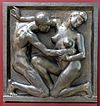
“Achilles was the son of a goddess and of a mortal; in that, he is the image of the genius of war. The divine part is all that that is derived from moral considerations of character, talent, the interest of your adversary, of opinion, of the temper of the soldier, which is strong and victorious, or feeble and beaten, according as he believes this divine part to be. The mortal part is the arms, the fortifications, the order of battle — everything which arises out of material things.”
- Napoleon, Napoleon
In a discussion on social order, Napoleon argues that religion, like inoculation, prevents societal collapse by satisfying the human need for the marvelous, keeping people away from dangerous ideologies.
“For my part, it is not the mystery of the incarnation which I discover in religion, but the mystery of social order, which associates with heaven that idea of equality which prevents the rich from destroying the poor. [Incorrect translation, should be prevents the rich from being massacred by the poor.] Religion is indeed a kind of vaccine innoculation, which, by satisfying our natural love for the marvellous, keeps us out of the hands of charlatans and conjurors. The priests are better than the Cagliostros, the Kants, and all the visionaries of Germany.”
“Europe has its history, often tragic, though at intervals consoling. But to speak of any universally recognized national rights or that these rights have played any part in its history, is to play with the powers of public credulity. Always the first duty of a state has been its safety; the pledge of its safety, its power; and the limits of its power, that intelligence of which each has been made the depository. When the great powers have proclaimed any other principle, it has been only for their own purposes, and the smaller powers have never received any benefit from it.”
- Napoleon, Napoleon

“At the beginning of a campaign it is important to consider whether or not to move forward; but when one has taken the offensive it is necessary to maintain it to the last extremity. However skilfully effected a retreat may be, it always lessens the morale of an army, since in losing the chances of success, they are remitted to the enemy. A retreat, moreover, costs much more in men and materials than the bloodiest engagements, with this difference, also, that in a battle the enemy loses practically as much as you do; while in a retreat you lose and he does not.”
- Napoleon, Napoleon
English Translation: "From the first day to the last, he is the same, always the same, majestic and simple, infinitely severe and infinitely gentle; in what can be called public life, Jesus never gives cause for the slightest criticism; his prudent conduct inspires admiration with a blend of strength and gentleness."
Original (French): "Depuis le premier jour jusqu'au dernier, il est le même, toujours le même, majestueux et simple , infiniment sévère et infiniment doux ; dans un commerce de vie pour ainsi dire public, Jésus ne donne jamais de prise à la moindre critique; sa conduite si prudente ravit l'admiration par un mélange de force et de douceur.
• Sentiment de Napoléon sur la divinité de Jésus-Christ (1841), p. 59. Translated: "From first day to the last, he is the same, always the same, majestic and simple, extremely severe and extremely mild in the business of public life, so to speak, Jesus does not hold to any criticism, his prudent manner so delighted admiration by a mixture of strength and gentleness"."
“Depuis le premier jour jusqu'au dernier, il est le même, toujours le même, majestueux et simple , infiniment sévère et infiniment doux ; dans un commerce de vie pour ainsi dire public, Jésus ne donne jamais de prise à la moindre critique; sa conduite si prudente ravit l'admiration par un mélange de force et de douceur.
Original (French): "Depuis le premier jour jusqu'au dernier, il est le même, toujours le même, majestueux et simple , infiniment sévère et infiniment doux ; dans un commerce de vie pour ainsi dire public, Jésus ne donne jamais de prise à la moindre critique; sa conduite si prudente ravit l'admiration par un mélange de force et de douceur.
• Sentiment de Napoléon sur la divinité de Jésus-Christ (1841), p. 59. Translated: "From first day to the last, he is the same, always the same, majestic and simple, extremely severe and extremely mild in the business of public life, so to speak, Jesus does not hold to any criticism, his prudent manner so delighted admiration by a mixture of strength and gentleness"."
• Sentiment de Napoléon sur la divinité de Jésus-Christ (1841), p. 59. Translated: "From first day to the last, he is the same, always the same, majestic and simple, extremely severe and extremely mild in the business of public life, so to speak, Jesus does not hold to any criticism, his prudent manner so delighted admiration by a mixture of strength and gentleness".”
“You Frenchmen, not content with having robbed us of everything we held dear, have also corrupted our character. The actual condition of my country, and the impossibility of changing it, is another reason for escaping from an earth, where I am obliged to praise men from a sense of duty, whom I must hate from a sense of virtue. When I arrive in my fatherland, what attitude am I to hold—what language am I to use? A good patriot ought to die when his fatherland has ceased to exist. If the deliverance of my fellow-countrymen depended upon the death of a single man, I would go immediately and plunge the sword which would avenge my country and its violated laws into the breast of tyrants.”
During the fleeting Peace of Amiens, Napoleon Bonaparte justified his need for military victories to Antoine Claire Thibaudeau, emphasizing the fragility of his power compared to traditional monarchies.
“Even in the midst of war I have never neglected the establishment of useful institutions and the promotion of peace and order at home. There still remains much to be done, and I certainly shall never rest from my labours. But is not military success still more necessary to dazzle or to content our people? Remember that a First Consul bears no resemblance to those Kings by the grace of God who look on their countries as their inherited property. Their authority is supported by ancient tradition. With us ancient tradition has fallen into contempt, and carries less than no weight. The French Government of to-day bears no sort of resemblance to that of the countries which surround us. Hated by its neighbours, obliged to deal at home with large classes of enemies, we have need to impose on our friends and foes by deeds of glory gained only by war.”
“Dante has not deigned to take his inspiration from any other. He has wished to be himself, himself alone; in a word, to create. He has occupied a vast space, and has filled it with the superiority of a sublime mind. He is diverse, strong, and gracious. He has imagination, warmth, and enthusiasm. He makes his reader tremble, shed tears, feel the thrill of honor in a way that is the height of art. Severe and menacing, he has terrible imprecations for crime, scourgings for vice, sorrow for misfortune. As a citizen, affected by the laws of the republic, he thunders against its oppressors, but he is always ready to excuse his native city, Florence is ever to him his sweet, beloved country, dear to his heart. I am envious for my dear France, that she has never produced a rival to Dante; that this Colossus has not had his equal among us. No, there is no reputation which can be compared to his.”
- Napoleon, Napoleon
“War is becoming an anachronism; if we have battled in every part of the continent it was because two opposing social orders were facing each other, the one which dates from 1789, and the old regime. They could not exist together; the younger devoured the other. I know very well, that, in the final reckoning, it was war that overthrew me, me the representative of the French Revolution, and the instrument of its principles. But no matter! The battle was lost for civilization, and civilization will inevitably take its revenge. There are two systems, the past and the future. The present is only a painful transition. Which must triumph? The future, will it not? Yes indeed, the future! That is, intelligence, industry, and peace. The past was brute force, privilege, and ignorance. Each of our victories was a triumph for the ideas of the Revolution. Victories will be won, one of these days, without cannon, and without bayonets.”
- Napoleon, Napoleon

Napoleon Bonaparte, wary of relinquishing power like George Monck after Cromwell, expresses his ambition and disdain for the Parisian Directory in this declaration.
“I do not care to play the part of Monk; I will not play it myself, and I do not choose that others shall do so. But those Paris lawyers who have got into the Directory understand nothing of government. They are poor creatures. I am going to see what they want to do at Rastadt; but I doubt much that we shall understand each other, or long agree together. They are jealous of me, I know, and notwithstanding all their flattery, I am not their dupe; they fear more than they love me. They were in a great hurry to make me General of the army of England, so that they might get me out of Italy, where I am the master, and am more of a sovereign than commander of an army. They will see how things go on when I am not there. I am leaving Berthier, but he is not fit for the chief command, and, I predict, will only make blunders. As for myself, my dear Miot, I may inform you, I can no longer obey; I have tasted command, and I cannot give it up. I have made up my mind, if I cannot be master I shall leave France; I do not choose to have done so much for her and then hand her over to lawyers.”

“Had it not been for that fatal suspension of arms, in 1813, to which I was induced to consent by Austria, I should have succeeded. The victories of Lutzen and Wurtzen (Bautzen) had restored confidence in the French forces. The King of Saxony was triumphantly brought back to his capital; one of the corps of the French army was at the gates of Berlin, and the enemy had been driven from Hamburg. The Russian and Prussian armies were preparing to pass the Vistula, when the cabinet of Austria, acting with its characteristic perfidy, advised the suspension of hostilities, at a time when it had already entered into engagements with Russia and Prussia; the armistice was only a delusion to gain the time necessary to make preparations, it being intended to declare against France in May. The unexpected successes obliged it to act with more circumspection. It was necessary to gain more time, and negociations went on at the congress of Prague. Metternich insisted that Austria should have the half of Italy, and made other exorbitant conditions, which were only demanded in order to be refused. As soon as she had got her army ready, Austria declared against France. After the victory of Dresden, I was superior, and had formed the project to deceive the enemy, by marching towards Magdeburgh, then to rcross the Elbe at Wittenberg, and march upon Berlin. Several divisions of the army were occupied in these manoeuvres, when a letter was brough to me from the King of Wirtemberg, announcing that the Bavarian army had joined the Austrians, and to the amount of eighty thousand men, were marching towards the Rhine, under the command of Wrede; that he, being compelled by the presence of that army, was obliged to join his contingent to it, and that Mentz would soon be invested by a hundred thousand men.”
- Napoleon, Napoleon in Exile

Exiled on St. Helena, Napoleon reflects on the enduring power of Jesus Christ's empire founded on love, contrasting it with his own built on force.
“Well then, I will tell you. Alexander, Caesar, Charlemagne and I myself have founded great empires; but upon what did these creations of our genius depend? Upon force. Jesus alone founded His empire upon love, and to this very day millions will die for Him. I think I understand something of human nature; and I tell you, all these were men, and I am a man: none else is like Him; Jesus Christ was more than a man. I have inspired multitudes with such an enthusiastic devotion that they would have died for me but to do this it was necessary that I should be visibly present with the electric influence of my looks, my words, of my voice. When I saw men and spoke to them, I lighted up the flame of self-devotion in their hearts. Christ alone has succeeded in so raising the mind of man toward the unseen, that it becomes insensible to the barriers of time and space. Across a chasm of eighteen hundred years, Jesus Christ makes a demand which is beyond all others difficult to satisfy; He asks for that which a philosopher may often seek in vain at the hands of his friends, or a father of his children, or a bride of her spouse, or a man of his brother. He asks for the human heart; He will have it entirely to Himself. He demands it unconditionally; and forthwith His demand is granted. Wonderful! In defiance of time and space, the soul of man, with all its powers and faculties, becomes an annexation to the empire of Christ. All who sincerely believe in Him, experience that remarkable, supernatural love toward Him. This phenomenon is unaccountable; it is altogether beyond the scope of man's creative powers. Time, the great destroyer, is powerless to extinguish this sacred flame; time can neither exhaust its strength nor put a limit to its range. This is it, which strikes me most; I have often thought of it. This it is which proves to me quite convincingly the Divinity of Jesus Christ.”
Napoleon Quotes by Topic
Find exactly what you are looking for by browsing this categorized list of Napoleon quotes by topic.
Napoleon on Necessity 5 quotes
“Necessity dominates inclination, will, and right.”
Napoleon on Success 4 quotes
“You have absolute control over but one thing, and that is your thoughts. p. 173... Doubting Thomases scoffed scornfully when Henry Ford tried out his first crudely built automobile on the streets of Detroit... Mind control is the result of self-discipline and habit. You either control your mind or it controls you. p. 173”
Napoleon on War 2 quotes
"Baptism of fire" encapsulates Napoleon III's sentiment after the Prince Imperial's initial exposure to battle at Saarbruecken, as noted in a letter to Empress Eugenie.
“Baptism of fire.”
Napoleon on Victory 2 quotes
“Victory belongs to the most persevering.”

Napoleon on Istanbul 2 quotes
Attributed to Napoleon Bonaparte in 1916, the assertion that control of Constantinople ensures global dominance reflects a long-held strategic view on the city's importance.
“Whoever possesses Constantinople ought to rule the world.”

What Napoleon Said About Others
Discover personal opinions Napoleon shared regarding contemporaries.
Napoleon on Tabitha and Napoleon D'umo 3 quotes
“Dance from your heart. If you dance from your heart, you'll always love it.”
- Napoleon, Napoleon)
Napoleon on Muhammad 2 quotes
Written during his exile, Napoleon Bonaparte, in his *Précis des guerres de César*, offered a surprisingly admiring assessment of Muhammad as a military and political leader.
“Mahomet was a great man, an intrepid soldier; with a handful of men he triumphed at the battle of Bender (sic); a great captain, eloquent, a great man of state, he revived his fatherland and created a new people and a new power in the middle of Arabia.”
Napoleon on Charles James Fox 2 quotes
In exile on Saint Helena, Napoleon lamented the death of British statesman Charles James Fox, believing his continued life would have reshaped European politics towards a more populist order.
“As to Fox, one must not look for his model among the ancients. He is himself a model, and his principles will sooner or later rule the world. ... Certainly the death of Fox was one of the fatalities of my career. Had his life been prolonged, affairs would have taken a totally different turn; the cause of the people would have triumphed, and we should have established a new order of things in Europe.”

Napoleon on Napoleon III
Napoleon on Stendhal
English Translation: "Napoleon was indeed the man sent by God for the young Frenchmen! Who will replace him?"
Original (French): "Napoléon était bien l'homme envoyé de Dieu pour les jeunes Français! Qui le remplacera?"
“Napoléon était bien l'homme envoyé de Dieu pour les jeunes Français! Qui le remplacera?”
Original (French): "Napoléon était bien l'homme envoyé de Dieu pour les jeunes Français! Qui le remplacera?"
- Napoleon, Le Rouge et le Noir
Quotes About Napoleon
Gain deeper perspective through quotes about Napoleon from others.
Correlli Barnett on Napoleon 2 quotes
This passage critiques Napoleon's politically engineered vision of society, revealing a calculated, state-controlled system that prioritized order over individual freedom and organic community.
“His views on politics and society, owing much to Rousseau's Du Contrat Social, display Buonaparte the egotist and Buonaparte the mathematician-engineer in uneasy collaboration. For society is conceived as of one great machine, constructed according to correct calculations which in turn are based on the right data. There is little sense of free association between individuals or groups, little sense of any natural community larger than the Corsican-style family or clan; no sense of organic social growth. Instead there are the competing egotisms of individuals, bridled or organized by the higher egotism of the State, whose will impels and directs the whole national apparatus. Buonaparte's ideal State enjoyed this untrammelled power because it was the organ of the people's will. Naïvely he believed that only hereditary monarchies could be tyrants. He scorned the ancien régime in France, with its agglomeration of different societies, partly regional, partly aristocratic, guild or religious; this is what constitutes the "privilege" which he and other progressives wished to sweep away. Buonaparte's chief complaint against the Catholic Church, for instance, lay in the very fact that it was independent of the State... Buonaparte's political ideas thus point straight towards the tyranny of the Consulate and the Empire; indeed towards every modern tyranny where the State bosses the entire life of the people in the people's name.”
Jules Barni on Napoleon
Contrasting Napoleon's ambitions for Italy with his universally criticized personality, this passage argues his ruthless nature wasn't a uniquely French trait, despite his actions.
“That contempt of humanity, that misprision of the opinion of others, that Caesarean pride, that insensitive heart and that profound moral indifference, these characteristics which distinguished Napoleon were not those of a Frenchman.”
E. H. Carr on Napoleon
Napoleon's contradictory legacy as both suppressor and exporter of revolutionary ideals fueled divergent interpretations of his impact, particularly influencing political alignments across Europe.
“In France Napoleon tamed the revolution and put it into the imperial straitjacket (and, in so doing, perhaps did more than the revolution itself to make a Bourbon restoration permanently impossible); beyond the borders of France he was the missionary and disseminator of the ideas of the revolution. Hence, as the Napoleonic legend grew through the succeeding century, the literary champions of Napoleon in France tended to be men of the Right, whereas outside France it was generally the Left which made him its idol-a perfectly natural phenomenon which Mr. Taylor needlessly attributes to the perversity of the English Left. This ambiguous role is the common destiny of heirs of revolutions, whose business it is to consolidate and stabilize the achievements of the revolution at home and capitalize them abroad.”
François-René de Chateaubriand on Napoleon 2 quotes
Written shortly after Napoleon's fall, this passage explores the paradox of Bonaparte's enduring popularity in France, despite his despotic rule and the nation's revolutionary past.
“One asks oneself by what sleight of hand Bonaparte, who was so much the aristocrat, who hated the people so cordially, has been able to obtain the popularity which he enjoys. For there is no gainsaying the fact that this subjugator has remained popular with a nation which once made it a point of honour to raise altars to independence and equality. Here is the solution. It is a matter of daily observation that the Frenchman's instinct is to strive after power; he cares not for liberty; equality is his idol. Now there is a hidden connection between equality and despotism. In both these respects Napoleon had a pull over the hearts of the French, who have a military liking for power and are democratically fond of seeing everything levelled. When he mounted the throne, he took the people with him. A proletarian king, he humiliated kings and noblemen in his anterooms. He levelled the ranks, not down but up. To have dragged them down to plebeian depths would have flattered the envy of the lowest; the higher level was more pleasing to their pride. French vanity, too, enjoyed the superiority which Bonaparte gave us over the rest of Europe. Another cause of Napoleon's popularity is the affliction of his latter days. After his death, as his sufferings on St. Helena became better known, people's hearts began to soften; his tyranny was forgotten; it was remembered how, having vanquished our enemies and subsequently having brought them into France, he defended our soil against them; we fancy that if he were alive today he would save us from the ignominy in which we are living. His misfortunes have revived his name among us, his glory has fed on his wretchedness. The miracles wrought by his arms have bewitched our youth, and have taught us to worship brute force. The most insolent ambition is spurred on by his unique career to aspire to the heights which he attained.”

Denis Decrès on Napoleon
Admiral Denis Decrès, a close confidant of Napoleon, privately expressed fears of the Emperor's escalating recklessness potentially leading to France's devastating downfall.
“The Emperor is mad, completely mad, and will destroy us all; this will all end in some horrible crash.”







Misattributed Quotes
Quotes mistakenly credited to Napoleon
“A constitution should be short and obscure.”
“Never ascribe to malice that which is adequately explained by stupidity.”
About Napoleon
Napoléon Bonaparte (15 August 1769 – 5 May 1821) was a French military general who rose dramatically up the ranks of the French Army during the French Revolution, becoming the ruler of France as First Consul of the French Republic (11 November 1799 - 18 May 1804), and then Emperor of the French and King of Italy under the name Napoleon I (18 May 1804 - 6 April 1814, and again briefly from 20 March - 22 June 1815). He died in exile on the island of Saint Helena.