Link Copied!
Miyamoto Musashi Quotes (1584-1645)

About Miyamoto Musashi
Miyamoto Musashi 宮本 武蔵 (c. 1584 – 13 June 1645) was a famous Japanese swordsman, believed to have been one of the most skilled swordsmen in history. He founded the Hyoho Niten Ichi-ryu, or Nito Ryu style of swordsmanship and wrote Go Rin No Sho (The Book of Five Rings) a classic work on strategy, tactics, and philosophy.
Best Miyamoto Musashi Quotes
Shortest
Earliest
Explore our curated collection of the most famous and impactful Miyamoto Musashi quotes.


“Be indifferent to where you live.”
“In all things have no preferences.”
“Accept everything just the way it is.”


“Examine your environment.”
“Never let yourself be saddened by a separation.”

“Do not hold on to possessions you no longer need.”
“Step by step walk the thousand-mile road.”

“Do not, under any circumstances, depend on a partial feeling.”
“Resentment and complaint are appropriate neither for oneself or others.”


“There is timing in everything. Timing in strategy cannot be mastered without a great deal of practice.”

“If you learn "indoor" techniques, you will think narrowly and forget the true Way. Thus you will have difficulty in actual encounters.”
“In strategy you must know the Ways of other schools, so I have written about various other traditions of strategy in this the Wind Book.”

“Really skilful people never get out of time, and are always deliberate, and never appear busy. From this example, the principle can be seen.”

“What is meant by 'mingling' is the spirit of advancing and becoming engaged with the enemy, and not withdrawing even one step. You must understand this.”
“Generally, I dislike fixedness in both long swords and hands. Fixedness means a dead hand. Pliability is a living hand. You must bear this in mind.”
“When your opponent is hurrying recklessly, you must act contrarily and keep calm. You must not be influenced by the opponent. Train diligently to attain this spirit.”
“You can know how to win through strategy with the long sword, but it cannot be clearly explained in writing. You must practise diligently in order to understand how to win.”
“People in this world look at things mistakenly, and think that what they do not understand must be the void. This is not the true void. It is bewilderment.”
“You cannot profit from small techniques particularly when full armor is worn. My Way of strategy is the sure method to win when fighting for your life one man against five or ten.”
“In large-scale strategy, it is beneficial to strike at the corners of the enemy's force, If the corners are overthrown, the spirit of the whole body will be overthrown.”

“Language does not extend to explaining the Way in detail, but it can be grasped intuitively. Study this book; read a word then ponder on it. If you interpret the meaning loosely you will mistake the Way.”

“In large-scale strategy, when we see that the enemy has few men, or if he has many men but his spirit is weak and disordered, we knock the hat over his eyes, crushing him utterly. If we crush lightly, he may recover.”
“"To know the times" means to know the enemy's disposition in battle. Is is flourishing or waning? By observing the spirit of the enemy's men and getting the best position, you can work out the enemy's disposition and move your men accordingly.”

“What is called the spirit of the void is where there is nothing. It is not included in man's knowledge. Of course the void is nothingness. By knowing things that exist, you can know that which does not exist. That is the void.”

“In my strategy, the training for killing enemies is by way of many contests, fighting for survival, discovering the meaning of life and death, learning the Way of the sword, judging the strength of attacks and understanding the Way of the "edge and ridge" of the sword.”
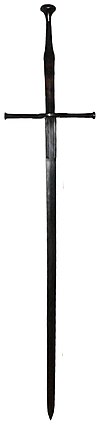
“Students of the Ichi school Way of strategy should train from the start with the sword and long sword in either hand. This is the truth: when you sacrifice your life, you must make fullest use of your weaponry. It is false not to do so, and to die with a weapon yet undrawn.”

“Just as a horse must have endurance and no defects, so it is with weapons. Horses should walk strongly, and swords and companion swords should cut strongly. Spears and halberds must stand up to heavy use: bows and guns must be sturdy. Weapons should be hardy rather than decorative.”
“In large-scale strategy you can frighten the enemy not by what you present to their eyes, but by shouting, making a small force seem large, or by threatening them from the flank without warning. These things all frighten. You can win by making best use of the enemy's frightened rhythm.”
“In single combat, we can confuse the enemy by attacking with varied techniques when the chance arises. Feint a thrust or cut, or make the enemy think you are going close to him, and when he is confused you can easily win.
This is the essence of fighting, and you must research it deeply.”
This is the essence of fighting, and you must research it deeply.”
“You win in battles with the timing in the Void born of the timing of cunning by knowing the enemies' timing, and this using a timing which the enemy does not expect.
All the five books are chiefly concerned with timing. You must train sufficiently to appreciate all this.”
All the five books are chiefly concerned with timing. You must train sufficiently to appreciate all this.”
“"To move the shade" is used when you cannot see the enemy's spirit.
In large-scale strategy, when you cannot see the enemy's position, indicate that you are about to attack strongly, to discover his resources. It is easy then to defeat him with a different method once you see his resources.”
In large-scale strategy, when you cannot see the enemy's position, indicate that you are about to attack strongly, to discover his resources. It is easy then to defeat him with a different method once you see his resources.”
“Everything can collapse. Houses, bodies, and enemies collapse when their rhythm becomes deranged.
In large-scale strategy, when the enemy starts to collapse you must pursue him without letting the chance go. If you fail to take advantage of your enemies' collapse, they may recover.”
In large-scale strategy, when the enemy starts to collapse you must pursue him without letting the chance go. If you fail to take advantage of your enemies' collapse, they may recover.”

“The principles of strategy are written down here in terms of single combat, but you must think broadly so that you attain an understanding for ten-thousand-a-side battles.
Strategy is different from other things in that if you mistake the Way even a little you will become bewildered and fall into bad ways.”
Strategy is different from other things in that if you mistake the Way even a little you will become bewildered and fall into bad ways.”
“The "mountain-sea" spirit means that it is bad to repeat the same thing several times when fighting the enemy. There may be no help but to do something twice, but do not try it a third time. If you once make an attack and fail, there is little chance of success if you use the same approach again.”
“Some of the world's strategists are concerned only with sword fencing, and limit their training to flourishing the long sword and carriage of the body. But is dexterity alone sufficient to win? This is not the essence of the Way.
I have recorded the unsatisfactory points of other schools one by one in this book.”
I have recorded the unsatisfactory points of other schools one by one in this book.”
“Whenever you cross swords with an enemy you must not think of cutting him either strongly or weakly; just think of cutting and killing him. Be intent solely on killing the enemy. Do not try to cut strongly and, of course, do not think of cutting weakly. You should only be concerned with killing the enemy.”
“The five attitudes are: Upper, Middle, Lower, Right Side, and Left Side. These are the five. Although attitude has these five dimensions, the one purpose of all of them is to cut the enemy. There are none but these five attitudes.
Whatever attitude you are in, do not be conscious of making the attitude; think only of cutting.”
Whatever attitude you are in, do not be conscious of making the attitude; think only of cutting.”
“Your strategy is of no account if when called on to fight in a confined space your heart is inclined to the long sword, or if you are in a house armed only with your companion sword. Besides, some men have not the strength of others.
In my doctrine, I dislike preconceived, narrow spirit. You must study this well.”
In my doctrine, I dislike preconceived, narrow spirit. You must study this well.”
“"Attitude No-Attitude" means that there is no need for what are known as long sword attitudes.
Even so, attitudes exist as the five ways of holding the long sword. However you hold the sword it must be in such a way that it is easy to cut the enemy well, in accordance with the situation, the place, and your relation to the enemy.”
Even so, attitudes exist as the five ways of holding the long sword. However you hold the sword it must be in such a way that it is easy to cut the enemy well, in accordance with the situation, the place, and your relation to the enemy.”
“Many things can cause a loss of balance. One cause is danger, another is hardship, and another is surprise. You must research this.
In large-scale strategy it is important to cause loss of balance. Attack without warning where the enemy is not expecting it, and while his spirit is undecided follow up your advantage and, having the lead, defeat him.”
In large-scale strategy it is important to cause loss of balance. Attack without warning where the enemy is not expecting it, and while his spirit is undecided follow up your advantage and, having the lead, defeat him.”

“In strategy your spiritual bearing must not be any different from normal. Both in fighting and in everyday life you should be determined though calm. Meet the situation without tenseness yet not recklessly, your spirit settled yet unbiased. Even when your spirit is calm do not let your body relax, and when your body is relaxed do not let your spirit slacken.”
“The primary thing when you take a sword in your hands is your intention to cut the enemy, whatever the means. Whenever you parry, hit, spring, strike or touch the enemy's cutting sword, you must cut the enemy in the same movement. It is essential to attain this. If you think only of hitting, springing, striking or touching the enemy, you will not be able actually to cut him.”
“The spirit of the smacking parry is not parrying, or smacking strongly, but smacking the enemy's long sword in accordance with his attacking cut, primarily intent on quickly cutting him. If you understand the timing of smacking, however hard your long swords clash together, your swordpoint will not be knocked back even a little. You must research sufficiently to realise this.”
“"To release four hands" is used when you and the enemy are contending with the same spirit, and the issue cannot be decided. Abandon this spirit and win through an alternative resource.
In large-scale strategy, when there is a "four hands" spirit, do not give up - it is man's existence. Immediately throw away this spirit and win with a technique the enemy does not expect.”
In large-scale strategy, when there is a "four hands" spirit, do not give up - it is man's existence. Immediately throw away this spirit and win with a technique the enemy does not expect.”

“"To renew" applies when we are fighting with the enemy, and an entangled spirit arises where there is no possible resolution. We must abandon our efforts, think of the situation in a fresh spirit then win in the new rhythm. To renew, when we are deadlocked with the enemy, means that without changing our circumstance we change our spirit and win through a different technique.”
“There is no fast way of wielding the long sword. The long sword should be wielded broadly, and the companion sword closely. This is the first thing to realise.
According to this Ichi school, you can win with a long weapon, and yet you can also win with a short weapon. In short, the Way of the Ichi school is the spirit of winning, whatever the weapon and whatever its size.”
According to this Ichi school, you can win with a long weapon, and yet you can also win with a short weapon. In short, the Way of the Ichi school is the spirit of winning, whatever the weapon and whatever its size.”
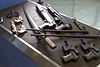
“"Treading" does not simply mean treading with the feet. Tread with the body, tread with the spirit, and, of course, tread and cut with the long sword. You must achieve the spirit of not allowing the enemy to attack a second time. This is the spirit of forestalling in every sense. Once at the enemy, you should not aspire just to strike him, but to cling after the attack. You must study this deeply.”
“This is the Way for men who want to learn my strategy:
Do not think dishonestly.
The Way is in training.
Become acquainted with every art.
Know the Ways of all professions.
Distinguish between gain and loss in worldly matters.
Develop intuitive judgment and understanding for everything.
Perceive those things which cannot be seen.
Pay attention even to trifles.
Do nothing which is of no use.”
Do not think dishonestly.
The Way is in training.
Become acquainted with every art.
Know the Ways of all professions.
Distinguish between gain and loss in worldly matters.
Develop intuitive judgment and understanding for everything.
Perceive those things which cannot be seen.
Pay attention even to trifles.
Do nothing which is of no use.”
“Second is the Water book. With water as the basis, the spirit becomes like water. Water adopts the shape of its receptacle, it is sometimes a trickle and sometimes a wild sea. … If you master the principles of sword-fencing, when you freely beat one man, you beat any man in the world. The spirit of defeating a man is the same for ten million men. … The principle of strategy is having one thing, to know ten thousand things.”

“To attain the Way of strategy as a warrior you must study fully other martial arts and not deviate even a little from the Way of the warrior. With your spirit settled, accumulate practice day by day, and hour by hour. Polish the twofold spirit heart and mind, and sharpen the twofold gaze perception and sight. When your spirit is not in the least clouded, when the clouds of bewilderment clear away, there is the true void.”

“Many things are said to be passed on. Sleepiness can be passed on, and yawning can be passed on. Time can be passed on also.
In large-scale strategy, when the enemy is agitated and shows an inclination to rush, do not mind in the least. Make a show of complete calmness, and the enemy will be taken by this and will become relaxed. When you see that this spirit has been passed on, you can bring about the enemy's defeat by attacking strongly with a Void spirit.”
In large-scale strategy, when the enemy is agitated and shows an inclination to rush, do not mind in the least. Make a show of complete calmness, and the enemy will be taken by this and will become relaxed. When you see that this spirit has been passed on, you can bring about the enemy's defeat by attacking strongly with a Void spirit.”
“Fifthly, the book of the Void. By Void I mean that which has no beginning and no end. Attaining this principle means not attaining the principle. The Way of strategy is the Way of nature. When you appreciate the power of nature, knowing the rhythm of any situation, you will be able to hit the enemy naturally and strike naturally. All this is the Way of the Void. I intend to show how to follow the true Way according to nature in the book of the Void.”

“Knowing the Way of the long sword means we can wield with two fingers the sword that we usually carry. If we know the path of the sword well, we can wield it easily.
If you try to wield the long sword quickly you will mistake the Way. To wield the long sword well you must wield it calmly. If you try to wield it quickly, like a folding fan or a short sword, you will err by using "short sword chopping". You cannot cut a man with a long sword using this method.”
If you try to wield the long sword quickly you will mistake the Way. To wield the long sword well you must wield it calmly. If you try to wield it quickly, like a folding fan or a short sword, you will err by using "short sword chopping". You cannot cut a man with a long sword using this method.”
“The gaze should be large and broad. This is the twofold gaze "Perception and Sight". Perception is strong and sight weak.
In strategy it is important to see distant things as if they were close and to take a distanced view of close things. It is important in strategy to know the enemy's sword and not to be distracted by insignificant movements of his sword. You must study this. The gaze is the same for single combat and for large-scale combat.”
In strategy it is important to see distant things as if they were close and to take a distanced view of close things. It is important in strategy to know the enemy's sword and not to be distracted by insignificant movements of his sword. You must study this. The gaze is the same for single combat and for large-scale combat.”

“Strategy is the craft of the warrior. Commanders must enact the craft, and troopers should know this Way. There is no warrior in the world today who really understands the Way of strategy.
There are various Ways. There is the Way of salvation by the law of Buddha, the Way of Confucius governing the Way of learning, the Way of healing as a doctor, as a poet teaching the Way of Waka, tea, archery, and many arts and skills. Each man practices as he feels inclined.”
There are various Ways. There is the Way of salvation by the law of Buddha, the Way of Confucius governing the Way of learning, the Way of healing as a doctor, as a poet teaching the Way of Waka, tea, archery, and many arts and skills. Each man practices as he feels inclined.”
“When you have come to grips and are striving together with the enemy, and you realise that you cannot advance, you "soak in" and become one with the enemy. You can win by applying a suitable technique while you are mutually entangled.
In battles involving large numbers as well as in fights with small numbers, you can often win decisively with the advantage of knowing how to "soak" into the enemy, whereas, were you to draw apart, you would lose the chance to win. Research this well.”
In battles involving large numbers as well as in fights with small numbers, you can often win decisively with the advantage of knowing how to "soak" into the enemy, whereas, were you to draw apart, you would lose the chance to win. Research this well.”
“The Way is shown in five books concerning different aspects. These are Ground, Water, Fire, Wind, and Void.
The body of the Way of strategy from the viewpoint of my Ichi school is explained in the Ground book. It is difficult to realise the true Way just through sword-fencing. Know the smallest things and the biggest things, the shallowest things and the deepest things. As if it were a straight road mapped out on the ground, the first book is called the Ground book.”
The body of the Way of strategy from the viewpoint of my Ichi school is explained in the Ground book. It is difficult to realise the true Way just through sword-fencing. Know the smallest things and the biggest things, the shallowest things and the deepest things. As if it were a straight road mapped out on the ground, the first book is called the Ground book.”
“With your spirit open and unconstricted, look at things from a high point of view. You must cultivate your wisdom and spirit. Polish your wisdom: learn public justice, distinguish between good and evil, study the Ways of different arts one by one. When you cannot be deceived by men you will have realised the wisdom of strategy.
The wisdom of strategy is different from other things. On the battlefield, even when you are hard-pressed, you should ceaselessly research the principles of strategy so that you can develop a steady spirit.”
The wisdom of strategy is different from other things. On the battlefield, even when you are hard-pressed, you should ceaselessly research the principles of strategy so that you can develop a steady spirit.”

“There is a time and a place for use of weapons.
The best use of the companion sword is in a confined space, or when you are engaged closely with an opponent. The long sword can be used effectively in all situations.
The halberd is inferior to the spear on the battlefield. With the spear you can take the initiative; the halberd is defensive. In the hands of one of two men of equal ability, the spear gives a little extra strength. Spear and halberd both have their uses, but neither is very beneficial in confined spaces.”
The best use of the companion sword is in a confined space, or when you are engaged closely with an opponent. The long sword can be used effectively in all situations.
The halberd is inferior to the spear on the battlefield. With the spear you can take the initiative; the halberd is defensive. In the hands of one of two men of equal ability, the spear gives a little extra strength. Spear and halberd both have their uses, but neither is very beneficial in confined spaces.”
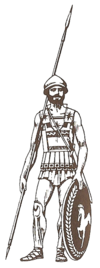
“If you do not look at things on a large scale it will be difficult for you to master strategy. If you learn and attain this strategy you will never lose even to twenty or thirty enemies. More than anything to start with you must set your heart on strategy and earnestly stick to the Way. You will come to be able to actually beat men in fights, and to be able to win with your eye. Also by training you will be able to freely control your own body, conquer men with your body, and with sufficient training you will be able to beat ten men with your spirit.”
“Grip the long sword with a rather floating feeling in your thumb and forefinger, with the middle finger neither tight nor slack, and with the last two fingers tight. It is bad to have play in your hands.
When you take up a sword, you must feel intent on cutting the enemy. As you cut an enemy you must not change your grip, and your hands must not "cower". When you dash the enemy's sword aside, or ward it off, or force it down, you must slightly change the feeling in your thumb and forefinger. Above all, you must be intent on cutting the enemy in the way you grip the sword.”
When you take up a sword, you must feel intent on cutting the enemy. As you cut an enemy you must not change your grip, and your hands must not "cower". When you dash the enemy's sword aside, or ward it off, or force it down, you must slightly change the feeling in your thumb and forefinger. Above all, you must be intent on cutting the enemy in the way you grip the sword.”
“If you rely on strength, when you hit the enemy's sword you will inevitably hit too hard. If you do this, your own sword will be carried along as a result. Thus the saying, "The strongest hand wins", has no meaning.
In large-scale strategy, if you have a strong army and are relying on strength to win, but the enemy also has a strong army, the battle will be fierce. This is the same for both sides.
Without the correct principle the fight cannot be won.
The spirit of my school is to win through the wisdom of strategy, paying no attention to trifles. Study this well.”
In large-scale strategy, if you have a strong army and are relying on strength to win, but the enemy also has a strong army, the battle will be fierce. This is the same for both sides.
Without the correct principle the fight cannot be won.
The spirit of my school is to win through the wisdom of strategy, paying no attention to trifles. Study this well.”
“This book is a spiritual guide for the man who wishes to learn the Way.
My heart has been inclined to the Way of strategy from my youth onwards. I have devoted myself to training my hand, tempering my body, and attaining the many spiritual attitudes of sword fencing. If we watch men of other schools discussing theory, and concentrating on techniques with the hands, even though they seem skilful to watch, they have not the slightest true spirit.
Of course, men who study in this way think they are training the body and spirit, but it is an obstacle to the true Way, and its bad influence remains for ever.”
My heart has been inclined to the Way of strategy from my youth onwards. I have devoted myself to training my hand, tempering my body, and attaining the many spiritual attitudes of sword fencing. If we watch men of other schools discussing theory, and concentrating on techniques with the hands, even though they seem skilful to watch, they have not the slightest true spirit.
Of course, men who study in this way think they are training the body and spirit, but it is an obstacle to the true Way, and its bad influence remains for ever.”
“In battles, when the armies are in confrontation, attack the enemy's strong points and, when you see that they are beaten back, quickly separate and attack yet another strong point on the periphery of his force. The spirit of this is like a winding mountain path.
This is an important fighting method for one man against many. Strike down the enemies in one quarter, or drive them back, then grasp the timing and attack further strong points to right and left, as if on a winding mountain path, weighing up the enemies' disposition. When you know the enemies' level, attack strongly with no trace of retreating spirit.”
This is an important fighting method for one man against many. Strike down the enemies in one quarter, or drive them back, then grasp the timing and attack further strong points to right and left, as if on a winding mountain path, weighing up the enemies' disposition. When you know the enemies' level, attack strongly with no trace of retreating spirit.”
“'''When the fight comes, always endeavour to chase the enemy around to your left side. Chase him towards awkward places, and try to keep him with his back to awkward places. When the enemy gets into an inconvenient position, do not let him look around, but conscientiously chase him around and pin him down. In houses, chase the enemy into the thresholds, lintels, doors, verandas, pillars, and so on, again not letting him see his situation.
Always chase the enemy into bad footholds, obstacles at the side, and so on, using the virtues of the place to establish predominant positions from which to fight. You must research and train diligently in this.”
Always chase the enemy into bad footholds, obstacles at the side, and so on, using the virtues of the place to establish predominant positions from which to fight. You must research and train diligently in this.”
“It is difficult for these people to cut the enemy when at close quarters because of the length of the long sword. The blade path is large so the long sword is an encumbrance, and they are at a disadvantage compared to the man armed with a short companion sword.
From olden times it has been said: "Great and small go together." So do not unconditionally dislike extra-long swords. What I dislike is the inclination towards the long sword. If we consider large-scale strategy, we can think of large forces in terms of long swords, and small forces as short swords. Cannot few men give battle against many? There are many instances of few men overcoming many.”
From olden times it has been said: "Great and small go together." So do not unconditionally dislike extra-long swords. What I dislike is the inclination towards the long sword. If we consider large-scale strategy, we can think of large forces in terms of long swords, and small forces as short swords. Cannot few men give battle against many? There are many instances of few men overcoming many.”
“Some other schools have a liking for extra-long swords. From the point of view of my strategy these must be seen as weak schools. This is because they do not appreciate the principle of cutting the enemy by any means. Their preference is for the extra-long sword and, relying on the virtue of its length, they think to defeat the enemy from a distance.
In this world it is said, "One inch gives the hand advantage", but these are the idle words of one who does not know strategy. It shows the inferior strategy of a weak spirit that men should be dependant on the length of their sword, fighting from a distance without the benefit of strategy.”
In this world it is said, "One inch gives the hand advantage", but these are the idle words of one who does not know strategy. It shows the inferior strategy of a weak spirit that men should be dependant on the length of their sword, fighting from a distance without the benefit of strategy.”
“Until you realise the true Way, whether in Buddhism or in common sense, you may think that things are correct and in order. However, if we look at things objectively, from the viewpoint of laws of the world, we see various doctrines departing from the true Way. Know well this spirit, and with forthrightness as the foundation and the true spirit as the Way. Enact strategy broadly, correctly and openly.
Then you will come to think of things in a wide sense and, taking the void as the Way, you will see the Way as void.
In the void is virtue, and no evil. Wisdom has existence, principle has existence, the Way has existence, spirit is nothingness.”
Then you will come to think of things in a wide sense and, taking the void as the Way, you will see the Way as void.
In the void is virtue, and no evil. Wisdom has existence, principle has existence, the Way has existence, spirit is nothingness.”

“It is said the warrior's is the twofold Way of pen and sword, and he should have a taste for both Ways. Even if a man has no natural ability he can be a warrior by sticking assiduously to both divisions of the Way. Generally speaking, the Way of the warrior is resolute acceptance of death.
• Variant translation: First, as is often said, a samurai must have both literary and martial skills: to be versed in the two is his duty. Even if he has no natural ability, a samurai must train assiduously in both skills to a degree appropriate to his status. On the whole, if you are to assess the samurai's mind, you may think it is simply attentiveness to the manner of dying.”
• Variant translation: First, as is often said, a samurai must have both literary and martial skills: to be versed in the two is his duty. Even if he has no natural ability, a samurai must train assiduously in both skills to a degree appropriate to his status. On the whole, if you are to assess the samurai's mind, you may think it is simply attentiveness to the manner of dying.”
“Third is the Fire book. This book is about fighting. The spirit of fire is fierce, whether the fire be small or big; and so it is with battles. The Way of battles is the same for man to man fights and for ten thousand a side battles. You must appreciate that spirit can become big or small. What is big is easy to perceive: what is small is difficult to perceive. In short, it is difficult for large numbers of men to change position, so their movements can be easily predicted. An individual can easily change his mind, so his movements are difficult to predict. You must appreciate this. The essence of this book is that you must train day and night in order to make quick decisions.”

“I have climbed mountain Iwato of Higo in Kyushu to pay homage to heaven, pray to Kwannon, and kneel before Buddha. I am a warrior of Harima province, Shinmen Musashi No Kami Fujiwara No Genshin, age sixty years.
From youth my heart has been inclined toward the Way of strategy. My first duel was when I was thirteen, I struck down a strategist of the Shinto school, one Arima Kihei. When I was sixteen I struck down an able strategist Tadashima Akiyama. When I was twenty-one I went up to the capital and met all manner of strategists, never once failing to win in many contests.”
From youth my heart has been inclined toward the Way of strategy. My first duel was when I was thirteen, I struck down a strategist of the Shinto school, one Arima Kihei. When I was sixteen I struck down an able strategist Tadashima Akiyama. When I was twenty-one I went up to the capital and met all manner of strategists, never once failing to win in many contests.”
“There is timing in the whole life of the warrior, in his thriving and declining, in his harmony and discord. Similarly, there is timing in the Way of the merchant, in the rise and fall of capital. All things entail rising and falling timing. You must be able to discern this. In strategy there are various timing considerations. From the outset you must know the applicable timing and the inapplicable timing, and from among the large and small things and the fast and slow timings find the relevant timing, first seeing the distance timing and the background timing. This is the main thing in strategy. It is especially important to know the background timing, otherwise your strategy will become uncertain.”
“"To tread down the sword" is a principle often used in strategy. First, in large-scale strategy, when the enemy first discharges bows and guns and then attacks, it is difficult for us to attack if we are busy loading powder into our guns or notching our arrows. The spirit is to attack quickly while the enemy is still shooting with bows or guns. The spirit is to win by "treading down" as we receive the enemy's attack.
In single combat, we cannot get a decisive victory by cutting, with a "tee-dum tee-dum" feeling, in the wake of the enemy's attacking long sword. We must defeat him at the start of his attack, in the spirit of treading him down with the feet, so that he cannot rise again to the attack.”
In single combat, we cannot get a decisive victory by cutting, with a "tee-dum tee-dum" feeling, in the wake of the enemy's attacking long sword. We must defeat him at the start of his attack, in the spirit of treading him down with the feet, so that he cannot rise again to the attack.”
“To master the virtue of the long sword is to govern the world and oneself, thus the long sword is the basis of strategy. The principle is "strategy by means of the long sword". If he attains the virtue of the long sword, one man can beat ten men. Just as one man can beat ten, so a hundred men can beat a thousand, and a thousand men can beat ten thousand. In my strategy, one man is the same as ten thousand, so this strategy is the complete warrior's craft.
The Way of the warrior does not include other Ways, such as Confucianism, Buddhism, certain traditions, artistic accomplishments and dancing. But even though these are not part of the Way, if you know the Way broadly you will see it in everything. Men must polish their particular Way.”
The Way of the warrior does not include other Ways, such as Confucianism, Buddhism, certain traditions, artistic accomplishments and dancing. But even though these are not part of the Way, if you know the Way broadly you will see it in everything. Men must polish their particular Way.”
“When we are fighting with the enemy, even when it can be seen that we can win on the surface with the benefit of the Way, if his spirit is not extinguished, he may be beaten superficially yet undefeated in spirit deep inside. With this principle of "penetrating the depths" we can destroy the enemy's spirit in its depths, demoralizing him by quickly changing our spirit. This often occurs.
Penetrating the depths means penetrating with the long sword, penetrating with the body, and penetrating with the spirit. This cannot be understood in a generalization.
Once we have crushed the enemy in the depths, there is no need to remain spirited. But otherwise we must remain spirited. If the enemy remains spirited it is difficult to crush him.”
Penetrating the depths means penetrating with the long sword, penetrating with the body, and penetrating with the spirit. This cannot be understood in a generalization.
Once we have crushed the enemy in the depths, there is no need to remain spirited. But otherwise we must remain spirited. If the enemy remains spirited it is difficult to crush him.”
“The Three Methods to Forestall the Enemy
The first is to forestall him by attacking. This is called Ken No Sen (to set him up).
Another method is to forestall him as he attacks. This is called Tai No Sen (to wait for the initiative).
The other method is when you and the enemy attack together. This is called Tai Tai No Sen (to accompany him and forestall him).
There are no methods of taking the lead other than these three. Because you can win quickly by taking the lead, it is one of the most important things in strategy. There are several things involved in taking the lead. You must make the best of the situation, see through the enemy's spirit so that you grasp his strategy and defeat him. It is impossible to write about this in detail.”
The first is to forestall him by attacking. This is called Ken No Sen (to set him up).
Another method is to forestall him as he attacks. This is called Tai No Sen (to wait for the initiative).
The other method is when you and the enemy attack together. This is called Tai Tai No Sen (to accompany him and forestall him).
There are no methods of taking the lead other than these three. Because you can win quickly by taking the lead, it is one of the most important things in strategy. There are several things involved in taking the lead. You must make the best of the situation, see through the enemy's spirit so that you grasp his strategy and defeat him. It is impossible to write about this in detail.”
“"There are many enemies" applies when you are fighting one against many. Draw both sword and companion sword and assume a wide-stretched left and right attitude. The spirit is to chase the enemies around from side to side, even though they come from all four directions. Observe their attacking order, and go to meet first those who attack first. Sweep your eyes around broadly, carefully examining the attacking order, and cut left and right alternately with your swords. Waiting is bad. Always quickly re-assume your attitudes to both sides, cut the enemies down as they advance, crushing them in the direction from which they attack. Whatever you do, you must drive the enemy together, as if tying a line of fishes, and when they are seen to be piled up, cut them down strongly without giving them room to move.”
“Some men use a shorter long sword with the intention of jumping in and stabbing the enemy at the unguarded moment when he flourishes his sword. This inclination is bad.
To aim for the enemy's unguarded moment is completely defensive, and undesirable at close quarters with the enemy. Furthermore, you cannot use the method of jumping inside his defense with a short sword if there are many enemies. Some men think that if they go against many enemies with a shorter long sword they can unrestrictedly frisk around cutting in sweeps, but they have to parry cuts continuously, and eventually become entangled with the enemy. This is inconsistent with the true Way of strategy.
The sure Way to win thus is to chase the enemy around in a confusing manner, causing him to jump aside, with your body held strongly and straight.”
To aim for the enemy's unguarded moment is completely defensive, and undesirable at close quarters with the enemy. Furthermore, you cannot use the method of jumping inside his defense with a short sword if there are many enemies. Some men think that if they go against many enemies with a shorter long sword they can unrestrictedly frisk around cutting in sweeps, but they have to parry cuts continuously, and eventually become entangled with the enemy. This is inconsistent with the true Way of strategy.
The sure Way to win thus is to chase the enemy around in a confusing manner, causing him to jump aside, with your body held strongly and straight.”
“When I reached thirty I looked back on my past. The previous victories were not due to my having mastered strategy. Perhaps it was natural ability, or the order of heaven, or that other schools' strategy was inferior. After that I studied morning and evening searching for the principle, and came to realise the Way of strategy when I was fifty.
Since then I have lived without following any particular Way. Thus with the virtue of strategy I practise many arts and abilities — all things with no teacher. To write this book I did not use the law of Buddha or the teachings of Confucius, neither old war chronicles nor books on martial tactics. I take up my brush to explain the true spirit of this Ichi school as it is mirrored in the Way of heaven and Kwannon. The time is the night of the tenth day of the tenth month, at the hour of the tiger. ”
Since then I have lived without following any particular Way. Thus with the virtue of strategy I practise many arts and abilities — all things with no teacher. To write this book I did not use the law of Buddha or the teachings of Confucius, neither old war chronicles nor books on martial tactics. I take up my brush to explain the true spirit of this Ichi school as it is mirrored in the Way of heaven and Kwannon. The time is the night of the tenth day of the tenth month, at the hour of the tiger. ”
“Fourthly the Wind book. This book is not concerned with my Ichi school but with other schools of strategy. By Wind I mean old traditions, present-day traditions, and family traditions of strategy. Thus I clearly explain the strategies of the world. This is tradition. It is difficult to know yourself if you do not know others. To all Ways there are side-tracks. If you study a Way daily, and your spirit diverges, you may think you are obeying a good way, but objectively it is not the true Way. If you are following the true Way and diverge a little, this will later become a large divergence. You must realise this. Other strategies have come to be thought of as mere sword-fencing, and it is not unreasonable that this should be so. The benefit of my strategy, although it includes sword-fencing, lies in a separate principle. I have explained what is commonly meant by strategy in other schools in the Wind book.”
Miyamoto Musashi Quotes by Topic
Find exactly what you are looking for by browsing this categorized list of Miyamoto Musashi quotes by topic.
Miyamoto Musashi on Timing 3 quotes
“There is timing in everything. Timing in strategy cannot be mastered without a great deal of practice.”
Miyamoto Musashi on Warrior 2 quotes
View all 2 quotes on Warrior →Miyamoto Musashi on Sword
“You can know how to win through strategy with the long sword, but it cannot be clearly explained in writing. You must practise diligently in order to understand how to win.”
Miyamoto Musashi on Diligence
“You can know how to win through strategy with the long sword, but it cannot be clearly explained in writing. You must practise diligently in order to understand how to win.”
Miyamoto Musashi on Meaning of life
“In my strategy, the training for killing enemies is by way of many contests, fighting for survival, discovering the meaning of life and death, learning the Way of the sword, judging the strength of attacks and understanding the Way of the "edge and ridge" of the sword.”

About Miyamoto Musashi
Miyamoto Musashi 宮本 武蔵 (c. 1584 – 13 June 1645) was a famous Japanese swordsman, believed to have been one of the most skilled swordsmen in history. He founded the Hyoho Niten Ichi-ryu, or Nito Ryu style of swordsmanship and wrote Go Rin No Sho (The Book of Five Rings) a classic work on strategy, tactics, and philosophy.