Link Copied!
Max Stirner Quotes (1806-1856)
Philosopher





About Max Stirner
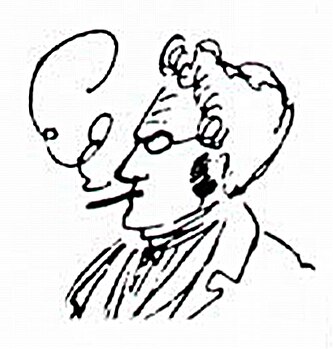
Max Stirner (October 25, 1806 – June 26, 1856), born Johann Kaspar Schmidt, was a German philosopher who was a major influence on the nineteenth century development of ideas of nihilism, existentialism and individualist anarchism.
Best Max Stirner Quotes
Shortest
Earliest
Explore our curated collection of the most famous and impactful Max Stirner quotes.
“Everything sacred is a tie, a fetter.”
“Thus the radii of all education run together into one center which is called personality.”

“The State’s behavior is violence, and it calls its violence “law”; that of the individual, “crime.””
“What matters the party to me? I shall find enough anyhow who unite with me without swearing allegiance to my flag.”
“People is the name of the body, State of the spirit, of that ruling person that has hitherto suppressed me.”
“"Freedom" awakens your rage against everything that is not you; "egoism" calls you to joy over yourselves, to self-enjoyment.”
“The republic is nothing whatever but – absolute monarchy; for it makes no difference whether the monarch is called prince or people, both being a 'majesty'.”

“Whoso is full of sacred (religious, moral, humane) love loves only the spook, the “true man,” and persecutes with dull mercilessness the individual, the real man.”

“Whoever will be free must make himself free. Freedom is no fairy gift to fall into a man's lap. What is freedom? To have the will to be responsible for one's self.”

“If religion has put forward the proposition that we are all of us sinners, I set another against it: we are all of us perfect! Because, in each moment, we are all we can be, and never need to be more.”

“He who is infatuated with Man leaves persons out of account so far as that infatuation extends, and floats in an ideal, sacred interest. Man, you see, is not a person, but an ideal, a spook.”
“Revolution is aimed at new arrangements; insurrection [Empörung] leads us no longer to let ourselves be arranged, but to arrange ourselves, and set no glittering hopes on “institutions.””

“The habit of the religious way of thinking has biased our mind so grievously that we are — terrified at ourselves in our nakedness and naturalness; it has degraded us so that we deem ourselves depraved by nature, born devils.”
“I love men too, not merely individuals, but every one. But I love them with the consciousness of egoism; I love them because love makes me happy, I love because loving is natural to me, because it pleases me. I know no 'commandment of love'.”

“Every love to which there clings but the smallest speck of obligation is an unselfish love, and, so far as this speck reaches, a possessedness. He who believes that he owes the object of his love anything loves romantically or religiously.”
“History seeks for man: but he is I, you, we. Sought as a mysterious essence, as the divine, first as God, then as man (humanity, humaneness, and mankind), he is found as the individual, the finite, the unique one.”
“If the press was to be free, nothing would be so important as precisely its liberation from every coercion that could be put on it in the name of a law. And, that it might come to that, I my own self should have to have absolved myself from obedience to the law.”

“On the contrary, to educate rational people, that should be sufficient; it is not really intended for sensible people; to understand things and conditions, there is the matter ended,—to understand oneself does not seem to be everyman's concern.”
“Wollen wir etwa die Pädagogik den Philosophen in die Hände spielen? Nichts weniger als das! Sie würden sich ungeschickt genug benehmen. Denen allein werde sie anvertraut, die mehr sind als Philosophen, darum aber auch unendlich mehr als Humanisten oder Realisten.”
“If man puts his honor first in relying upon himself, knowing himself and applying himself, this in self-reliance, self-assertion, and freedom, he then strives to rid himself of the ignorance which makes a strange impenetrable object a barrier and a hindrance to his self-knowledge.”
“It would be foolish to assert that there is no power above mine. Only the attitude that I take toward it will be quite another than that of the religious age: I shall be the enemy of every higher power, while religion teaches us to make it our friend and be humble toward it.”

“Where the world comes in my way — and it comes in my way everywhere — I consume it to quiet the hunger of my egoism. For me you are nothing but — my food, even as I too am fed upon and turned to use by you. We have only one relation to each other, that of usableness, of utility, of use.”
“Apart from any other basis which might justify a superiority, education, as a power, raised him who possessed it over the weak, who lacked it, and the educated man counted in his circle, however large or small it was, as the mighty, the powerful, the imposing one: for he was an authority.”

“I have no need to take up each thing that wants to throw its cause on us and show that it is occupied only with itself, not with us, only with its good, not with ours. Look at the rest for yourselves. Do truth, freedom, humanity, justice, desire anything else than that you grow enthusiastic and serve them?”
“[...] then the necessary decline of non-voluntary learning and rise of the self-assured will which perfects itself in the glorious sunlight of the free person may be somewhat expressed as follows: knowledge must die and rise again as will and create itself anew each day as a free person.”
“If a concept lacks an essence, nothing will ever be found that completely fits that concept. If you are lacking in the concept of human being, it will immediately expose that you are something individual, something that cannot be expressed by the term human being, thus, in every instance, an individual human being.”

“The will is not fundamentally right, as the practical ones would like very much to assure us; one may not pass over the desire for knowledge in order to stand immediately in the will, but knowledge perfects itself to will when it desensualizes itself and creates itself as a spirit "which builds its own body."”

“Atheists keep up their scoffing at the higher being, which was also honoured under the name of the 'highest' or être suprême, and trample in the dust one 'proof of his existence' after another, without noticing that they themselves, out of need for a higher being, only annihilate the old to make room for a new.”
“Yes, so it is that knowledge itself must die in order to blossom forth again in death as will; the freedom of thought, belief, and conscience, these wonderful flowers of three centuries will sink back into the lap of mother earth so that a new freedom, the freedom will, will be nourished with its most noble juices.”
“If one awakens in men the idea of freedom then the free men will incessantly go on to free themselves; if on the contrary, one only educates them, then they will at all times accommodate themselves to circumstance in the most highly educated and elegant manner and degenerate into subservient cringing souls.”
“A people cannot be free otherwise than at the individual's expense; for it is not the individual that is the main point in this liberty, but the people. The freer the people, the more bound the individual; the Athenian people, precisely at its freest time, created ostracism, banished the atheists, poisoned the most honest thinker.”
“Might is a fine thing, and useful for many purposes; for 'one goes further with a handful of might than with a bagful of right'. You long for freedom? You fools! If you took might, freedom would come of itself. See, he who has might 'stands above the law'. How does this prospect taste to you, you 'law-abiding' people? But you have no taste!”
“What is not supposed to be my concern! First and foremost, the Good Cause, then God's cause, the cause of mankind, of truth, of freedom, of humanity, of justice; further, the cause of my people, my prince, my fatherland; finally, even the cause of Mind, and a thousand other causes. Only my cause is never to be my concern. "Shame on the egoist who thinks only of himself!"”
“Do I write out of love to men? No, I write because I want to procure for my thoughts an existence in the world; and, even if I foresaw that these thoughts would deprive you of your rest and your peace, even if I saw the bloodiest wars and the fall of many generations springing up from this seed of thought – I would nevertheless scatter it. Do with it what you will and can, that is your affair and does not trouble me.”
“The workers have the most enormous power in their hands, and if one day they became truly aware of it and used it, then nothing could resist them; they would only have to stop work and look upon the products of work as their own and enjoy them. This is the meaning of the labor unrest that is looming here and there. The state is founded on the-slavery of labor. If labor becomes free, the state is lost.”

“Feuerbach … recognizes … "even love, in itself the truest, most inward sentiment, becomes an obscure, illusory one through religiousness, since religious love loves man only for God’s sake, therefore loves man only apparently, but in truth God only.” Is this different with moral love? Does it love the man, this man for this man’s sake, or for morality’s sake, for Man’s sake, and so—for homo homini Deus—for God’s sake?”
“The difficulty in our education up till now lies, for the most part, in the fact that knowledge did not refine itself into will, to application of itself, to pure practice. The realists felt the need and supplied it, though in a most miserable way, by cultivating idea-less and fettered "practical men." Most college students are living examples of this sad turn of events. Trained in the most excellent manner, they go on training; drilled they continue drilling.”
“Political freedom means this: that the polis, the state, is free; religious freedom this: that religion is free, just as freedom of conscience indicates that conscience is free; thus, it does not that I am free from state, from religion, from conscience, or that I am rid of them. It does not mean my freedom, but the freedom of a power that rules and vanquishes me; it means that one of my oppressors, like state, religion, conscience, is free.”
“'''''Human or general needs can be satisfied through society; for satisfaction of unique'' needs you must do some seeking'''. A friend and a friendly service, or even an individual's service, society cannot procure you. And yet you will every moment be in need of such a service, and on the slightest occasions require somebody who is helpful to you. Therefore do not rely on society, but see to it that you have the wherewithal to — purchase the fulfilment of your wishes.”

“Now, on the contrary, when every one is to cultivate himself into man, condemning a man to machine-like labor amounts to the same thing as slavery. If a factory-worker must tire himself to death twelve hours and more, he is cut off from becoming man. Every labor is to have the intent that the man be satisfied. [...] His labor is nothing taken by itself, has no object in itself, is nothing complete in itself; he labors only into another's hands, and is used (exploited) by this other.”
“I am owner of my might, and I am so when I know myself as unique. In the unique one the owner himself returns into his creative nothing, of which he is born. Every higher essence above me, be it God, be it man, weakens the feeling of my uniqueness, and pales only before the sun of this consciousness. If I concern myself for myself, the unique one, then my concern rests on its transitory, mortal creator, who consumes himself, and I may say: All things are nothing to me.”
“If the church had deadly sins, the state has capital crimes; if the one had heretics, the other has traitors; the one ecclesiastical penalties, the other criminal penalties; the one inquisitorial processes, the other fiscal; in short, there sins, here crimes, there inquisition and here – inquisition. Will the sanctity of the state not fall like the church's? The awe of its laws, the reverence for its highness, the humility of its 'subjects', will this remain? Will the 'saint's' face not be stripped of its adornment?”
“It is truly not the merit of the school if we do not come out selfish. Each sort of corresponding pride and every wind of covetousness, eagerness for office, mechanical and servile officiousness, hypocrisy, etc., is bound as much with extensive knowledge as with elegant, classical education, and since this whole instruction exercises no influence of any sort on our ethical behavior, it thus frequently falls to the fate of being forgotten in the same measure as it is not used: one shakes off the dust of the school.”
“Egoism, as Stirner uses it, is not opposed to love nor to thought; it is no enemy of the sweet life of love, nor of devotion and sacrifice; it is no enemy of intimate warmth, but it is also no enemy of critique, nor of socialism, nor, in short, of any actual interest. It doesn’t exclude any interest.
It is directed against only disinterestedness and the uninteresting; not against love, but against sacred love, not against thought, but against sacred thought, not against socialists, but against sacred socialists, etc.”
“For the state it is indispensable that nobody have an own will; if one had, the state would have to exclude (lock up, banish, etc.) this one; if all had, they would do away with the state. (...) The own will of me is the state's destroyer; it is therefore denounced by the state as 'self-will'. Own will and the state are powers in deadly hostility, between which no 'perpetual peace' is possible. As long as the state asserts itself, it represents own will, its ever-hostile opponent, as unreasonable, evil; and the latter lets itself be talked into believing this.”
“An appeal to men's self-sacrificing disposition and self-renouncing love ought at least to have lost its seductive plausibility when, after an activity of thousands of years, it has left nothing behind but the – misery of today. Why then still fruitlessly expect self-sacrifice to bring us better times? Why not rather hope for them from usurpation? Salvation comes no longer from the giver, the bestower, the loving one, but from the taker, the appropriator (usurper), the owner. Communism, and, consciously, egoism-reviling humanism, still count on love.”
“In the pedagogical as in certain other spheres freedom is not allowed to erupt, the power of the opposition is not allowed to put a word in edgewise: they want submissiveness. Only a formal and material training is being aimed at and only scholars come out of the menageries of the humanists, only "useful citizens" out of those of the realists, both of whom are indeed nothing but subservient people. Our good background of recalcitrancy [sic] gets strongly suppressed and with it the development of knowledge to free will. The result of school is then philistinism.”
“Everything over which I have might that cannot be torn from me remains my property; well, then let might decide about property, and I will expect everything from my might! Alien might, might that I leave to another, makes me an owned slave: then let my own might make me an owner. Let me then withdraw the might that I have conceded to others out of ignorance regarding the strength of my own might! Let me say to myself, what my might reaches to is my property; and let me claim as property everything that I feel myself strong enough to attain, and let me extend my actual property as far as I entitle, that is, empower, myself to take.”

“Just as the schoolmen philosophized only inside the belief of the church, … without ever throwing a doubt upon this belief; as authors fill whole folios on the State without calling in question the fixed idea of the State itself; as our newspapers are crammed with politics because they are conjured into the fancy that man was created to be a zoon politicon,—so also subjects vegetate in subjection, virtuous people in virtue, liberals in humanity, etc., without ever putting to these fixed ideas of theirs the searching knife of criticism. Undislodgeable, like a madman’s delusion, those thoughts stand on a firm footing, and he who doubts them—lays hands on the sacred!”
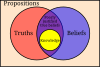
“All right, men are as they should be, can be. What should they be? Surely not more than they can be! And what can they be? Not more, again, than they – can, than they have the competence, the force, to be. But this they really are, because what they are not, they are incapable of being; for to be capable means – really to be. One is not capable for anything that one really is not; one is not capable of anything that one does not really do. Could a man blinded by cataract see? Oh, yes, if he had his cataract successfully removed. But now he cannot see because he does not see. Possibility and reality always coincide. One can do nothing that one does not, as one does nothing that one cannot.”
“That the individual is of himself a world's history, and possesses his property in the rest of the world's history, goes beyond what is Christian. To the Christian the world's history is the higher thing, because it is the history of Christ or 'man'; to the egoist only his history has value, because he wants to develop only himself not the mankind-idea, not God's plan, not the purposes of Providence, not liberty, and the like. He does not look upon himself as a tool of the idea or a vessel of God, he recognizes no calling, he does not fancy that he exists for the further development of mankind and that he must contribute his mite to it, but he lives himself out, careless of how well or ill humanity may fare thereby.”

“But let the individual man lay claim to ever so many rights because Man or the concept man ‘entitles’ him to them, because his being man does it: what do I care for his right and his claim? If he has his right only from Man and does not have it from me, then for me he has no right. His life, for example, counts to me only for what it is worth to me. I respect neither a so-called right of property (or his claim to tangible goods) nor yet his right to the ‘sanctuary of his inner nature’ (or his right to have the spiritual goods and divinities, his gods, remain un-aggrieved). His goods, the sensuous as well as the spiritual, are mine, and I dispose of them as proprietor, in the measure of my — might.”
“Because our time is struggling toward the word with which it may express its spirit, many names come to the fore and all make claim to being the right one. [...] Without our assistance, time will not bring the right word to light; we must all work together on it. If, however, so much depends on us, we may reasonably ask what they have made of us and what they propose to make of us; we ask about the education through which they seek to make us creators of that word. Do they conscientiously cultivate our predisposition to become creators or do they treat us only as creatures whose nature simply permits training? [...] Therefore we are concerned above all with what they make of us in the time of our plasticity; the school question is a life question.”
“If it is the drive of our time, after freedom of thought is won, to pursue it to that perfection through which it changes to freedom of the will in order to realize the latter as the principle of a new era, then the final goal of education can no longer be knowledge, but the will born out of knowledge, and the spoken expression of that for which it has to strive is: the personal or free man. Truth consists in nothing other than man's revelation of himself, and thereto belongs the discovery of himself, the liberation from all that is alien, the uttermost abstraction or release from all authority, the re-won naturalness. Such thoroughly true men are not supplied by school; if they are there, they are there in spite of school.”
“Criticism actually says: You must free your I so completely from all limitations that it becomes a human I. I say: Free yourself as far as you can, and you have done your part; because it is not given to everyone to break through all limits, or, more eloquently: that is not a limit for everyone which is one to the others. Consequently, don’t exhaust yourself on the limits of others; it’s enough if you tear down your own. Who has ever been able to break down even one limit for all people? Aren’t countless people today, as at all times, running around with all the “limitations of humanity”? One who overturns one of his limits may have shown others the way and the means; the overturning of their limits remains their affair.”
“Whether nature gives me a right, or whether God, the people's choice, etc., does so, all of that is the same foreign right, a right that I do not give or take to myself. Thus the Communists say, equal labour entitles man to equal enjoyment. [...] No, equal labour does not entitle you to it, but equal enjoyment alone entitles you to equal enjoyment. Enjoy, then you are entitled to enjoyment. But, if you have laboured and let the enjoyment be taken from you, then – ‘it serves you right.’ If you take the enjoyment, it is your right; if, on the contrary, you only pine for it without laying hands on it, it remains as before, a, ‘well-earned right’ of those who are privileged for enjoyment. It is their right, as by laying hands on it would become your right.”

“With competition is connected less the intention to do the thing best than the intention to make it as profitable, as productive, as possible. Hence people study to get into the civil service (study in order to get a well-paid job), study cringing and flattery, routine and 'acquaintance with business', work 'for appearance'. Hence, while it is apparently a matter of doing 'good service', in truth only a 'good business' and earning of money are looked out for. The job is done only ostensibly for the job's sake, but in fact on account of the gain that it yields. One would indeed prefer not to be censor, but one wants to be – advanced; one would like to judge, administer, etc., according to his best convictions, but one is afraid of transfer or even dismissal; one must, above all things – live.”
“Man, your head is haunted; you have wheels in your head! You imagine great things, and depict to yourself a whole world of gods that has an existence for you, a spirit-realm to which you suppose yourself to be called, an ideal that beckons to you. You have a fixed idea! Do not think that I am jesting or speaking figuratively when I regard those persons who cling to the Higher, and (because the vast majority belongs under this head) almost the whole world of men, as veritable fools, fools in a madhouse. What is it, then, that is called a "fixed idea"? An idea that has subjected the man to itself. When you recognize, with regard to such a fixed idea, that it is a folly, you shut its slave up in an asylum. And is the truth of the faith, say, which we are not to doubt; the majesty of (e. g.) the people, which we are not to strike at (he who does is guilty of — lese-majesty); virtue, against which the censor is not to let a word pass, that morality may be kept pure; — are these not "fixed ideas"? Is not all the stupid chatter of (e. g.) most of our newspapers the babble of fools who suffer from the fixed idea of morality, legality, Christianity, etc., and only seem to go about free because the madhouse in which they walk takes in so broad a space?”

“Get away from me with your 'philanthropy'! Creep in, you philanthropist, into the 'dens of vice', linger awhile in the throng of the great city: will you not everywhere find sin, and sin, and again sin? Will you not wail over corrupt humanity, not lament at the monstrous egoism? Will you see a rich man without finding him pitiless and 'egoistic'? Perhaps you already call yourself an atheist, but you remain true to the Christian feeling that a camel will sooner go through a needle's eye than a rich man not be an 'un-man'. How many do you see anyhow that you would not throw into the 'egoistic mass'? What, therefore, has your philanthropy (love of man) found? Nothing but unlovable men! And where do they all come from? From you, from your philanthropy! You brought the sinner with you in your head, therefore you found him, therefore you inserted him everywhere. Do not call men sinners, and they are not: you alone are the creator of sinners; you, who fancy that you love men, are the very one to throw them into the mire of sin, the very one to divide them into vicious and virtuous, into men and un-men, the very one to befoul them with the spittle of your possessedness; for you love not men, but man. But I tell you, you have never seen a sinner, you have only – dreamed of him.”
Max Stirner Quotes by Topic
Find exactly what you are looking for by browsing this categorized list of Max Stirner quotes by topic.
Max Stirner on Creativity 2 quotes
“I am not nothing in the sense of emptiness, but I am the creative nothing, the nothing out of which I myself as creator create everything.”

Max Stirner on Sacredness 2 quotes
“Before the sacred, people lose all sense of power and all confidence; they occupy a powerless and humble attitude toward it. And yet no thing is sacred of itself, but by my declaring it sacred, by my declaration, my judgment, my bending the knee.”

Max Stirner on Government
“The state calls its own violence law, but that of the individual, crime.”

Max Stirner on Liberty
What Max Stirner Said About Others
Discover personal opinions Max Stirner shared regarding contemporaries.
Max Stirner on Pierre-Joseph Proudhon
“Proudhon, like the Communists, fights against egoism. Therefore they are continuations and consistent carryings-out of the Christian principle, the principle of love, of sacrifice for something general, something alien. They complete in property, only what has long been extant as a matter of fact — namely, the propertylessness of the individual. ... In this too Proudhon is like the Christians, that he ascribes to God that which he denies to men. He names him the Proprietaire of the earth. Herewith he proves that he cannot think away the proprietor as such; he comes to a proprietor at last, but removes him to the other world.”

Quotes About Max Stirner
Gain deeper perspective through quotes about Max Stirner from others.
Emma Goldman Preface on Max Stirner
“The most disheartening tendency common among readers is to tear out one sentence from a work, as a criterion of the writer's ideas or personality...It is the same narrow attitude which sees in Max Stirner naught but the apostle of the theory "each for himself, the devil take the hind one." That Stirner's individualism contains the greatest social possibilities is utterly ignored. Yet, it is nevertheless true that if society is ever to become free, it will be so through liberated individuals, whose free efforts make society.”
Fabián Ludueña on Max Stirner
“Stirner lays the foundation for a heretical Hegelianism that posits a non-teleological philosophy of history. Hegel's thinking is certainly the condition of possibility for the Stirnerian idea-system, but it's equally certain that the path of the Unique leads to the most radical rejection of Hegel's Spirit. In this sense we can maintain that Stirner was the seed sowed by Hegelianism for its own self-destruction (or, perhaps, for the final, unexpected, paradoxical post-speculative metamorphosis).”
Svein Olav Nyberg on Max Stirner
“But it is easy to be intoxicated by a book-such as Stirner’s, – and fail to read what is written. What Stirner actually writes about is that there are basically two forms of interaction, namely that of standing as an I against a You versus meeting one another as predicate-filled objects. The understanding of this demands that one understands the difference between the Einzige that one is, and the objects we are conditioned by culture to see ourselves as.”
Rudolf Rocker on Max Stirner
“A unique expression of libertarian ideas is to be found in Max Stirner's (Johann Kaspar Schmidt) (1806-1856) book, Der Einzige und sein Eigentum, which, it is true, passed quickly into oblivion and had no influence on the development of the Anarchist movement as such. Stirner's book is predominantly a philosophic work which traces man's dependence on so-called higher powers through all its devious ways, and is not timid about drawing inferences from the knowledge gained by the survey. It is the book of a conscious and deliberate insurgent, which reveals no reverence for any authority, however exalted. and, therefore appeals powerfully to independent thinking.”

Donald Rooum on Max Stirner
“I am happy to be called a Stirnerite anarchist, provided 'Stirnerite' means one who agrees with Stirner's general drift, not one who agrees with Stirner's every word. Please judge my arguments on their merits, not on the merits of Stirner's arguments, and not by the test of whether I conform to Stirner.”
About Max Stirner
Max Stirner (October 25, 1806 – June 26, 1856), born Johann Kaspar Schmidt, was a German philosopher who was a major influence on the nineteenth century development of ideas of nihilism, existentialism and individualist anarchism.