Link Copied!
Martin Heidegger Quotes (1889-1976)
Philosopher









About Martin Heidegger
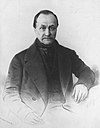
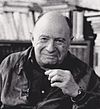
Martin Heidegger (26 September 1889 – 26 May 1976) was a German philosopher. His book Being and Time (1927) is widely regarded as one of the most important philosophy texts of the 20th Century, but Heidegger's involvement with the Nazis has led to much controversy and debate.
Best Martin Heidegger Quotes
Shortest
Earliest
Explore our curated collection of the most famous and impactful Martin Heidegger quotes.
“Transcendence constitutes selfhood.”
“In everything well known something worthy of thought still lurks.”
“The human body is essentially something other than an animal organism.”
“Der Tod ist die Möglichkeit der schlechthinnigen Daseinsunmöglichkeit.”
“Enjoyment of the work consists in participation in the creative state of the artist.”

“Das Bedenklichste in unserer bedenklichen Zeit ist, dass wir noch nicht denken.”
“Technology is in its essence something that human beings cannot master of their own accord.”

“The word “art” does not designate the concept of a mere eventuality; it is a concept of rank.”

“The relation of feeling toward art and its bringing-forth can be one of production or one of reception and enjoyment.”


“What Is A Thing? Heidegger, Martin. Translated by W.B. Barton and V. Deutsch. What Is A Thing? Gateway Editions, 1968.”

“Existential analytics [the object of the book] decides nothing about the existence of God, about human freedom and the immortality of the soul.”
“Every questioning is a seeking. Every seeking takes its direction beforehand from what is sought. Questioning is a knowing search for beings in their thatness and whatness.”
“In Nietzsche’s view nihilism is not a Weltanschauung that occurs at some time and place or another; it is rather the basic character of what happens in Occidental history.”
“The desire to philosophize from the standpoint of standpointlessness, as a purportedly genuine and superior objectivity, is either childish, or, as is usually the case, disingenuous.”
“If in Nietzsche’s thinking the prior tradition of Western thought is gathered and completed in a decisive respect, then the confrontation with Nietzsche becomes one with all Western thought hitherto.”
“Eternity, not as a static “now,” nor as a sequence of “nows” rolling off into the infinite, but as the “now” that bends back into itself. … Thinking the most difficult thought of philosophy means thinking being as time.”
“Nietzsche … does not shy from conscious exaggeration and one-sided formulations of his thought, believing that in this way he can most clearly set in relief what in his vision and in his inquiry is different from the run-of-the-mill.”
“The critique of the highest values hitherto does not simply refute them or declare them invalid. It is rather a matter of displaying their origins as impositions which must affirm precisely what ought to be negated by the values established.”
“From our human experience and history, at least as far as I am informed, I know that everything essential and great has only emerged when human beings had a home and were rooted in a tradition. Today's literature is, for instance, largely destructive.”

“The small are always dependent on the great; they are “small” precisely because they think they are independent. The great thinker is one who can hear what is greatest in the work of other “greats” and who can transform it in an original manner.”

““To stamp becoming with the character of being—that is the supreme will to power.” (WM 617) This suggests that becoming only is if it is grounded in being as being: “That everything recurs is the closest approximation of a world of becoming to one of being.””

“Agriculture is now a motorized food industry, the same thing in its essence as the production of corpses in the gas chambers and the extermination camps, the same thing as blockades and the reduction of countries to famine, the same thing as the manufacture of hydrogen bombs.”
“It is said that "being" is the most universal and the emptiest concept. As such it resists every attempt at definition. Nor does this most universal and thus indefinable concept need any definition. Everybody uses it constantly and also already understands what is meant by it.”

“Nevertheless, the ultimate business of philosophy is to preserve the force of the most elemental words in which Dasein expresses itself, and to keep the common understanding from levelling them off to that unintelligibility which functions in turn as a source of pseudo-problems.”
“Our elucidations of the preliminary concept of phenomenology show that its essential character does not consist in its actuality as a philosophical "movement." Higher than actuality stands possibility. We can understand phenomenology solely by seizing upon it as a possibility.”
“The domination of the public way in which things have been interpreted has already decided upon even the possibilities of being attuned, that is, about the basic way in which Da-sein lets itself be affected by the world. The they prescribes that attunement, it determines what and how one "sees."”

“Everyone is the other, and no one is himself. The they, which supplies the answer to the who of everyday Da-sein, is the nobody to whom every Da-sein has always already surrendered itself, in its being-among-one-another.”
“Everywhere we remain unfree and chained to technology, whether we passionately affirm or deny it. But we are delivered over to it in the worst possible way when we regard it as something neutral; for this conception of it, to which today we particularly like to do homage, makes us utterly blind to the essence of technology.”
“We think of beauty as being most worthy of reverence. But what is most worthy of reverence lights up only where the magnificent strength to revere is alive. To revere is not a thing for the petty and lowly, the incapacitated and underdeveloped. It is a matter of tremendous passion; only what flows from such passion is in the grand style.”
“For anyone who at the end of Western philosophy can and must still question philosophically, the decisive question is no longer merely “What basic character do beings manifest?” or “How may the being of beings be characterized?” but “What is this ‘being’ itself?” The decisive question is that of “the meaning of being,” not merely that of the being of beings.”
“What is peddled about nowadays as philosophy, especially that of N.S. [National Socialism], but has nothing to do with the inner truth and greatness of that movement [namely the encounter between global technology and modern humanity] is nothing but fishing in that troubled sea of values and totalities.”
“Nietzsche understands the aesthetic state of the observer and recipient on the basis of the state of the creator. Thus the effect of the artwork is nothing else than a reawakening of the creator’s state in the one who enjoys the artwork. Observation of art follows in the wake of creation. Nietzsche says (SM, 821), “—the effect of artworks is arousal of the art-creating state, rapture.””

“There is no information about the thingness of the thing without knowledge of the kind of truth in which the thing stands. But there is no information about this truth of the thing without knowledge of the thingness of the thing whose truth is in question. Where are we to get a foothold? The ground slips away under us. Perhaps we are already close to falling into the well. At any rate the housemaids are already laughing. p. 27”
“Mathematics is as little a natural science as philosophy is one of the humanities. Philosophy in its essence belongs as little in the philosophical faculty as mathematics belongs to natural science. To house philosophy and mathematics in this way today seems to be a blemish or a mistake in the catalog of the universities. Plato put over the entrance to his Academy the words: "Let no one who has not grasped the mathematical enter here!" p. 69,75”
“Who is to determine what the perfect is? It could only be those who are themselves perfect and who therefore know what it means. Here yawns the abyss of that circularity in which the whole of human Dasein moves. What health is, only the healthy can say. Yet healthfulness is measured according to the essential starting point of health. What truth is, only one who is truthful can discern; but the one who is truthful is determined according to the essential starting point of truth.”
“Kant stands in the tradition of the Leibniz-Woffian school. He made the thinking through of English philosophy, especially Hume, fruitful for the formation of his own questioning. On the whole, however, the school-philosophy of Leibniz-Wolffian stamp remained predominant in Kant. He used Metaphysica 1739, by Alexander Baumgarten (1714-1762) in his lectures in metaphysics and appreciated this textbook "especially for the richness and precision of its teaching method." p. 114”
“But in fact there is no circle at all in the formulation of our question. Beings can be determined in their being without the explicit concept of the meaning of being having to be already available. If this were not so there could not have been as yet any ontological knowledge. And probably no one would deny the factual existence of such knowledge. It is true that "being" is "presupposed" in all previous ontology, but not as an available concept-not as the sort of thing we are seeking.”
“Kant's philosophy shifts for the first time the whole of modern thought and being (Desein) into the clarity and transparency of the foundation (Begrundung). This determines every attitude toward knowledge since then, as well as the bounds (Abgrenzungen) and appraisals of the sciences in the nineteenth century up to the present time. Therein Kant towers so far above all who precede and follow that even those who reject him or go beyond him still remain entirely dependent upon him. p. 55-56”
“"What is a thing?" is historical, because every report of the past, that is of the preliminaries to the question about the thing, is concerned with something static. This kind of historical reporting is an explicit shutting down of history, whereas it is, after all, a happening. We question historically if we ask what is still happening even if it seems to be past. We ask what is still happening and whether we remain equal to this happening so that it can really develop. p. 43”
“The particularity (Jeweiligkeit) of the places and their manifoldness are grounded in space, and the particularity of the time points is grounded in time. That basic characteristic of the thing, that essential determination of the thingness of the thing to be this one (je dieses), is grounded in the essence of space and time. Our question "What is a thing?" includes, therefore, the questions "What is space?" and "What is time?" It is customary The particularity (Jeweiligkeit) os the places. p. 16”

“I see the situation of man in the world of planetary technicity not as an inexitricable and inescapable destiny, but I see the task of thought precisely in this, that within its own limits it helps man as such achieve a satisfactory relationship to the essence of technicity. National Socialism did indeed go in this direction. Those people, however, were far too poorly equipped for thought to arrive at a really explicit relationship to what is happening today and has been underway for the past 300 years.”
“If beings are grasped as will to power, the “should” which is supposed to hang suspended over them, against which they might be measured, becomes superfluous. If life itself is will to power, it is itself the ground, principium, of valuation. Then a “should” does not determine being. Being determines a “should.” “When we talk of values we are speaking under the inspiration or optics of life: life itself compels us to set up values; life itself values through us whenever we posit values.” (VIII, 89)”

“Philosophy will not be able to bring about a direct change of the present state of the world. This is true not only of philosophy but of all merely human meditations and endeavors. Only a god can still save us. I think the only possibility of salvation left to us is to prepare readiness, through thinking and poetry, for the appearance of the god or for the absence of the god during the decline; so that we do not, simply put, die meaningless deaths, but that when we decline, we decline in the face of the absent god.”
“The Geschick of being: a child that plays... Why does it play, the great child of the world-play Heraclitus brought into view in the aiôn? It plays, because it plays. The "because" withers away in the play. The play is without "why." It plays since it plays. It simply remains a play: the most elevated and the most profound. But this "simply" is everything, the one, the only... The question remains whether and how we, hearing the movements of this play, play along and accommodate ourselves to the play.”

“Plato has preserved in the Theaetetus - the story is that Thales, while occupied in studying the heavens above and looking up, fell into a well. A good-looking and whimsical maid from Thrace laughed at him and told him that while he might passionately want to know all things in the universe, the things in front of his very nose and feet were unseen by him." Plato added: "This jest also fits all those who become involved in Philosophy." Therefore, the question, What is a thing?" must always be rated as one that causes housemaids to laugh. p. 3”

“Those in the crossing must in the end know what is mistaken by all urging for intelligibility: that every thinking of being, all philosophy, can never be confirmed by "facts," ie, by beings. Making itself intelligible is suicide for philosophy. Those who idolize "facts" never notice that their idols only shine in a borrowed light. They are also meant not to notice this; for thereupon they would have to be at a loss and therefore useless. But idolizers and idols are used wherever gods are in flight and so announce their nearness.”
“Everything functions. That is exactly what is uncanny. Everything functions and the functioning drives us further and further to more functioning, and technology tears people away and uproots them from the Earth more and more. I don't know if you are scared; I was certainly scared when I recently saw the photographs of the Earth taken from the Moon. We don't need an atom bomb at all; the uprooting of human beings is already taking place. We only have purely technological conditions left. It is no longer an earth on which human beings live today.”

“Kant speaks of the "thing-in-itself" (Ding an sich) in order to distinguish it from the "thing-for-us" (Ding fur uns), that is, as a "phenomenon." A thing-in-itself is that which is not approachable through experience as are the rocks, plants, and animals. Every thing-for-us is as a thing and also a thing-in-itself, which means that it is recognized absolutely withing the absolute knowledge of God. But not every thing-in-itself is also a thing-for-us: God, for instance, is a thing-in-itself, as Kant uses the word, according to the meaning of Christian theology. p. 5”
“This Europe, which in its ruinous blindness is forever on the point of cutting its own throat, lies today in a great pincers, squeezed between Russia on one side and America on the other. From a metaphysical point of view, Russia and America are the same: the same dreary technological frenzy, the same unrestricted organization of the average man...
We [
We [
““For many, abstract thinking is toil; for me, on good days, it is feast and frenzy.” (XIV, 24) Abstract thinking a feast? The highest form of human existence? … “The feast implies: pride, exuberance, frivolity; mockery of all earnestness and respectability; a divine affirmation of oneself, out of animal plenitude and perfection—all obviously states to which the Christian may not honestly say Yes. The feast is paganism par excellence.” (WM, 916). For that reason, we might add that thinking never takes place in Christianity. That is to say, there is no Christian philosophy. There is no true philosophy that could be determined anywhere else than from within itself.”
“Do the essences of proposition and of the truth determine themselves from out of the essence of the thing, or does the essence of the thing determine itself from out of the essence of the proposition? The question is posed as an either/or. However does this either/or itself suffice? Are the essence of the thing and the essence of the proposition only built as mirror images because both of them together determine themselves from out of the same but deeper lying root? However, what and where can be this common ground for the essence of the thing and of the proposition and of their origin? The unconditioned (Unbedingt)? We stated at the beginning that what conditions the essense of the thing in its thingness can no longer itself be thing and conditioned, it must be an unconditioned (Un-bedingtes). p. 47”
“"Here is the chalk." This is a truth; and here and the now hereby characterize the chalk so that we emphasize by saying; the chalk, which means "this." We take a scrap of paper and we write the truth down: "Here is the chalk." We lay this written statement beside the thing of which it is the truth. After the lecture is finished both doors are opened, the classroom is aired, there will be a draft, and the scrap of paper, let us suppose, will flutter out into the corridor. A student finds it on his way to the cafeteria, reads the sentence. "Here is the chalk," and ascertains that this is not true at all. Through the draft the truth has become an untruth. Strange that a truth should depend on a gust of wind. ... We have made the truth about the chalk independent of us and entrusted it to a scrap of paper. p. 29-30”

“This is precisely what is decisive in Nietzsche’s conception of art, that he sees it in its essential entirety in terms of the artist; this he does consciously and in explicit opposition to that conception of art which represents it in terms of those who “enjoy” and “experience” it.
That is a guiding principle of Nietzsche’s teaching on art: art must be grasped in terms of creators and producers, not recipients. Nietzsche expresses it unequivocally in the following words (WM, 811): “Our aesthetics heretofore has been a woman’s aesthetics, inasmuch as only the recipients of art have formulated their experiences of ‘what is beautiful.’ In all philosophy to date the artist is missing.” Philosophy of art means “aesthetics” for Nietzsche too—but masculine aesthetics, not feminine aesthetics. The question of art is the question of the artist as the productive, creative one; his experiences of what is beautiful must provide the standard.”
That is a guiding principle of Nietzsche’s teaching on art: art must be grasped in terms of creators and producers, not recipients. Nietzsche expresses it unequivocally in the following words (WM, 811): “Our aesthetics heretofore has been a woman’s aesthetics, inasmuch as only the recipients of art have formulated their experiences of ‘what is beautiful.’ In all philosophy to date the artist is missing.” Philosophy of art means “aesthetics” for Nietzsche too—but masculine aesthetics, not feminine aesthetics. The question of art is the question of the artist as the productive, creative one; his experiences of what is beautiful must provide the standard.”

“Today we decide about metaphysics and about even more elevated things at philosophy conferences. For everything that is to be done these days we must first have a meeting, and here is how it works: people come together, constantly come together, and they all wait for one another to turn up so that the others will tell them how it is, and if it doesn’t get said, never mind, everyone has had their say. It may very well be that all the talkers who are having their say have understood little of the matter in question, but still we believe that if we accumulate all that misunderstanding something like understanding will leap forth at the end of the day. Thus there are people today who travel from one meeting to the next and who are sustained by the confidence that something is really happening, that they’ve actually done something; whereas, at bottom, they’ve merely ducked out of work, seeking in chatter a place to build a nest for their helplessness—a helplessness, it is true, that they will never understand.”

“Modern philosophy is usually considered to have begun with Descartes (1596-1650), who lived a generation after Galileo. The following is the usual image of Descartes and his philosophy: During the Middle Ages philosophy stood - if it stood independently at all - under the exclusive domination of theology and gradually degenerated into a mere analysis of concepts and elucidations of traditional opinion and propositions. It petrified into an academic knowledge which no longer concerned man and was unable to illuminate reality as a whole. Then Descartes appeared and liberated philosophy from this position. He began by doubting everything, but this doubt finally did run into something which could no longer be doubted, for, inasmuch as the skeptic doubts, he cannot doubt that he, the skeptic, is present and must be present in order to doubt at all. As I doubt I must admit that "I am." The "I," accordingly, is the indubitable. As a doubter, Descartes forced men into doubt in this way; he led them to think of themselves, as their "I." Thus the "I," human subjectivity, came to be declared the center of thought. From here originated the I-viewpoint of modern times and its subjectivism. p. 98-99”

Martin Heidegger Quotes by Topic
Find exactly what you are looking for by browsing this categorized list of Martin Heidegger quotes by topic.
Martin Heidegger on Philosophy 2 quotes
“Making itself intelligible is suicide for philosophy.”
Martin Heidegger on Existentialism 2 quotes
“This characteristic of Dasein’s being—this “that it is”—is veiled in its “whence” and “whither.””
Martin Heidegger on World view 2 quotes
“In Nietzsche’s view nihilism is not a Weltanschauung that occurs at some time and place or another; it is rather the basic character of what happens in Occidental history.”

Martin Heidegger on Essence 2 quotes
“There is an idea that technology is in its essence something human beings have under their control. In my opinion, that is not possible. Technology is in its essence something that human beings cannot master of their own accord.”
Martin Heidegger on Time 2 quotes
“The history of the concept of time is the history of the discovery of time and the history of its conceptual interpretation. ...it is the history of the question of the being of entities, the history of the attempts to uncover entities in their being, borne by the particular understanding of time, by the particular level of conceptual elaboration of the phenomenon of time. Hence, in the end, the history of the concept of time is more accurately the history of the decline and the history of the distortion of the basic question of scientific research into the being of entities. It is the history of the incapacity to pose the question of being in a radically new way and to work out its fundamentals anew—an incapacity which is grounded in the being of Dasein.”

What Martin Heidegger Said About Others
Discover personal opinions Martin Heidegger shared regarding contemporaries.
Martin Heidegger on Friedrich Nietzsche 2 quotes
“If in Nietzsche's thinking the prior tradition of Western thought is gathered and completed in a decisive respect, then the confrontation with Nietzsche becomes one with all Western thought hitherto.”

Martin Heidegger on Baruch Spinoza
“In Spinoza, Hegel finds the fully developed “standpoint of substance” which cannot, however, be the highest standpoint because Being is not yet thought equally fundamentally and resolutely as thinking thinking itself. Being, as substance and substantiality, has not yet developed into the subject in its absolute subjectivity. Still, spinoza appeals always afresh to the whole thinking of German Idealism, and at the same time provokes its contradiction, because he lets thinking begin with the absolute.”

Martin Heidegger on Adolf Hitler
“For what is healthy and what is sick, every people and age gives itself its own law, according to the inner greatness and extension of its existence. Now the German people are in the process of rediscovering their own essence and making themselves worthy of their great destiny. Adolf Hitler, our great Führer and chancellor, created, through the National Socialist revolution, a new state by which the people will assure itself anew of the duration and continuity of its history.... For every people, the first warranty of is authenticity and greatness is in its blood, its soil, and its physical growth. If it loses this good or even only allows it to become considerably weakened, all effort at state politics, all economic and technical ability, all spiritual action will remain in the end null and void.”

Quotes About Martin Heidegger
Gain deeper perspective through quotes about Martin Heidegger from others.
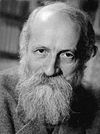
Hannah Arendt on Martin Heidegger
“[Heidegger] lies notoriously always and everywhere, and whenever he can.”

Harold Bloom Introduction on Martin Heidegger
“I desire to restore alienation to the literary sense it possessed before the abominable Martin Heidegger, Nazi philosopher of Dasein....I prefer... Freud, alienation essentially as the estrangement he termed the "Uncanny" (Unheimlich), which, as I have argued elsewhere, is our modern version of the Sublime.”
Martin Buber on Martin Heidegger
“As we have seen, Heidegger secularizes the Single One of Kierkegaard, that is, he severs the relation to the absolute for which Kierkegaard’s man becomes a Single One. And as we have seen, he does not replace this “for” with any other worldly and human “for”. He ignores the decisive fact that only the man who has become a Single One, a self, a real person, is able to have a complete relation of his life to the other self, a relation which is not beneath but above the problematic of the relations between man and man, and which comprises, withstands and overcomes all this problematic situation.”
James Ceasar on Martin Heidegger
“Heidegger’s political views are commonly deplored today on account of his early and open support of Nazism. Because of this connection, many like to suppose that his influence on subsequent political thought (as distinct from general intellectual thought) in Europe has been meager. Yet nothing could be farther from the truth. Heidegger’s major ideas were sufficiently protean that with a bit of tinkering they could easily be adopted by the left, which they were. Following the war, Heidegger’s thought, shorn of its national socialism but fortified in its anti-Americanism, was embraced by many on the left, often without attribution. In the writings of numerous thinkers like Jean-Paul Sartre, “Heideggerianism” was married to communism, and this odd coupling became the core of the intellectual left for the next generation.”
Joseph Epstein on Martin Heidegger
“What is it about the study of philosophy that tends to make brilliant minds stupid when it comes down to what are known as actual cases? Consider Martin Heidegger, Bertrand Russell, Jean-Paul Sartre, and Ludwig Wittgenstein, the four great names in twentieth-century philosophy: the first was a Nazi, the second died certain that America was responsible for all the world’s evil, the third was a Stalinist long after any justification for being so could be adduced, and the fourth lived on the borders of madness most of his life. Contemplation of the lives of philosophers is enough to drive one to the study of sociology.”





About Martin Heidegger
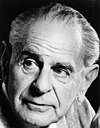
Martin Heidegger (26 September 1889 – 26 May 1976) was a German philosopher. His book Being and Time (1927) is widely regarded as one of the most important philosophy texts of the 20th Century, but Heidegger's involvement with the Nazis has led to much controversy and debate.