Link Copied!
Marie Curie Quotes (1867-1934)
Physicist, King




About Marie Curie
Maria Salomea Skłodowska-Curie (7 November 1867 – 4 July 1934), known simply as Marie Curie, was a Polish and naturalised-French physicist and chemist who conducted pioneering research on radioactivity. She was the first woman to win a Nobel Prize, the first person to win a Nobel Prize twice, and the only person to win a Nobel Prize in two scientific fields. Her husband, Pierre Curie, was a co-winner of her first Nobel Prize (the 1903 Nobel Prize in Physics), making them the first married couple to win the Nobel Prize and launching the Curie family legacy of five Nobel Prizes.
Best Marie Curie Quotes
Shortest
Earliest
Explore our curated collection of the most famous and impactful Marie Curie quotes.

“There are sadistic scientists who hurry to hunt down errors instead of establishing the truth.”

“Be less curious about people and more curious about ideas.
• Variant: In science, we must be interested in things, not in persons.”
• Variant: In science, we must be interested in things, not in persons.”
“I have no dress except the one I wear every day. If you are going to be kind enough to give me one, please let it be practical and dark so that I can put it on afterwards to go to the laboratory.”

“Life is not easy for any of us. But what of that? We must have perseverance and above all confidence in ourselves. We must believe that we are gifted for something, and that this thing, at whatever cost, must be attained.”

“You cannot hope to build a better world without improving the individuals. To that end each of us must work for his own improvement, and at the same time share a general responsibility for all humanity, our particular duty being to aid those to whom we think we can be most useful.”

“I believe international work is a heavy task, but that it is nevertheless indispensable to go through an apprenticeship in it, at the cost of many efforts and also of a real spirit of sacrifice: however imperfect it may be, the work of Geneva has a grandeur that deserves our support.”
“We must not forget that when radium was discovered no one knew that it would prove useful in hospitals. The work was one of pure science. And this is a proof that scientific work must not be considered from the point of view of the direct usefulness of it. It must be done for itself, for the beauty of science, and then there is always the chance that a scientific discovery may become like the radium a benefit for humanity.”
“Humanity needs practical men, who get the most out of their work, and, without forgetting the general good, safeguard their own interests. But humanity also needs dreamers, for whom the disinterested development of an enterprise is so captivating that it becomes impossible for them to devote their care to their own material profit. Without doubt, these dreamers do not deserve wealth, because they do not desire it. Even so, a well-organized society should assure to such workers the efficient means of accomplishing their task, in a life freed from material care and freely consecrated to research.”
“I am among those who think that science has great beauty. A scientist in his laboratory is not only a technician: he is also a child placed before natural phenomena which impress him like a fairy tale. We should not allow it to be believed that all scientific progress can be reduced to mechanisms, machines, gearings, even though such machinery also has its beauty.
Neither do I believe that the spirit of adventure runs any risk of disappearing in our world. If I see anything vital around me, it is precisely that spirit of adventure, which seems indestructible and is akin to curiosity.
• Variant translation: A scientist in his laboratory is not a mere technician: he is also a child confronting natural phenomena that impress him as though they were fairy tales.”
Neither do I believe that the spirit of adventure runs any risk of disappearing in our world. If I see anything vital around me, it is precisely that spirit of adventure, which seems indestructible and is akin to curiosity.
• Variant translation: A scientist in his laboratory is not a mere technician: he is also a child confronting natural phenomena that impress him as though they were fairy tales.”
Marie Curie Quotes by Topic
Find exactly what you are looking for by browsing this categorized list of Marie Curie quotes by topic.
Marie Curie on Fear
“Nothing in life is to be feared, it is only to be understood. Now is the time to understand more, so that we may fear less.”

Marie Curie on Chemistry
“We must not forget that when radium was discovered no one knew that it would prove useful in hospitals. The work was one of pure science. And this is a proof that scientific work must not be considered from the point of view of the direct usefulness of it. It must be done for itself, for the beauty of science, and then there is always the chance that a scientific discovery may become like the radium a benefit for humanity.”

Marie Curie on History of chemistry
“We must not forget that when radium was discovered no one knew that it would prove useful in hospitals. The work was one of pure science. And this is a proof that scientific work must not be considered from the point of view of the direct usefulness of it. It must be done for itself, for the beauty of science, and then there is always the chance that a scientific discovery may become like the radium a benefit for humanity.”

Quotes About Marie Curie
Gain deeper perspective through quotes about Marie Curie from others.
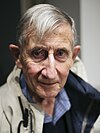
Freeman Dyson on Marie Curie
“Marie Curie was at heart a Baconian, boiling tons of crude uranium ore to demolish the dogma of the indestructibility of atoms.”
Adrienne Rich on Marie Curie
“In the 1970s we were rediscovering women whose lives had been dropped out of history or distorted, like Susan B. Anthony, Harriet Tubman, Emily Dickinson, Marie Curie, Ida B. Wells-Barnett, Hannah Senesch, Ethel Rosenberg.”

Source on Marie Curie 3 quotes
“Marie Curie made a detailed examination by the electrical method of the great majority of known substances, including the very rare elements, to see if they possessed any activity. In cases when it was possible, several compounds of the elements were examined. With the exception of thorium and phosphorus, none of the other substances possessed an activity even of the order of 1/100 of uranium.”
Misattributed Quotes
Quotes mistakenly credited to Marie Curie
“I am one of those who think like Nobel, that humanity will draw more good than evil from new discoveries.”
About Marie Curie
Maria Salomea Skłodowska-Curie (7 November 1867 – 4 July 1934), known simply as Marie Curie, was a Polish and naturalised-French physicist and chemist who conducted pioneering research on radioactivity. She was the first woman to win a Nobel Prize, the first person to win a Nobel Prize twice, and the only person to win a Nobel Prize in two scientific fields. Her husband, Pierre Curie, was a co-winner of her first Nobel Prize (the 1903 Nobel Prize in Physics), making them the first married couple to win the Nobel Prize and launching the Curie family legacy of five Nobel Prizes.