Link Copied!
Malcolm Gladwell Quotes (1963-)
Author, Writer



About Malcolm Gladwell
Malcolm Timothy Gladwell (born September 3, 1963) is an English-born Canadian journalist, bestselling author, and speaker. He has been a staff writer for The New Yorker since 1996.
Best Malcolm Gladwell Quotes
Shortest
Earliest
Explore our curated collection of the most famous and impactful Malcolm Gladwell quotes.
“It's those who lie outside ordinary experience who have the most to teach us.”

“If you make a great number of predictions, the ones that were wrong will soon be forgotten, and the ones that turn out to be true will make you famous.”
“The most influential thinker, in my life, has been the psychologist Richard Nisbett. He basically gave me my view of the world.”
“What do we tell our children? Haste makes waste. Look before you leap. Stop and think. Don't judge a book by its cover. We believe that we are always better off gathering as much information as possible and spending as much time as possible in deliberation.”


“The bottom line is that civil society simply cannot function without default to truth…I can’t converse with you, for instance, if I subject every statement that comes out of your mouth to critical scrutiny before I accept it as true. Conversation cannot proceed without default to truth.”

“The problems with framing it in terms of race is not that it is inaccurate, it absolutely is effective…but the minute you raise race, you derail the conversation and it becomes possible to dismiss this whole story as a story about a racist cop. Now he may be a racist cop, but that is not the issue, the issue is that the system with the best intentions set him up in a certain way.”

“You’re always, as a journalist, walking this fine line between faithfully representing the complexity of the thing you’re writing about and retaining your readers. The finest piece of journalism in the world is of no use if no one reads it. And getting people to read it requires compromises and sacrifices and all kinds of things. It is very hard to get it perfectly right. But I feel like over time, most good journalists, I think, do a pretty good job of balancing those things…”
““Outlier” is a scientific term to describe things or phenomena that lie outside normal experience. In the summer, in Paris, we expect most days to be somewhere between warm and very hot. But imagine if you had a day in the middle of August where the temperature fell below freezing. That day would be outlier. And while we have a very good understanding of why summer days in Paris are warm or hot, we know a good deal less about why a summer day in Paris might be freezing cold. In this book I’m interested in people who are outliers—in men and women who, for one reason or another, are so accomplished and so extraordinary and so outside of ordinary experience that they are as puzzling to the rest of us as a cold day in August.”

Malcolm Gladwell Quotes by Topic
Find exactly what you are looking for by browsing this categorized list of Malcolm Gladwell quotes by topic.
Malcolm Gladwell on Hormonal birth control 2 quotes
“Today, a growing movement of reproductive specialists has begun to campaign loudly against the standard twenty-eight-day pill regimen. The drug company Organon has come out with a new oral contraceptive, called Mircette, that cuts the seven-day placebo interval to two days. Patricia Sulak, a medical researcher at Texas A. & M. University, has shown that most women can probably stay on the Pill, straight through, for six to twelve weeks before they experience breakthrough bleeding or spot-ting. More recently, Sulak has documented precisely what the cost of the Pill’s monthly “off” week is. In a paper in the February issue of the journal ‘’Obstetrics and Gyne-cology’’, she and her colleagues documented something that will come as no surprise to most women on the Pill: during the placebo week, the number of users experiencing pelvic pain, bloating, and swelling more than triples, breast tenderness more than doubles, and headaches increase by almost fifty per cent. In other words, some women on the Pill continue to experience the kinds of side effects associated with normal menstruation. Sulak’s paper is a short, dry, academic work, of the sort intended for a narrow professional audience. But it is impossible to read it without being struck by the consequences of John Rock’s desire to please his church. In the past forty years, millions of women around the world have been given the Pill in such a way as to maximize their pain and suffering. And to what end? To pretend that the Pill was no more than a pharmaceutical version of the rhythm method?”

Malcolm Gladwell on Deliberation
“What do we tell our children? Haste makes waste. Look before you leap. Stop and think. Don't judge a book by its cover. We believe that we are always better off gathering as much information as possible and spending as much time as possible in deliberation.”
Malcolm Gladwell on Ketchup
““The biggest tomato producer in the world today?” Smith paused, for dramatic effect. “China. You don’t think of tomato being a part of Chinese cuisine, and it wasn’t ten years ago. But it is now.” Smith dipped one of my French fries into the homemade sauce. “It has that raw taste,” he said, with a look of intense concentration. “It’s fresh ketchup. You can taste the tomato.” Ketchup was, to his mind, the most nearly perfect of all the tomato’s manifestations. It was inexpensive, which meant that it had a firm lock on the mass market, and it was a condiment, not an ingredient, which meant that it could be applied at the discretion of the food eater, not the food preparer.”

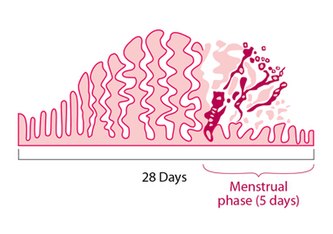
Malcolm Gladwell on Menstruation
“To Strassmann and others in the field of evolutionary medicine, this shift from a hundred to four hundred lifetime menses is enormously significant. It means that women’s bodies are being subjected to changes and stresses that they were not necessarily designed by evolution to handle. In a brilliant and provocative book, “Is Menstruation Obsolete?,” Drs. Elsimar Coutinho and Sheldon S. Segal, two of the world’s most prominent contraceptive researchers, argue that this recent move to what they call “incessant ovulation” has become a serious problem for women’s health. It doesn’t mean that women are always better off the less they menstruate. There are times—particularly in the context of certain medical conditions—when women ought to be concerned if they aren’t menstruating: In obese women, a failure to menstruate can signal an increased risk of uterine cancer. In female athletes, a failure to menstruate can signal an increased risk of osteoporosis. But for most women, Coutinho and Segal say, incessant ovulation serves no purpose except to increase the occurrence of abdominal pain, mood shifts, migraines, endometriosis, fibroids, and anemia—the last of which, they point out, is “one of the most serious health problems in the world.” Most serious of all is the greatly increased risk of some cancers. Cancer, after all, occurs because as cells divide and reproduce they sometimes make mistakes that cripple the cells’ defenses against runaway growth. That’s one of the reasons that our risk of cancer generally increases as we age: our cells have more time to make mistakes. But this also means that any change promoting cell division has the potential to increase cancer risk, and ovulation appears to be one of those changes. Whenever a woman ovulates, an egg literally bursts through the walls of her ovaries. To heal that puncture, the cells of the ovary wall have to divide and reproduce. Every time a woman gets pregnant and bears a child, her lifetime risk of ovarian cancer drops ten per cent. Why? Possibly because, between nine months of pregnancy and the suppression of ovulation associated with breast-feeding, she stops ovulating for twelve months—and saves her ovarian walls from twelve bouts of cell division. The argument is similar for endometrial cancer. When a woman is menstruating, the estrogen that flows through her uterus stimulates the growth of the uterine lining, causing a flurry of potentially dangerous cell division. Women who do not menstruate frequently spare the endometrium that risk. Ovarian and endometrial cancer are characteristically modern diseases, consequences, in part, of a century in which women have come to menstruate four hundred times in a lifetime.”
About Malcolm Gladwell
Malcolm Timothy Gladwell (born September 3, 1963) is an English-born Canadian journalist, bestselling author, and speaker. He has been a staff writer for The New Yorker since 1996.