Ch.13
“
For that which is without a beginning, a final cause need not be sought.
— Maimonides
What It Means
This is a placeholder explanation generated by the low-overhead model. It interprets "For that which is without a beginning, a final cause need not be sought." in the context of "Ch.13" to mean that wisdom is timeless.
Source: Wikiquote: "Maimonides" (Quotes, Guide for the Perplexed (c. 1190): Hebrew:מורה נבוכים, translit. Moreh Nevuchim, The Guide for the Perplexed (1904) at Wikisource, as translated by Michael Friedlander., Part III: Note: the following quotes are taken from The Guide of the Perplexed of Maimonides, Volume 3, 1885 translation by Michael Friedländer)
The 'What it means' explanation text was generated by Google Gemini Flash (accessed January 18, 2026). https://gemini.google.com/app
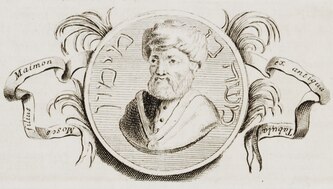
About Maimonides
Moshe ben Maimon (Hebrew: רבי משה בן מיימון; Arabic: موسى بن ميمون بن عبد الله القرطبي الإسرائيلي / Mussa bin Maimun ibn Abdallah al-Kurtubi al-Israili; 1135 or 1138 – 12 December 1204), commonly known as Moses Maimonides, was a Jewish rabbi, physician, and philosopher. He was born in Spain, but spent most of his life in Egypt. His works ranged from a commentary on the Mishnah to his Code of Law (summarising the whole of Jewish law) and the philosophical work, the Guide for the Perplexed.
View all quotes →