Link Copied!
Mahmud of Ghazni Quotes (971-1030)

About Mahmud of Ghazni
Mahmud of Ghazni (محمود غزنوی; November 971 – 30 April 1030), also known as Mahmūd-i Zābulī (محمود زابلی), was the most prominent ruler of the Ghaznavid Empire. He conquered the eastern portions of the Persian empire including, modern Afghanistan, and the northwestern Indian subcontinent (modern Pakistan) from 997 to his death in 1030. Mahmud turned the former provincial city of Ghazna into the wealthy capital of an extensive empire that covered most of today's Afghanistan, eastern Iran, and Pakistan, by looting the riches and wealth from the then Indian subcontinent.
Mahmud of Ghazni Quotes by Topic
Find exactly what you are looking for by browsing this categorized list of Mahmud of Ghazni quotes by topic.
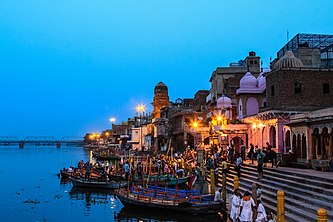
Mahmud of Ghazni on Mathura 4 quotes
“From that place [Mahawan] the Sultan advanced to Mathurah, which is a large city containing many temples' and the Sultan completely destroyed the city and burnt the temples. There was one golden idol which was broken up under the orders of the Sultan...”

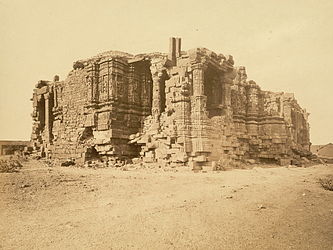
Mahmud of Ghazni on Sack of Somnath
“While rejecting the offer of the BrãhmaNas to ransom the idol of Somnath with its weight in gold, Mahmûd is supposed to have said, “I am afraid that on the Day of Judgment when all the idolaters are brought into the presence of Allãh, He would say, ‘Bring Ãdhar and Mahmûd together one was idol-maker, the other idol-seller’... The Sultãn... then ordered a fire to be lighted round it. The idol burst and 20 manns of precious stones poured out from its inside. The Sultãn said, ‘This (fire) is what Lãt (by which name ATTãr calls Somnãth) deserves; and that (the precious stones) is my guerdon from my God.””

Quotes About Mahmud of Ghazni
Gain deeper perspective through quotes about Mahmud of Ghazni from others.
Edwin Arnold on Mahmud of Ghazni
“THEY mock’d the Sovereign of Ghaznin: one saith, “Ayaz hath no great beauty, by my faith! A Rose that ’s neither rosy-red nor fragrant, The Bulbul’s love for such astonisheth!” This went to Mahmud’s ears; ill-pleas’d he sate, Bow’d on himself, reflecting; then to that Replied: “My love is for his kindly nature, Not for his stature, nor his face, nor state!””
Aurangzeb. on Mahmud of Ghazni
“Sültán Mahmüd-may God forgive his crimes-did not allow half-hearted religious men and heretics to enter his court, nay not even his kingdom, so that other people might not be misled by seeing such persons in the form of the dervish, and they themselves might have no power to mislead others.”

Ziauddin Barani on Mahmud of Ghazni
“If Mahmud . . . had gone to India once more, he would have brought Wlder his sword all the btihmans of Hind who, in that vast land, are the cause of the continuance of the laws of infidelity and of the strength of idolators, he would have cut off the heads of two hundred or three hundred thousand Hindu chiefs. He would not have returned his "Hindu-slaughtering" sword to its scabbard until the whole of Hind had accepted Islam. For Mahmiid was a Shafiite, and according to Imam Shafii the decree for Hindus is "either death or Islam"-that is to say, they should either be put to death or embrace Islam. It is not lawful to accept jizyi from Hindus as they have neither a prophet nor a revealed book.”
Al-Biruni on Mahmud of Ghazni
“Mahmud utterly ruined the prosperity of the country, and performed there wonderful exploits, by which the Hindus became like atoms of dust scattered in all directions, and like a tale of old in the mouth of the people. Their scattered remains cherish, of course, the most inveterate aversion towards all Muslims.”

Jeremy Black on Mahmud of Ghazni
“The continued dynamism of successive Islamic societies produced fresh bouts of conquest that led to new sources of slaves. Thus, on the eastern end of the Islamic world, Mahmud of Ghazni, south-west of Kabul (r.971–1030), whose empire stretched from the River Oxus to the River Indus, launched numerous raids into northern India from the 990s, annexing the Hindu state of Sahi to the east by 1021. Religious factors played a role in his attacks, which in 1022 extended far down the Ganges valley and in 1026 into Gujarat. Chroniclers claimed that his campaign of 1024 yielded over 100,000 slaves. Such numbers fed a major slave trade into Central Asia, Persia and Iraq, as well as bringing wealth to the army. The Delhi sultanate (1206–1526), established by Qutb-ud-din Aybak, who had been a military slave of the Churid Sultan Muizz u-Din, so that it is sometimes referred to as the Slave Dynasty, in turn, used Turkic slave soldiers from Central Asia as well as local Hindu soldiers. This sultanate took part in largescale slave raiding in India.... The island of Bali in the East Indies (Indonesia) was a source of Hindu slaves for the Muslim world... The campaigns in India of the Mughals and the Deccan sultanates produced many Hindu slaves, some of whom were sold on to Central Asia and Persia... In India, the Mughals enslaved rebels and those deemed rebels, for example, Hindus who rejected attempts at proselytism, as at Benares in 1632. Those captured in Mughal campaigns were often given to the troops for their use or for them to sell. Enslavement was also the fate of peasants who could not meet their taxes and rents, with men, women and children often sold to Muslim lords as a consequence. Further south in India, enslavement was used by the Deccan sultanates, notably Bijapur and Golconda, in suppressing opposition. These major Muslim states campaigned extensively into southern India and enslaved Buddhists, Hindus and others. Thus, in the 1640s, Golconda seized much of the state of Vijayahagara and Bijapur that of Mysore. However, the Mughal conquest of the Deccan sultanates of Bijapur and Golconda in the 1680s led to the end of military slavery there... India was also a source of slaves, for example with girls taken to Afghanistan and the Middle East and, from the mid-seventeenth century, forced labour moved to plantations in the Dutch-ruled coastlands of Sri Lanka.”




About Mahmud of Ghazni
Mahmud of Ghazni (محمود غزنوی; November 971 – 30 April 1030), also known as Mahmūd-i Zābulī (محمود زابلی), was the most prominent ruler of the Ghaznavid Empire. He conquered the eastern portions of the Persian empire including, modern Afghanistan, and the northwestern Indian subcontinent (modern Pakistan) from 997 to his death in 1030. Mahmud turned the former provincial city of Ghazna into the wealthy capital of an extensive empire that covered most of today's Afghanistan, eastern Iran, and Pakistan, by looting the riches and wealth from the then Indian subcontinent.