• quoted in VEDIC ROOTS OF EARLY TAMIL CULTURE Michel Danino Written in 2001 and published in Saundaryashri: Studies of Indian History, Archaeology, Literature and Philosophy (Festschrift to Professor Anantha Adiga Sundara), P. Chenna Reddy, (ed.), Sharada Publishing House, New Delhi, 2009, pp. 19–30.
The Aryan-Dravidian or Aryan-Tamil dichotomy envisaged by some scholars may have to be given up since we are unable to come across anything which could be designated as purely Aryan or purely Dravidian in the character of South India of the Sangam Age. In view of this, the Sangam culture has to be looked upon as expressing in a local idiom all the essential features of classical “Hindu” culture.
What It Means
This is a placeholder explanation generated by the low-overhead model. It interprets "The Aryan-Dravidian or Aryan-Tamil dichotomy envisaged by some scholars may have to be given up since we are unable to come across anything which could be designated as purely Aryan or purely Dravidian in the character of South India of the Sangam Age. In view of this, the Sangam culture has to be looked upon as expressing in a local idiom all the essential features of classical “Hindu” culture." in the context of "M. G. S. Narayanan, “The Vedic-Puranic-Shastraic Element in Tamil Sangam Society and Culture,” in Essays in Indian Art, Religion and Society,
• quoted in VEDIC ROOTS OF EARLY TAMIL CULTURE Michel Danino Written in 2001 and published in Saundaryashri: Studies of Indian History, Archaeology, Literature and Philosophy (Festschrift to Professor Anantha Adiga Sundara), P. Chenna Reddy, (ed.), Sharada Publishing House, New Delhi, 2009, pp. 19–30." to mean that wisdom is timeless.
Tags
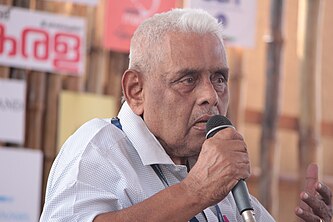
About M. G. S. Narayanan