Kevin D. Williamson on Lyndon B. Johnson
← Back to Lyndon B. Johnson Profile
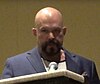
“Johnson ran as the peace candidate in 1964, promising to get us out of Vietnam or at least to stop any escalation of American involvement there. The opposite happened. Johnson promised that Medicare would be efficiently run and financially self-sustaining. The opposite happened. Johnson said that his Great Society programs would usher in a new kind of America, one in which government-directed investments in anti-poverty campaigns and educational projects would not only lift up the poor but would, by helping them to maximize their own economic value, lift the entire country, too. The opposite, or something close to it, happened there, too. Johnson, who in Congress had opposed not only a great deal of civil-rights legislation but even anti-lynching bills, would in 1964 reinvent himself as a civil-rights champion. It is pleasant to think that, in whatever afterlife he finds himself in, he is both amused and pleased to see himself politically reincarnated as a black man.”
Unsourced — Primary work/page citation not yet verified in the QuotesCosmos archive. Per our Unnamed Sources & Verification Policy, quotes without confirmed primary editions are explicitly marked Unsourced while under editorial review.
“The key difference is that while Johnson may have been a rotten S.O.B., he knew what he was doing, more or less. He didn’t fumble into Vietnam in 1965 — he lied about his intentions in 1964. He was sufficiently intelligent, and sufficiently a man of the Senate, to understand that the particulars of legislative architecture were going to be the deciding factor in the success or the failure of his programs. He knew that they would have to be revisited over the years. He was a deeply weird man — and a monster — but he was also a resident of the real world. Barack Obama? Less so.”
Unsourced — Primary work/page citation not yet verified in the QuotesCosmos archive. Per our Unnamed Sources & Verification Policy, quotes without confirmed primary editions are explicitly marked Unsourced while under editorial review.