Tell me, O Goddess of song, of the clever man, ...
• Odissia I, 1
• Odissia I, 1
“
Virum mihi, Camena, insece versutum, ...
— Livius Andronicus
What It Means
This is a placeholder explanation generated by the low-overhead model. It interprets "Virum mihi, Camena, insece versutum, ..." in the context of "Tell me, O Goddess of song, of the clever man, ...
• Odissia I, 1" to mean that wisdom is timeless.
Source: Wikiquote: "Livius Andronicus" (Quotes: E. H. Warmington, Remains of Old Latin, Vol. 2, LCL 314 (1936), pp. 1–45
Norbert Guterman, A Book of Latin Quotations (1966), pp. 2–5)
The 'What it means' explanation text was generated by Google Gemini Flash (accessed January 19, 2026). https://gemini.google.com/app
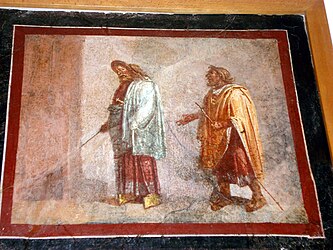
About Livius Andronicus
Lucius Livius Andronicus (Greek: Λούκιος Λίβιος Ανδρόνικος; c. 284 – c. 204 BC) was a Greco-Roman dramatist and epic poet of the Old Latin period of the Roman Republic.
About Livius Andronicus
Lucius Livius Andronicus (Greek: Λούκιος Λίβιος Ανδρόνικος; c. 284 – c. 204 BC) was a Greco-Roman dramatist and epic poet of the Old Latin period of the Roman Republic.
View all quotes →