Superior forms of thought have a fatal tendency of later becoming revealed law: and all philosophy ends, in its last stages, by becoming religion.
• "Israelismo"; "Israelism" p. 50.
• "Israelismo"; "Israelism" p. 50.
“
As formas superiores do pensamento tem uma tendência fatal a tornar-se na futura lei revelada: e toda a filosofia termina, nos seus velhos dias, por ser religião.
— José Maria Eça de Queiroz
What It Means
This is a placeholder explanation generated by the low-overhead model. It interprets "As formas superiores do pensamento tem uma tendência fatal a tornar-se na futura lei revelada: e toda a filosofia termina, nos seus velhos dias, por ser religião." in the context of "Superior forms of thought have a fatal tendency of later becoming revealed law: and all philosophy ends, in its last stages, by becoming religion.
• "Israelismo"; "Israelism" p. 50." to mean that wisdom is timeless.
Source: Wikiquote: "José Maria Eça de Queiroz" (Quotes, Cartas de Inglaterra (1879–82): English quotations and pagination are taken from Eça de Queiroz (trans. Ann Stevens) Letters from England (1970).)
The 'What it means' explanation text was generated by Google Gemini Flash (accessed January 18, 2026). https://gemini.google.com/app
Tags
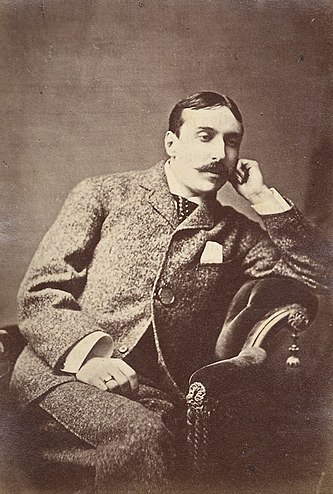
About José Maria Eça de Queiroz
José Maria de Eça de Queiroz (or Eça de Queirós) (November 25, 1845 – August 16, 1900) was a Portuguese novelist, short-story writer, travel-writer, critic and diplomat. His novels, which are often compared to those of Balzac, Flaubert and Zola, satirize the Portuguese bourgeoisie and priesthood.
View all quotes →