John Kerry on Vietnam War
← Back to John Kerry Profile
“The war the soldiers tried to stop.”
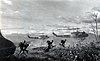
“I would like to talk to you a little bit about what the result is of -- of the feelings these men carry with them after coming back from Vietnam. The country doesn’t know it yet but it’s created a monster, a monster in the form of millions of men who have been taught to deal and to trade in violence, and who are given the chance to die for the biggest nothing in history; men who have returned with a sense of anger and a sense of betrayal which no one has yet grasped. As a veteran, and one who feels this anger, I’d like to talk about it. We’re angry because we feel we have been used in the worst fashion by the Administration of this country.”
“In 1970 at West Point, Vice President Agnew said: "Some glamorize the criminal misfits of society while our best men die in Asian rice paddies to preserve the freedoms which those misfits abuse." And this was used as a rallying point for our effort in Vietnam. But for us, his boys in Asia whom the country was supposed to support, his statement is a terrible distortion from which we can only draw a very deep sense of revulsion; and hence the anger of some of the men who are here in Washington today. It’s a distortion because we in no way considered ourselves the best men of this country; because those he calls misfits were standing up for us in a way that nobody else in this country dared to; because so many who have died would have returned to this country to join the misfits in their efforts to ask for an immediate withdrawal from South Vietnam; because so many of those best men have returned as quadriplegics and amputees, and they lie forgotten in Veterans Administration hospitals in this country which fly the flag which so many have chosen as their own personal symbol. And we cannot consider ourselves America’s best men when we were ashamed of and hated what we were called to do in Southeast Asia.”
“In our opinion, and from our experience, there is nothing in South Vietnam, nothing which could happen that realistically threatens the United States of America. And to attempt to justify the loss of one American life in Vietnam, Cambodia, or Laos by linking such loss to the preservation of freedom, which those misfits supposedly abuse, is to us the height of criminal hypocrisy, and it’s that kind of hypocrisy which we feel has torn this country apart. We are probably much more angry than that and I don’t want to go into the foreign policy aspects because I’m outclassed here. I know that all of you have talked about every possible -- every possible alternative to getting out of Vietnam. We understand that. We know that you’ve considered the seriousness of the aspects to the utmost level and I’m not going to try and deal on that. But I want to relate to you the feeling which many of the men who’ve returned to this country express because we are probably angriest about all that we were told about Vietnam and about the mystical war against communism. We found that not only was it a civil war, an effort by a people who had for years been seeking their liberation from any colonial influence whatsoever, but also we found that the Vietnamese, whom we had enthusiastically molded after our own image, were hard put to take up the fight against the threat we were supposedly saving them from. We found that most people didn’t even know the difference between communism and democracy. They only wanted to work in rice paddies without helicopters strafing them and bombs with napalm burning their villages and tearing their country apart. They wanted everything to do with the war, particularly with this foreign presence of the United States of America, to leave them alone in peace; and they practiced the art of survival by siding with whichever military force was present at a particular time, be it Vietcong, North Vietnamese, or American.”
“We found also that all too often American men were dying in those rice paddies for want of support from their allies. We saw first hand how monies from American taxes was used for a corrupt dictatorial regime. We saw that many people in this country had a one-sided idea of who was kept free by our flag, as blacks provided the highest percentage of casualties. We saw Vietnam ravaged equally by American bombs as well as by search and destroy missions, as well as by Vietcong terrorism; and yet we listened while this country tried to blame all of the havoc on the Vietcong. We rationalized destroying villages in order to save them. We saw America lose her sense of morality as she accepted very coolly a My Lai and refused to give up the image of American soldiers that hand out chocolate bars and chewing gum. We learned the meaning of "free-fire zones," "shoot anything that moves," and we watched while America placed a cheapness on the lives of Orientals. We watched the United States' falsification of body counts, in fact the glorification of body counts. We listened while month after month we were told the back of the enemy was about to break. We fought using weapons against “oriental human beings,” with quotation marks around that. We fought using weapons against those people which I do not believe this country would dream of using were we fighting in a European theater -- or let us say a non-third-world people theater. And so we watched while men charged up hills because a general said "That hill has to be taken." And after losing one platoon or two platoons they marched away to leave the hill for the reoccupation of the North Vietnamese; because -- because we watched pride allow the most unimportant of battles to be blown into extravaganzas; because we couldn’t lose, and we couldn’t retreat, and because it didn’t matter how many American bodies were lost to prove that point. And so there were Hamburger Hills and Khe Sanhs and Hill 881's and Fire Base 6's, and so many others. And now we’re told that the men who fought there must watch quietly while American lives are lost so that we can exercise the incredible arrogance of Vietnamizing the Vietnamese.”