Link Copied!
John Cage Quotes (1912-1992)
Composer


About John Cage
John Cage (September 5, 1912 – August 12, 1992) was an American composer. A pioneer of chance music, electronic music and non-standard use of musical instruments. Cage was one of the leading figures of the post-war avantgarde and, in the opinion of many, the most influential American composer of the 20th century.
Best John Cage Quotes
Shortest
Earliest
Explore our curated collection of the most famous and impactful John Cage quotes.
“A finished work is exactly that, requires resurrection.”

“As far as consistency of thought goes, I prefer inconsistency.”

“Value judgments are destructive to our proper business, which is curiosity and awareness.”
“I can't understand why people are frightened of new ideas. I'm frightened of the old ones.”

“What I'm proposing, to myself and other people, is what I often call the tourist attitude - that you act as though you've never been there before. So that you're not supposed to know anything about it. If you really get down to brass tacks, we have never been anywhere before.”
“I believe that the use of noise to make music will continue and increase until we reach a music produced through the use of electrical instruments which will make available for musical purposes any and all sounds that can be heard. Photoelectric, film and mechanical mediums for the synthetic production of music will be explored.”

“I certainly had no feeling for harmony, and Schoenberg thought that that would make it impossible for me to write music. He said, 'You'll come to a wall you won't be able to get through.' I said, 'Well then, I'll beat my head against that wall.' I quite literally began hitting things, and developed a music of percussion that involved noises.”
“I once asked Aragon, the historian, how history was written. He said, 'You have to invent it.' When I wish as now to tell of critical incidents, persons, and events that have influenced my life and work, the true answer is all of the incidents were critical, all of the people influenced me, everything that happened and that is still happening influences me.”
“A sound does not view itself as thought, as ought, as needing another sound for its elucidation, as etc.; it has not time for any consideration--it is occupied with the performance of its characteristics: before it has died away it must have made perfectly exact its frequency, its loudness, its length, its overtone structure, the precise morphology of these and of itself.”
“When I hear what we call music, it seems to me that someone is talking. And talking about his feelings, or about his ideas of relationships. But when I hear traffic, the sound of traffic — here on Sixth Avenue, for instance — I don't have the feeling that anyone is talking. I have the feeling that sound is acting. And I love the activity of sound.. .I don't need sound to talk to me.”
“They say, 'you mean it's just sounds?' thinking that for something to just be a sound is to be useless, whereas I love sounds just as they are, and I have no need for them to be anything more than what they are. I don't want them to be psychological. I don't want a sound to pretend that it's a bucket or that it's president or that it's in love with another sound. I just want it to be a sound.”
“...WHEREAS, IN THE PAST, THE POINT OF DISAGREEMENT HAS BEEN BETWEEN DISSONANCE AND CONSONANCE, IT WILL BE, IN THE IMMEDIATE FUTURE, BETWEEN NOISE AND SO-CALLED MUSICAL SOUNDS.
THE PRESENT METHODS OF WRITING MUSIC, PRINCIPALLY THOSE WHICH EMPLOY HARMONY AND ITS REFERENCE TO PARTICULAR STEPS IN THE FIELD OF SOUND, WILL BE INADEQUATE FOR THE COMPOSER, WHO WILL BE FACED WITH THE ENTIRE FIELD OF SOUND.”
THE PRESENT METHODS OF WRITING MUSIC, PRINCIPALLY THOSE WHICH EMPLOY HARMONY AND ITS REFERENCE TO PARTICULAR STEPS IN THE FIELD OF SOUND, WILL BE INADEQUATE FOR THE COMPOSER, WHO WILL BE FACED WITH THE ENTIRE FIELD OF SOUND.”
“The composer (organizer of sound) will be faced not only with the entire field of sound but also with the entire field of time. The 'frame' or fraction of a second, following established film technique, will probably be the basic unit in the measurement of time. No rhythm will be beyond the composer's reach.
NEW METHODS WILL BE DISCOVERED, BEARING A DEFINITE RELATION TO SCHOENBERG'S TWELVE-TONE SYSTEM”
NEW METHODS WILL BE DISCOVERED, BEARING A DEFINITE RELATION TO SCHOENBERG'S TWELVE-TONE SYSTEM”
“There is one term of the problem which you are not taking into account: precisely, the world. The real. You say: the real, the world as it is. But it is not, it becomes! It moves, it changes! It doesn’t wait for us to change.. .It is more mobile than you can imagine. You are getting closer to this reality when you say as it 'presents itself'; that means that it is not there, existing as an object. The world, the real is not an object. It is a process.”

“I imagine that as contemporary music goes on changing in the way that I'm changing it what will be done is to more and more completely liberate sounds from abstract ideas about them and more and more exactly to let them be physically uniquely themselves. This means for me: knowing more and more not what I think a sound is but what it actually is in all of its acoustical details and then letting this sound exist, itself, changing in a changing sonorous environment.”
“We are living in a period in which many people have changed their mind about what the use of music is or could be for them. Something that doesn't speak or talk like a human being, that doesn't know its definition in the dictionary or its theory in the schools, that expresses itself simply by the fact of its vibrations. People paying attention to vibratory activity, not in reaction to a fixed ideal performance, but each time attentively to how it happens to be this time, not necessarily two times the same. A music that transports the listener to the moment where he is.”
“David Tudor and I went to Hilversum in Holland to make a recording for the Dutch radio. We arrived at the studio early and there was some delay. To pass the time, we chatted with the engineer who was to work with us. He asked me what kind of music he was about to record. Since he was a Dutchman I said, 'It may remind you of the work of Mondrian.' When the session was finished and the three of us were leaving the studio, I asked the engineer what he thought of the music we had played. He said, 'It reminded me of the work of Mondrian.'”
“Wherever we are, what we hear is mostly noise. When we ignore it, it disturbs us. When we listen to it, we find it fascinating. The sound of a truck at fifty miles per hour. Static between the stations. Rain. We want to capture and control these sounds, to use them not as sound effects but as musical instruments. Every film studio has a library of "sound effects" recorded on film. With a film phonograph it is now possible to control the amplitude and frequency of any one of these sounds and to give to it rhythms within or beyond the reach of the imagination. Given four film phonographs, we can compose and perform a quartet for explosive motor, wind, heartbeat, and landslide.”
“At Black Mountain College in 1952, I organized an event that involved the paintings of Bob Rauschenberg, the dancing of Merce Cunningham, films, slides, phonograph records, radios, the poetries of Charles Olson and M. C. Richards recited from the tops of ladders, and the pianism of David Tudor, together with my 'Juilliard lecture', which ends: 'A piece of string, a sunset, each acts.' The audience was seated in the center of all this activity. Later that summer, vacationing in New England, I visited America's first synagogue, to discover that the congregation was there seated precisely the way I had arranged the audience at Black Mountain.”

“So it was that I gave about 1949 my 'Lecture on Nothing' at the Artists' Club on Eighth Street in New York City (started by Robert Motherwell), which predated the popular one associated with Philip Pavia, Bill de Kooning, et al. ). This 'Lecture on Nothing' was written in the same rhythmic structure I employed at the time in my musical compositions (Sonatas and Interludes, Three Dances, etc.) . One of the structural divisions was the repetition, some fourteen times, of a single page in which occurred the refrain, 'If anyone is sleepy let him go to sleep.' Jeanne Reynal, I remember, stood up part way through, screamed, and then said, while I continued speaking, 'John, I dearly love you, but I can't bear another minute.' She then walked out. Later, during the question period, I gave one of six previously prepared answers regardless of the question asked. This was a reflection of my engagement in Zen.”

“Critics frequently cry 'Dada' after attending one of my concerts or hearing one of my lectures. Others bemoan my interest in Zen. One of the liveliest lectures I ever heard was given by Nancy Wilson Ross at the Cornish School in Seattle. It was called Zen Buddhism and Dada. It is possible to make a connection between the two, but neither Dada nor Zen is a fixed tangible. They change; and in quite different ways in different places and times, they invigorate action. What was Dada in the 1920's is now, with the exception of the work of Marcel Duchamp, just art. What I do, I do not wish blamed on Zen, though without my engagement with Zen.. .I doubt whether I would have done what I have done. . .I often point out that Dada nowadays has in it a space, an emptiness, that it formerly lacked. What nowadays, America mid-twentieth century, is Zen?”

John Cage Quotes by Topic
Find exactly what you are looking for by browsing this categorized list of John Cage quotes by topic.
John Cage on Sound 2 quotes
“Which is more musical, a truck passing by a factory or a truck passing by a music school?”
John Cage on Poetry
“Our poetry now is the realization that we possess nothing. Anything therefore is a delight (since we do not possess it) and thus need not fear its loss.”

What John Cage Said About Others
Discover personal opinions John Cage shared regarding contemporaries.
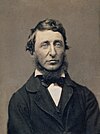
John Cage on Henry David Thoreau

Quotes About John Cage
Gain deeper perspective through quotes about John Cage from others.
Quote by Philip Guston on John Cage
“John Cage ...once told me, ‘When you start working everybody is in your studio – the past, your friends, enemies, the art world, and above all, your own ideas – all are there. But as you continue painting, they start leaving, one by one, and you are left completely alone. Then, if you are lucky, even you leave.”
Jasper Johns on John Cage 4 quotes
“I'm especially interested in the music of John Cage.. ..I would like to do some experimenting with the relationship between his freeform sound and [my] free-form art.”

Michael Steinberg on John Cage
“The rise of music that is totally without social commitment also increases the separation between composer and public, and represents still another form of departure from tradition. The cynicism with which this particular departure seems to have been made is perfectly symbolized in John Cage's account of a public lecture he had given: "Later, during the question period, I gave one of six previously prepared answers regardless of the question asked. This was a reflection of my engagement in Zen." While Mr. Cage's famous silent piece [i.e. 4′33″], or his Landscapes for a dozen radio receivers may be of little interest as music, they are of enormous importance historically as representing the complete abdication of the artist's power.”
Earle Brown on John Cage
“Cage's Music of Changes was a further indication that the arts in general were beginning to consciously deal with the 'given' material and, to varying degrees, liberating them from the inherited, functional concepts of control.”

Merce Cunningham on John Cage 2 quotes
“John Cage and I became interested in the use of chance in the 50's. I think one of the very primary things that happened then was the publication of the I Ching, the Chinese book of changes, from which you can cast your fortune: the hexagrams.”

About John Cage
John Cage (September 5, 1912 – August 12, 1992) was an American composer. A pioneer of chance music, electronic music and non-standard use of musical instruments. Cage was one of the leading figures of the post-war avantgarde and, in the opinion of many, the most influential American composer of the 20th century.