“After the reduction of Gualiar, the King marched his army towards Malwa, reduced the fort of Bhilsa, and took the city of Oojein, where he destroyed a magnificent temple dedicated to Mahakaly, formed upon the same plan with that of Somnat. This temple is said to have occupied three hundred years in building, and was surrounded by a wall one hundred cubits in height. The image of Vikramaditya, who had been formerly prince of this country, and so renowned, that the Hindoos have taken an era from his death, as also the image of Mahakaly, both of stone, with many other figures of brass, were found in the temple. These images the King caused to be conveyed to Dehly, and broken at the door of the great mosque.”
What It Means
This is a placeholder explanation generated by the low-overhead model. It interprets "“After the reduction of Gualiar, the King marched his army towards Malwa, reduced the fort of Bhilsa, and took the city of Oojein, where he destroyed a magnificent temple dedicated to Mahakaly, formed upon the same plan with that of Somnat. This temple is said to have occupied three hundred years in building, and was surrounded by a wall one hundred cubits in height. The image of Vikramaditya, who had been formerly prince of this country, and so renowned, that the Hindoos have taken an era from his death, as also the image of Mahakaly, both of stone, with many other figures of brass, were found in the temple. These images the King caused to be conveyed to Dehly, and broken at the door of the great mosque.”" in the context of "Tãrîkh-i-Firishta by Firishta. Sultãn Shamsu’d-Dîn Iltutmish (AD 1210-1236) Ujjain (Madhya Pradesh)" to mean that wisdom is timeless.
Tags
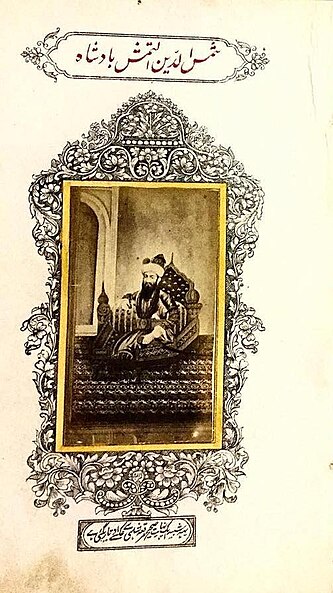
About Iltutmish