Minhaju-s Siraj Elliot and Dowson, vol. II, quoted from Jain, M. (editor) (2011). The India they saw: Foreign accounts. New Delhi: Ocean Books. Volume II Chapter 12
“
After he had reached the capital he sent, in A.H. 632 (1234 A.D.), the army of Islam towards Malwa and took the fort and city of Bhilsa. There was a temple there which was three hundred years in building. It was about one hundred and five gaz high. He demolished it. From thence he proceeded to Ujjain, where there was a temple of Maha-kal, which he destroyed.
— Iltutmish
What It Means
This is a placeholder explanation generated by the low-overhead model. It interprets "After he had reached the capital he sent, in A.H. 632 (1234 A.D.), the army of Islam towards Malwa and took the fort and city of Bhilsa. There was a temple there which was three hundred years in building. It was about one hundred and five gaz high. He demolished it. From thence he proceeded to Ujjain, where there was a temple of Maha-kal, which he destroyed." in the context of "Minhaju-s Siraj Elliot and Dowson, vol. II, quoted from Jain, M. (editor) (2011). The India they saw: Foreign accounts. New Delhi: Ocean Books. Volume II Chapter 12" to mean that wisdom is timeless.

Source: Wikiquote: "Iltutmish" (Quotes, About the tomb)
The 'What it means' explanation text was generated by Google Gemini Flash (accessed January 18, 2026). https://gemini.google.com/app
Tags
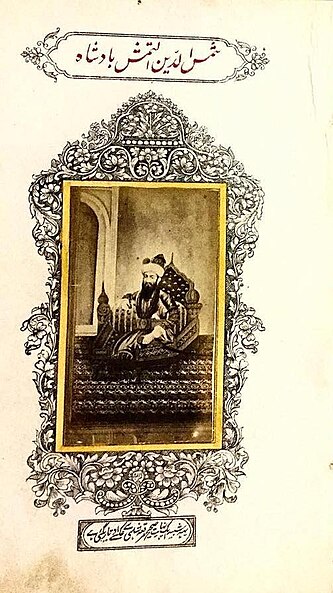
About Iltutmish
Shams ud-Din Iltutmish (r. 1211 – 1236) was the third of the Mamluk kings who ruled the former Ghurid territories in northern India. He was the first Muslim sovereign to rule from Delhi, and is thus considered the effective founder of the Delhi Sultanate.
About Iltutmish
Shams ud-Din Iltutmish (r. 1211 – 1236) was the third of the Mamluk kings who ruled the former Ghurid territories in northern India. He was the first Muslim sovereign to rule from Delhi, and is thus considered the effective founder of the Delhi Sultanate.
View all quotes →