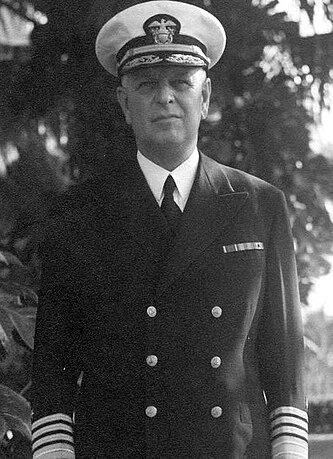
The gravest charge against Admiral Kimmel and General Short is that they virtually ignored the "war warning" dispatch of 17 November from Washington. Admiral Kimmel, as we have seen, did send air reinforcement promptly to Wake and Midway Islands. He had already (with Admiral Bloch's cooperation) set up the surface and air patrol off the mouth of Pearl Harbor which encountered the midget submarines. Thus, the charge whittles down to this: that he did not repeat this warning and beef-up air patrol after 17 November. He thought that he had done everything that could reasonably be expected, in view of the intelligence received. Nevertheless, an "unwarranted feeling of immunity from attack" prevailed in Oahu at the crucial moment, as Admiral King observed; and it is not unfair to hold Kimmel and Short responsible.
What It Means
This is a placeholder explanation generated by the low-overhead model. It interprets "The gravest charge against Admiral Kimmel and General Short is that they virtually ignored the "war warning" dispatch of 17 November from Washington. Admiral Kimmel, as we have seen, did send air reinforcement promptly to Wake and Midway Islands. He had already (with Admiral Bloch's cooperation) set up the surface and air patrol off the mouth of Pearl Harbor which encountered the midget submarines. Thus, the charge whittles down to this: that he did not repeat this warning and beef-up air patrol after 17 November. He thought that he had done everything that could reasonably be expected, in view of the intelligence received. Nevertheless, an "unwarranted feeling of immunity from attack" prevailed in Oahu at the crucial moment, as Admiral King observed; and it is not unfair to hold Kimmel and Short responsible." in the context of "Samuel Eliot Morison, The Two-Ocean War: A Short History of the United States Navy in the Second World War (1963). Boston: Little, Brown & Company, p. 74" to mean that wisdom is timeless.

Tags
About Husband E. Kimmel