Link Copied!
Hippocrates Quotes (-460--377)


About Hippocrates
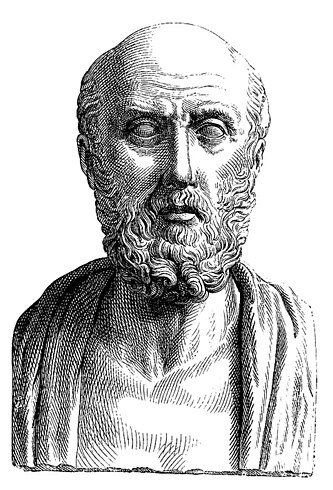
Hippocrates (Ἱπποκράτης) of Kos (c. 460 BC - 377 BC) was an ancient Greek physician who is referred to as the "father of medicine".
Best Hippocrates Quotes
Shortest
Earliest
Explore our curated collection of the most famous and impactful Hippocrates quotes.
“Everything in excess is opposed to nature.”
“Sleep and watchfulness, both of them, when immoderate, constitute disease.”

“For extreme diseases, extreme methods of cure, as to restriction, are most suitable.”
“Keep a watch also on the faults of the patients, which often make them lie about the taking of things prescribed. (XIV, Translated by W. H. S. Jones. LCL 148, Pages 296-297)”
“[A]ll the causes of the sufferance refer themselves to this rule, that the strongest things most especially and decidedly hurt man, whether in health or in disease.”
“While I continue to keep this Oath unviolated, may it be granted to me to enjoy life and the practice of the art, respected by all men, in all times! But should I trespass and violate this Oath, may the reverse be my lot!”

“Into whatever houses I enter, I will go into them for the benefit of the sick, and will abstain from every voluntary act of mischief and corruption; and, further from the seduction of females or males, of freemen and slaves.”

“Whatever, in connection with my professional practice, or not in connection with it, I see or hear, in the life of men, which ought not to be spoken of abroad, I will not divulge, as reckoning that all such should be kept secret.”

“I will follow that system of regimen which, according to my ability and judgment, I consider for the benefit of my patients, and abstain from whatever is deleterious and mischievous. I will give no deadly medicine to any one if asked, nor suggest any such counsel; and in like manner I will not give to a woman a pessary to produce abortion.”
“Conclusions which are merely verbal cannot bear fruit, only those do which are based on demonstrated fact. For affirmation and talk are deceptive and treacherous. Wherefore one must hold fast to facts in generalizations also, and occupy oneself with facts persistently, if one is to acquire that ready and infallible habit which we call "the art of medicine."”
“Those diseases which medicines do not cure, iron cures; those which iron cannot cure, fire cures; and those which fire cannot cure, are to be reckoned wholly incurable.
• Variant translation: What cannot be cured by medicaments is cured by the knife, what the knife cannot cure is cured with the searing iron, and whatever this cannot cure must be considered incurable.”
• Variant translation: What cannot be cured by medicaments is cured by the knife, what the knife cannot cure is cured with the searing iron, and whatever this cannot cure must be considered incurable.”
“[W]e ought not to reject the ancient Art, as if it were not, and had not been properly founded, because it did not attain accuracy in all things, but rather, since it is capable of reaching to the greatest exactitude by reasoning, to receive it and admire its discoveries, made from a state of great ignorance, and as having been well and properly made, and not from chance.”
“Time is that wherein there is opportunity, and opportunity is that wherein there is no great time. Healing is a matter of time, but it is sometimes also a matter of opportunity. However, knowing this, one must attend to medical practice not primarily to plausible theories, but to experience combined with reason. For a theory is a composite memory of things apprehended with sense perception.”

“All these require arrangements, depending on the materials, so that you can have the tools, the equipment, the metallics and the rest of it already prepared. Because the shortage of these things creates embarrassment and causes harm. For your trips, you will carry a simple and portable kit. The most appropriate is the one which follows a methodic layout, because the physician cannot keep everything in mind.”

“[N]o less mischief happens to a man from unseasonable depletion than from repletion... to the bulk of mankind it is of little consequence which of these rules they observe... whether they make it a practice to take one or two meals [per day]. But there are certain persons who cannot readily change their diet with impunity; and if they make any alteration in it for one day, or even for a part of a day, are greatly injured thereby.”
“A natural talent is required; for, when Nature opposes, everything else is in vain; but when Nature leads the way to what is most excellent, instruction in the art takes place, which the student must try to appropriate to himself by reflection, becoming an early pupil in a place well adapted for instruction. He must also bring to the task a love of labor and perseverance, so that the instruction taking root may bring forth proper and abundant fruits.”

“I would give great praise to the physician whose mistakes are small, for perfect accuracy is seldom to be seen, since many physicians seem to me to be in the same plight as bad pilots, who, if they commit mistakes while conducting the ship in a calm do not expose themselves, but when a storm and violent hurricane overtake them, they then, from their ignorance and mistakes, are discovered to be what they are, by all men, namely, in losing their ship.”
“ἀσκεῖν περὶ τὰ νοσήματα δύο, ὠφελεῖν ἢ μὴ βλάπτειν
• As to diseases, make a habit of two things — to help, or at least, to do no harm.
• Variant translation: The physician must be able to tell the antecedents, know the present, and foretell the future — must mediate these things, and have two special objects in view with regard to disease, namely, to do good or to do no harm.”
• As to diseases, make a habit of two things — to help, or at least, to do no harm.
• Variant translation: The physician must be able to tell the antecedents, know the present, and foretell the future — must mediate these things, and have two special objects in view with regard to disease, namely, to do good or to do no harm.”

“Related to this is the surgery of wounds arising in military service, which concerns the extraction of missiles. In city practice experience of these is but little, for very rarely even in a whole lifetime are there civil or military combats. In fact such things occur most frequently and continuously in armies abroad. Thus, the person intending to practice this kind of surgery must serve in the army, and accompany it on expeditions abroad; for in this way he would become experienced in this practice.”

“Medicine is of all the Arts the most noble; but, owing to the ignorance of those who practice it, and of those who, inconsiderately, form a judgment of them, it is at present far behind all the other arts. Their mistake appears to me to arise principally from this, that in the cities there is no punishment connected with the practice of medicine (and with it alone) except disgrace, and that does not hurt those who are familiar with it. Such persons are like the figures which are introduced in tragedies, for as they have the shape, and dress, and personal appearance of an actor, but are not actors, so also physicians are many in title but very few in reality.”

“Ὁ βίος βραχὺς, ἡ δὲ τέχνη μακρὴ, ὁ δὲ καιρὸς ὀξὺς, ἡ δὲ πεῖρα σφαλερὴ, ἡ δὲ κρίσις χαλεπή. Δεῖ δὲ οὐ μόνον ἑωυτὸν παρέχειν τὰ δέοντα ποιεῦντα, ἀλλὰ καὶ τὸν νοσέοντα, καὶ τοὺς παρεόντας, καὶ τὰ ἔξωθεν.
• Ars longa, vita brevis, occasio praeceps, experimentum periculosum, iudicium difficile. Nec vero solum seipsum praestare oportet oportuna facientem: sed et assidentes, et exteriora.
• 1:1, Variant translation: Art is long; life is short; opportunity is fleeting; judgement is difficult; experience is deceitful. Compare: "The lyfe so short, the craft so long to lerne", Geoffrey Chaucer, The Assembly of Fowles, line 1.”
• Ars longa, vita brevis, occasio praeceps, experimentum periculosum, iudicium difficile. Nec vero solum seipsum praestare oportet oportuna facientem: sed et assidentes, et exteriora.
• 1:1, Variant translation: Art is long; life is short; opportunity is fleeting; judgement is difficult; experience is deceitful. Compare: "The lyfe so short, the craft so long to lerne", Geoffrey Chaucer, The Assembly of Fowles, line 1.”
“[O]f articles of food, those which are unsuitable and hurtful to man when administered, every one is either bitter... or saltish or acid, or something else intense and strong, and therefore we are disordered by them... But all those things of which a man eats and drinks are devoid of any such intense and well-marked quality... which man is accustomed to use for food, with the exception of condiments and confectionaries, which are made to gratify the palate and for luxury. And from those things, when received into the body abundantly, there is no disorder nor dissolution of the powers belonging to the body; but strength, growth, and nourishment... for no other reason than because they are well mixed, have no thing in them of an immoderate character, nor anything strong, but the whole forms... [of] simple and not strong substance.”

“Certain sophists and physicians say that it is not possible for any one to know medicine who does not know what man is, and that who ever would cure men properly, must learn this in the first place. But this saying rather appertains to philosophy, as Empedocles and certain others have described what man in his origin is, and how he first was made and constructed. But I think whatever such has been said or written by sophist or physician concerning nature has less connexion with the art of medicine than with the art of painting. And I think that one cannot know anything certain respecting nature from any other quarter than from medicine... Wherefore it appears to me necessary to every physician to be skilled in nature, and strive to know... what man is in relation to the articles of food and drink, and to his other occupations, and what are the effects of each of them to every one.”
“I swear by Apollo the physician, and Aesculapius, and Health, and All-heal, and all the gods and goddesses, that, according to my ability and judgment, I will keep this Oath and this stipulation — to reckon him who taught me this Art equally dear to me as my parents, to share my substance with him, and relieve his necessities if required; to look upon his offspring in the same footing as my own brothers, and to teach them this art, if they shall wish to learn it, without fee or stipulation; and that by precept, lecture, and every other mode of instruction, I will impart a knowledge of the Art to my own sons, and those of my teachers, and to disciples bound by a stipulation and oath according to the law of medicine, but to none others.
• Variant translation: I swear by Apollo Physician and Asclepius and Hygieia and Panaceia and all the gods and goddesses, making them my witnesses, that I will fulfil according to my ability and judgment this oath and this covenant ...”
• Variant translation: I swear by Apollo Physician and Asclepius and Hygieia and Panaceia and all the gods and goddesses, making them my witnesses, that I will fulfil according to my ability and judgment this oath and this covenant ...”
“Whoever having undertaken to speak or write on Medicine, have first laid down for themselves some hypothesis to their argument, such as hot, or cold, or moist, or dry, or whatever else they choose, (thus reducing their subject within a narrow compass, and supposing only one or two original causes of diseases or of death among mankind,) are all clearly mistaken in much that they say; and this is the more reprehensible as relating to an art which all men avail themselves of on the most important occasions... For there are practitioners, some bad and some far otherwise, which, if there had been no such thing as Medicine, and if nothing had been investigated or found out in it... all would have been equally unskilled and ignorant of it, and everything concerning the sick would have been directed by chance. But now it is not so; for, as in all the other arts, those who practise them differ much from one another in dexterity and knowledge, so is it in like manner with Medicine. Wherefore I have not thought that it stood in need of an empty hypothesis, like those subjects which are occult and dubious... as, for example, with regard to things above us [meteorology, astronomy or astrology] and things below the earth [geology, Hades, antipodes, or outside of the Firmament]; if any one should treat of these and undertake to declare how they are constituted, the reader or hearer could not find out, whether what is delivered be true or false; for there is nothing which can be referred to in order to discover the truth.”
“[N]ecessity itself made medicine to be sought out and discovered by men, since the same things when administered to the sick, which agreed with them when in good health, neither did nor do agree with them. But to go still further back, I hold that the diet and food which people in health now use would not have been discovered, provided it had suited with man to eat and drink in like manner as the ox, the horse, and all other animals... And, at first, I am of opinion that man used the same sort of food, and that the present articles of diet had been discovered and invented only after a long lapse of time. ...[I]t is likely that the greater number, and those who had weaker constitutions, would all perish; whereas the stronger would hold out for a longer time, as even nowadays some, in consequence of using strong articles of food, get off with little trouble, but others with much pain and suffering. From this necessity it appears to me that they would search out the food befitting their nature, and thus discover that which we now use: and that from wheat, by macerating it, stripping it of its hull, grinding it all down, sifting, toasting, and baking it, they formed bread; and from barley they formed cake (maza), performing many operations in regard to it; they boiled, they roasted, they mixed, they diluted those things which are strong and of intense qualities with weaker things, fashioning them to the nature and powers of man, and considering that the stronger things Nature would not be able to manage if administered, and that from such things pains, diseases, and death would arise, but such as Nature could manage, that from them food, growth, and health, would arise. To such a discovery and investigation what more suitable name could one give than that of Medicine? since it was discovered for the health of man, for his nourishment and safety, as a substitute for that kind of diet by which pains, diseases, and deaths were occasioned.”

Hippocrates Quotes by Topic
Find exactly what you are looking for by browsing this categorized list of Hippocrates quotes by topic.
Hippocrates on Remedy 2 quotes
View all 2 quotes on Remedy →Hippocrates on Life 2 quotes
View all 2 quotes on Life →Hippocrates on Disease
“Extreme remedies are very appropriate for extreme diseases.”
Hippocrates on Extremes
“For extreme diseases, extreme methods of cure, as to restriction, are most suitable.”
Hippocrates on Overweight
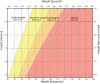
“It is very injurious to health to take in more food than the constitution will bear, when, at the same time one uses no exercise to carry off this excess.”
What Hippocrates Said About Others
Discover personal opinions Hippocrates shared regarding contemporaries.
Quotes About Hippocrates
Gain deeper perspective through quotes about Hippocrates from others.
Evelyn B. Kelly on Hippocrates
“Both Plato and Aristotle approved of abortion, the former in the interests of wise population policy, the latter chiefly on the ground that it was an element of the family’s proper freedom in the state. Hippocrates’ words on the subject are, in the original Greek, somewhat less blunt and categorical than modern takers of the Hippocratic Oath have sometimes suggested. All Hippocrates says is: “I will not give to a woman a pessary to produce abortion.” There were other means of abortion known to the Greeks, none of which Hippocrates abjures.”
Jeffrey H. Reiman on Hippocrates
“The Pythagoreans, rather than Hippocrates himself, are believed to have been responsible for the passage in the Hippocratic Oath that prohibits assisting a woman to bring about an abortion: “I will give no deadly medicine to anyone if asked, not suggest any such counsel; and in like manner I will not give a woman a remedy to produce abortion.” The doubt about whether Hipporates actually wrote the prohibition on abortion in the oath attributed to him is due to the fact that Hippocrates (c. 460-377 B.C.E.) believed that fetuses became animated, not at conception, but on thirtieth day of gestation for male fetuses and the forty-second day for females.”
John M. Riddle on Hippocrates
“The Christian church father Tertullian accused Hippocrates of possessing one of the brutal instruments designed to dismember a fetus in a breech birth. Although no surviving Hippocratic treatise has instructions on this procedure, it was performed in those years to save the life of the mother. One Hippocratic work, Nature of the Child, describes the procedure of abortion by manipulation called Lacedamonian leap in the case of a six-day-old-embryo: “jump up and down, touching her buttocks with her heels at each leap [for] . . . seven times”; after this, “there was a noise; the seed fell out on the ground” . . . “as though someone had removed the shell from a raw egg.””
Disputed Quotes
Quotes attributed to Hippocrates that are questionable.
About Hippocrates
Hippocrates (Ἱπποκράτης) of Kos (c. 460 BC - 377 BC) was an ancient Greek physician who is referred to as the "father of medicine".