Link Copied!
Hermann Hesse Quotes (1877-1962)
Poet, Painter, Novelist



-100px.png)



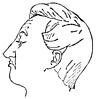



About Hermann Hesse
Hermann Karl Hesse (2 July 1877 – 9 August 1962) was a German-Swiss poet, novelist, and painter. In 1946, he received the Nobel Prize in Literature. His most famous works include Steppenwolf, Siddhartha, and The Glass Bead Game (also known as Magister Ludi) all of which explore an individual's search for spirituality.
Best Hermann Hesse Quotes
Shortest
Earliest
Explore our curated collection of the most famous and impactful Hermann Hesse quotes.

“There was room for repentance and solitude; room for good living and company.”

“How mysterious this life was, how deep and muddy its waters ran, yet how clear and noble what emerged from them.”

“I had grown a thin mustache, I was a full-grown man, and yet I was completely helpless and without a goal in life.”
“I wanted only to try to live in accord with the promptings which came from my true self. Why was that so very difficult?”
“I wanted only to live in accord with the promptings which came from my true self. Why was that so very difficult?”
“I realize today that nothing in the world is more distasteful to a man than to take the path that leads to himself.”
“I have begun with the easiest tasks which require the smallest amount of faith. Each succeeding task will be increasingly difficult. p. 85”
“The marvel of the Bhagavad-Gita is its truly beautiful revelation of life's wisdom which enables philosophy to blossom into religion.”

“One of the aphorisms occurred to me now and I wrote it under the picture: "Fate and temperament are two words for one and the same concept." That was clear to me now.”
“That is where my dearest and brightest dreams have ranged — to hear for the duration of a heartbeat the universe and the totality of life in its mysterious, innate harmony.”
“You must find your dream, then the way becomes easy. But there is no dream that lasts forever, each dream is followed by another, and one should not cling to any particular one.”

“It is not our purpose to become each other; it is to recognize each other, to learn to see the other and honor him for what he is: each the other's opposite and complement. Ch. IV”
“For our goal was not only the East, or rather the East was not only a country and something geographical, but the home and the youth of the soul, the everywhere and nowhere, the oneness of all times.”

“Goldmund smiled up into his eyes, with the new smile he had brought home from his travels, the smile which seemed so frail and old, uncertain, at times, and feeble-witted, and then again pure goodness and pure wisdom.”
“I was given the freedom to discover my own inclination and talents, to fashion my inmost pleasures and sorrows myself and to regard the future not as an alien higher power but as the hope and product of my own strength.”

“Passion is always a mystery and unaccountable, and unfortunately there is no doubt that life does not spare its purest children and often it is just the most deserving people who cannot help loving those that destroy them.”
“Sadness when there should be Joy, hatred when there should be love show compassion because we can be more because we both have scars and pain that no one will ever understand but us so be with me not against me and bring us where we were happy and free.”
“Was that really love? I saw all these passionate people reel about and drift haphazardly as if driven by a storm, the man filled with desire today, satiated on the morrow, loving fiercely and discarding brutally, sure of no affection and happy in no love...”

“For a while the cloister of Mariabronn was renowned for its exorcists and devil-chasers; for a while for the beauty of its plain chaunt; then for a saintly father who healed and wrought miracles; then for its pike broth and stag’s liver pasty - each in its time.”
“I, who could not decipher or understand one thousandth part of those millions of scripts, books, pictures and references in the archives! Humbled, unspeakably foolish, unspeakably ridiculous, not understanding myself, feeling extremely small, I saw myself... p. 76”
“In the cells and schoolrooms of the cloister, between the strong double redstone pillars and rounded arches, monks lived, taught, administered, studied, ruled. Every branch of science was pursued there, and inherited by each new generation: divine and worldly lore, the dark and the light.”
“People with courage and character always seem sinister to the rest. It was a scandal that a breed of fearless and sinister people ran around freely, so they attached a nickname and a myth to these people to get even with them, to make up for the many times they had felt afraid.”
“Only the ideas that we actually live are of any value. You knew all along that your sanctioned world was only half the world and you tried to suppress the second half the same way the priests and teachers do. You won't succeed. No one succeeds in this once he has begun to think.”

“Young people have many pleasures and many sorrows, because they only have themselves to think of, so every wish and every notion assume importance; every pleasure is tasted to the full, but also every sorrow, and many who find that their wishes cannot be fulfilled, immediately put an end to their lives.”
“The defendant did not know until this hour, or could not really believe, that his apostasy and aberration were a test... His suffering became too great, and you know that as soon as suffering becomes acute enough, one goes forward. p.83”

“Wenn wir einen Menschen hassen, so hassen wir in seinem Bild etwas, was in uns selber sitzt. Was nicht in uns selber ist, das regt uns nicht auf.
• Translation: If you hate a person, you hate something in him that is part of yourself. What isn't part of ourselves doesn't disturb us.”
• Translation: If you hate a person, you hate something in him that is part of yourself. What isn't part of ourselves doesn't disturb us.”
“Leo looked at me with a warning glance to be patient, silent and respectful, and disappeared amongst the crowd... I perceived familiar faces, serious or smiling. I saw the figure of Albertus Magnus, the ferryman Vasudeva, the artist Klingsor, and others. p. 68”
“It was not for me to convert Lukas, but I gave him some corrected information; for instance...that Zoroaster, Lao Tse, Plato, Xenophon, Pythagoras, Albertus Magnus, Don Quixote, Tristram Shandy, Novalis and Baudelaire were co-founders and brothers of our League. p. 43”

“Books were written and annotated, systems evolved, the writings of the ancients collected, missals illuminated, the people’s belief fostered, the people’s credulity smiled upon. Here there was all, and room for everything, belief and learning, depths and simplicity, the wisdom of the Greeks and the Evangelists, black magic and white - all had their uses.”
“Our god's name is Abraxas and he is God and Satan and he contains both the luminous and the dark world. Abraxas does not take exception to any of your thoughts, any of your dreams. Never forget that. But he will leave you once you've become blameless and normal. Then he will leave you and look for a different vessel in which to brew his thoughts.”
“It was one of the triumphant periods of our journey; we had brought the magic wave with us ; it cleansed everything. The native paid homage on his knees to beauty, the lord of the castle produced a poem which dealt with our evening activities. The animals from the forest lurked close to the castle walls, and in the river the gleaming fishes moved in lively swarms and were fed with cakes and wine. p. 26”
“I found some consolation or narcotic. Sometimes it was a woman, sometimes a good friend — yes, you too once helped me that way — at other times it was music or applause in the theater. But now these things no longer give me pleasure and that is why I drink. I could never sing without first having a couple of drinks, but now I can also not think, talk, live and feel tolerably well without first having a couple of drinks.”
“As I stood there and looked and tried to understand what I saw, I recalled a short conversation that I had once had with Leo during the festive days at Bremgarten. We had talked about the creations of poetry being more vivid and real than the poets themselves. The candles burned low and went out. I was overcome by an infinite weariness and desire to sleep, and I turned away to find a place where I could lie down and sleep. p. 93”
“The paradox alone must always be accepted that the seemingly impossible must continually be attempted. I agree with Siddhartha, our wise friend from the East, who once said: Words do not express thoughts very well; everything immediately becomes a little different, a little distorted, a little foolish. And yet it also pleases me and seems right that what is of value and wisdom to one man seems nonsense to another. p. 7”
“His walk was light and peaceful, his robe sparkled with gold. He came nearer amid the silence of the assembly... he climbed through the rows of officials to the High Throne like a Pope. Like a magnificent, rare flower, he carried the brilliance of his attire up the stairs. Each row of officials rose to greet him as he passed. He bore his radiant office conscientiously, humbly, dutifully, as humbly as a holy Pope or patriarch bears his insignia. p. 77”

“"You must not give way to desires which you don't believe in. I know what you desire. You should, however, either be capable of renouncing these desires or feel wholly justified in having them. Once you are able to make your request in such a way that you will be quite certain of its fulfillment, then the fulfillment will come. But at present you alternate between desire and renunciation and are afraid all the time. All that must be overcome."”
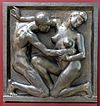
“All existence seemed to be based on duality, on contrast. Either one was a man or one was a woman, either a wanderer or sedentary burgher, either a thinking person or a feeling person-no one could breathe in at the same time as he breathed out, be a man as well as a woman, experience freedom as well as order, combine instinct and mind. One always had to pay for one with the loss of the other, and one thing was always just as important and desirable as the other.”
“The bird fights its way out of the egg. The egg is the world. Who would be born must first destroy a world. The bird flies to God. The God's name is Abraxas.
• Variant translation: The bird is struggling out of the egg. The egg is the world. Whoever wants to be born must first destroy a world. The bird is flying to God. The name of the God is called Abraxas.”
• Variant translation: The bird is struggling out of the egg. The egg is the world. Whoever wants to be born must first destroy a world. The bird is flying to God. The name of the God is called Abraxas.”
“You, too, have mysteries of your own. I know that you must have dreams that you don't tell me. I don't want to know them. But I can tell you: live those dreams, play with them, build altars to them. It is not yet the ideal but it points in the right direction. Whether you and I and a few others will renew the world someday remains to be seen. But within ourselves we must renew it each day, otherwise we just aren't serious. Don't forget that!”
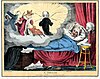
“It was my destiny to join in a great experience. Having had the good fortune to belong to the League, I was permitted to be a participant in unique journey. What wonder it had at the time! How radiant and comet-like it seemed, and how quickly it has been forgotten and allowed to fall into disrepute. For this reason, I have decided to attempt a short description of this fabulous journey, a journey the like of which had not been attempted since the days of Hugo and mad Roland. p. 4”
“In the beginning was the myth. God, in his search for self-expression, invested the souls of Hindus, Greeks, and Germans with poetic shapes and continues to invest each child's soul with poetry every day.
• Variant translation: In the beginning was the myth. Just as the great god composed and struggled for expression in the souls of the Indians, the Greeks and Germanic peoples, so too it continues to compose daily in the soul of every child.”
• Variant translation: In the beginning was the myth. Just as the great god composed and struggled for expression in the souls of the Indians, the Greeks and Germanic peoples, so too it continues to compose daily in the soul of every child.”

“Only slowly did it dawn upon me. Only slowly and gradually did I begin to suspect and then perceive what it was intended to represent. It represented a figure which was myself, and this likeness of myself was unpleasantly weak and half-real; it had blurred features, and in its whole expression there was something unstable, weak, dying or wishing to die, and looked rather like a piece of sculpture which could be called “ Transitoriness ” or “ Decay,” or something similar. p. 92”
“If nature has made you a bat, you shouldn't try and be an ostrich. You consider yourself odd at times, you accuse yourself of taking a road different from most people. You have to unlearn that! Gaze into the fire, the clouds and as soon as the inner voices begin to speak - surrender to them. Don't ask first whether it is permitted or would please your teachers or your father or some God. You will ruin yourself if you do that. That way you will become earth bound, a vegetable.”

“Of the many monks who had thronged the church, the dormitories and study-rooms, there were two, remarked by all, whom all were watching - Abbot Daniel and the teaching novice, Narziss, only recently entered in the novitiate, yet already, against all tradition, and because of his exceptional gifts, employed, in Greek especially, as a teacher. These two, the novice and the abbot, were respected and heeded by all the house. They were watched and aroused curiosity, admired and envied, slandered in secret. Ch. I”
“Even centuries ago the members and historians of our League recognised and courageously faced up to this difficulty. One of the greatest of them gave expression to it in an immortal verse: He who travels far will often see things Far removed from what he believed was Truth. When he talks about it in the fields at home, He is often accused of lying, For the obdurate people will not believe What they do not see and distinctly feel. Inexperience, I believe. Will give little credence to my song. p. 8”
“Many generations of cloister schoolboys had trooped past beneath this stranger tree, laughing, gossiping, playing, squabbling, shod or barefoot, according to the season of the year; each with his writing-tablet; boys with a flower between their lips, boys cracking nuts, boys with snowballs. Always there were new ones; every second year brought its fresh faces, though most - tousled and yellow-haired - were very like the boys that had passed. Some stayed and turned into novices, then monks, and their yellow hair was shorn. Ch. I”
“One thing, however, did become clear to him [Goldmund] – why so many perfect works of art did not please him at all, why they were almost hateful and boring to him, in spite of a certain undeniable beauty. Workshops, churches, and palaces were full of these fatal works of art; he had even helped with a few himself. They were deeply disappointing because they aroused the desire for the highest and did not fulfill it. They lacked the most essential thing – mystery. That was what dreams and truly great works of art had in common: mystery.”
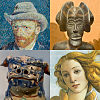
“My tale becomes even more difficult because we not only wandered through Space, but also through Time. We moved towards the East, but we also travelled into the Middle Ages and the Golden Age ; we roamed through Italy or Switzerland, but at times we also spent the night in the 10th century and dwelt with the patriarchs or the fairies. During the times I remained alone, I often found again places and people of my own past. I wandered with my former betrothed along the edges of the forest of the Upper Rhine, caroused with friends of my youth... p. 23”

“‘I am not that wanton whose feet you stroked beneath the table. You seem only to know such women as that.’
‘No, God be praised, you are far more beautiful, and finer.’
‘That was not what I meant’
‘No, but it is so. Do you know how beautiful you are?’
‘I have my looking-glass.’
‘Did you ever look and see your forehead in it, Lydia? And your shoulders and your little finger-nails; and then your knees? And have you seen how all these things belong to each other, how all has the same long, beautiful shape? Have you seen it?’ Ch IX”
‘No, God be praised, you are far more beautiful, and finer.’
‘That was not what I meant’
‘No, but it is so. Do you know how beautiful you are?’
‘I have my looking-glass.’
‘Did you ever look and see your forehead in it, Lydia? And your shoulders and your little finger-nails; and then your knees? And have you seen how all these things belong to each other, how all has the same long, beautiful shape? Have you seen it?’ Ch IX”
“That life is difficult, I have often bitterly realized. I now had further cause for serious reflection. Right up to the present I have never lost the feeling of contradiction that lies behind all knowledge. My life has been miserable and difficult, and yet to others, and sometimes to myself, it has seemed rich and wonderful. Man's life seems to me like a long, weary night that would be intolerable if there were not occasionally flashes of light, the sudden brightness of which is so comforting and wonderful, that the moments of their appearance cancel out and justify the years of darkness.”
“At about the age of six or seven, I realized that of all the invisible powers the one I was destined to be most strongly affected and dominated by was music. From that moment on I had a world of my own, a sanctuary and a heaven that no one could take away from me. Oh, music! A melody occurs to you; you sing it silently, inwardly only; you steep your being in it;it takes possession of all your strength and emotions, and during the time it lives in you, it effaces all that is fortuitous, evil, coarse and sad in you; it brings the world into harmony with you, it makes burdens light and gives wings to to depressed spirits.”

“The Speaker... gently placed his hand on my head and uttered the formula which confirmed my admission as a member of the League. Anima pia, he said and bade me be constant in faith, courageous in danger, and to love my fellow-men. Well-schooled during my year’s probation, I took the oath, renounced the world and its superstitions and had the League ring placed on my finger to the words from one of the most beautiful chapters in our League’s history: On earth and in the air, in water and in fire. The spirits are subservient to him. His glance frightens and tames the wildest beasts. And even the anti-Christian must approach him with awe. . . . etc. p. 11”
“Now everything changed. My childhood world was breaking apart around me. My parents eyed me with a certain embarrassment. My sisters had become strangers to me. A disenchantment falsified and blunted my usual feelings and joys: the garden lacked fragrance, the woods held no attraction for me, the world stood around me like a clearance sale of last year's secondhand goods, insipid, all its charm gone. Books were so much paper, music a grating noise. That is the way leaves fall around a tree in autumn, a tree unaware of the rain running down its sides, of the sun or the frost, and of life gradually retreating inward. The tree does not die. It waits.”
“I do not consider myself less ignorant than most people. I have been and still am a seeker, but I have ceased to question stars and books; I have begun to listen to the teachings my blood whispers to me. My story is not a pleasant one; it is neither sweet nor harmonious, as invented stories are; it has the taste of nonsense and chaos, of madness and dreams — like the lives of all men who stop deceiving themselves.
Each man's life represents the road toward himself, and attempt at such a road, the intimation of a path. No man has ever been entirely and completely himself. Yet each one strives to become that — one in an awkward, the other in a more intelligent way, each as best he can.”
Each man's life represents the road toward himself, and attempt at such a road, the intimation of a path. No man has ever been entirely and completely himself. Yet each one strives to become that — one in an awkward, the other in a more intelligent way, each as best he can.”
“The Speaker then brought the ring, kissed me on the cheek and placed the ring on my finger. Hardly had I looked at the ring, hardly had I felt its metallic coolness on my fingers, when a thousand things occurred to me, a thousand inconceivable acts of neglect. Above all, it occurred to me that the ring had four stones at equal distances apart, and that it was a rule of the League and part of the vow to turn the ring slowly on the finger at least once a day, and at each of the four stones to bring to mind one of the four basic precepts of the vow. I had not only lost the ring... I had also no longer repeated the four basic precepts or thought of them. Immediately, I tried to say them again inwardly...I had forgotten the rules... p. 85”
“I remember a select little group with which we traveled and camped together for some days ; this group had undertaken to liberate some captive League brothers and the Princess Isabella from the hands of the Moors. It was said that they were in possession of Hugo’s horn, and among them were my friends the poet Lauscher and the artists Klingsor and Paul Klee ; they spoke of nothing else but Africa and the captured princess, and their Bible was the book of the deeds of Don Quixote, in whose honor they thought of making their way across Spain. It was very pleasant whenever we met one of these groups, to attend their feasts and devotions and to invite them to ours, to hear about their deeds and plans, to bless and know them on parting ; they went their way, we went ours. p. 20”
“We fear death, we shudder at life's instability, we grieve to see the flowers wilt again and again, and the leaves fall, and in our hearts we know that we, too, are transitory and will soon disappear. When artists create pictures and thinkers search for laws and formulate thoughts, it is in order to salvage something from the great dance of death, to make something that lasts longer than we do.
(Alternate translation by Geoffrey Dunlop: We shrink from death, shuddering at our frail instability, sadly watching the flowers fade again and again, knowing in our hearts how soon we shall be as withered as they. So that when, as craftsmen, we carve images, or seek laws to formulate our thoughts, we do it all to save what little we may from the linked, never-ending dance of death. Ch. 10”
(Alternate translation by Geoffrey Dunlop: We shrink from death, shuddering at our frail instability, sadly watching the flowers fade again and again, knowing in our hearts how soon we shall be as withered as they. So that when, as craftsmen, we carve images, or seek laws to formulate our thoughts, we do it all to save what little we may from the linked, never-ending dance of death. Ch. 10”

“‘How can I tell you, Lydia? What do we care. I can only be happy that I love you, and what will come of it never troubles me. My heart leaps up to see you ride, to hear your voice, and feel your fingers in my hair. I shall be full of joy when I can kiss you.’
‘Goldmund, a man may only kiss his Bride. And did you never think of that, then?
‘No, I never thought of that. Why should I? You know as well as I that you can never be my bride,’
‘So that is it; and since you can never be my goodman, and stay for ever at my side, it was very wicked of you to speak of love to me. Did you really think you could entice me?’
‘I thought of nothing, Lydia, but you only. I think much less than you suppose. And I ask nothing, except that one day you should kiss me. We talk too much; lovers should never talk. Ch IX”
‘Goldmund, a man may only kiss his Bride. And did you never think of that, then?
‘No, I never thought of that. Why should I? You know as well as I that you can never be my bride,’
‘So that is it; and since you can never be my goodman, and stay for ever at my side, it was very wicked of you to speak of love to me. Did you really think you could entice me?’
‘I thought of nothing, Lydia, but you only. I think much less than you suppose. And I ask nothing, except that one day you should kiss me. We talk too much; lovers should never talk. Ch IX”
“He thought for a moment, brought back from his reflections. "It was only possible for me to do it," he said, "because it was necessary. I either had to write the book or be reduced to despair; it was the only means of saving me from nothingness, chaos and suicide. The book was written under this pressure and brought me the expected cure, simply because it was written, irrespective of whether it was good or bad. That was the only thing that counted. And while writing it, there was no need for me to think at all of any other reader but myself, or at the most, here and there another close war comrade, and I certainly never thought then about the survivors, but always about those who fell in the war. While writing it, I was as if delirious or crazy, surrounded by three or four people with mutilated bodies — that is how the book was produced." p. 46”
“When I take a long look at my life, as though from outside, it does not appear particularly happy. Yet I am even less justified in calling it unhappy, despite all its mistakes. After all, it is foolish to keep probing for happiness or unhappiness, for it seems to me it would be hard to exchange the unhappiest days of my life for all the happy ones. If what matters in a person's existence is to accept the inevitable consciously, to taste the good and bad to the full and to make for oneself a more individual, unaccidental and inward destiny alongside one's external fate, then my life has been neither empty nor worthless. Even if, as it is decreed by the gods, fate has inexorably trod over my external existence as it does with everyone, my inner life has been of my own making . I deserve its sweetness and bitterness and accept full responsibility for it.”
“I was very fond of many of my comrades and leaders, but not one of them subsequently occupied my thoughts as much as Leo, while at that time he was apparently hardly noticed. Leo was one of our servants (who were naturally volunteers, as we were). He helped to carry the luggage and was often assigned to the personal service of the Speaker. This unaffected man had something so pleasing, so unobtrusively winning about him that everyone loved him. He did his work gaily, usually sang or whistled as he went along, was never seen except when needed — in fact, an ideal servant. Furthermore, all animals were attached to him. We nearly always had some dog or other with us which joined us on account of Leo; he could tame birds and attract butterflies to him. It was his desire for Solomon’s key which would enable him to understand the language of the birds that had drawn him to the East. p. 22”

“Isolated here in the North, planted long ago by a Roman pilgrim, a chestnut grew, strong and solitary, by the colonnade of rounded double arches at the entrance to the cloister of Mariabronn: a noble, vigorous tree, the sweep of its foliage drooping tenderly, facing the winds in bold and quiet assurance; so tardy in spring that when all glowed green around it and even the cloister nut trees wore their russet, it awaited the shortest nights to thrust forth, through little tufts of leaves, the dim exotic rays of its blossom, and in October, after wine and harvests had long been gathered, let drop the prickly fruits from its yellowing crown... The lovely tree, aloof and tender, shadowed the entrance to the cloister, a delicate, shuddering guest from a warmer clime, secretly akin to the slender double columns of the gateway, the pillars and mouldings of the window arches, loved by all Latins and Italians, gaped at, as a stranger, by the inhabitants. Ch. I”
“We ought not to consider the opinions of those sects as naïve as they appear from the rationalist point of view. Science as we know it today was unknown to antiquity. Instead there existed a preoccupation with philosophical and mystical truths which was highly developed. What grew out of this preoccupation was to some extent merely pedestrian magic and frivolity; perhaps it frequently led to deceptions and crimes, but this magic, too, had noble antecedents in a profound philosophy. As, for instance, the teachings concerning Abraxas which I cited a moment ago. This name occurs in connection with Greek magical formulas and is frequently considered to be the name of some magician's helper such as certain uncivilized tribes believe in even at present. But it appears that Abraxas has much deeper significance. We may conceive of the name as that of the godhead whose symbolic task is the uniting of godly and devilish elements.”
“When it came about that a new face appeared in the cloister, which had seen so many faces come and go, and that this new face was not among those that pass unnoticed, and when they are gone, are soon forgotten. It was a little boy, long since announced by his father, who brought him, on a day in spring, to put him to school in the cloister. Under the chestnut tree they tethered their horses, and the porter had come out through the gate to meet them. The boy looked up at the still bare branches of the tree. ‘I have never seen such a tree as that till now,’ he said, ‘a rare, beautiful tree, and I wish I knew what they call it.’ The father, an elderly man, with a peaked, care-lined face, did not heed the words of his little son. But the porter, pleased already with the boy, told him the name of the tree. The little boy thanked him graciously, gave him his hand, and said to him: ‘My name is Goldmimd, and I am to go to school here.’ The porter smiled and led the newcomers through the gates and on up the broad stone steps. Goldmund entered the cloister without dismay, feeling that here he had met two beings, the tree and the porter, with whom he could easily be friends. Ch. I”

“Our Journey to the East and our League, the basis of our community, has been the most important thing, indeed the only important thing in my life, compared with which my own individual life has appeared completely unimportant. And now that I want to hold fast to and describe this most important thing, or at least something of it, everything is only a mass of separate fragmentary pictures which has been reflected in something, and this something is myself, and this self, this mirror, whenever I have gazed into it, has proved to be nothing but the upper- most surface of a glass plane. I put my pen away with the sincere intention and hope of continuing tomorrow or some other time, or rather to begin anew, but at the back of my intention and hope, at the back of my really tremendous urge to relate our story, there remains a dreadful doubt. It is the doubt that arose during the search for Leo in the valley of Morbio. This doubt does not only ask the question, “ Is your story capable of being told ? ” It also asks the question, “ Was it possible to experience it ? ” We recall examples of participants in the World War who, although by no means short of facts and attested stories, must at times have entertained the same doubts. p. 40”

“It was no different with my own life, and with Gertrude's and that of many others. Fate was not kind, life was capricious and terrible, and there was no good or reason in nature. But there is good and reason in us, in human beings, with whom fortune plays, and we can be stronger than nature and fate, if only for a few hours. And we can draw close to one another in times of need, understand and love one another, and live to comfort each other. And sometimes, when the black depths are silent, we can do even more. We can then be gods for moments, stretch out a commanding hand and create things which were not there before and which, when they are created, continue to live without us. Out of sounds, words, and other frail and worthless things, we can construct playthings — songs and poems full of meaning, consolation and goodness, more beautiful and enduring than the grim sport of fortune and destiny. We can keep the spirit of God in our hearts and, at times, when we are full of Him, He can appear in our eyes and our words, and also talk to others who do no know or do not wish to know Him. We cannot evade life's course, but we can school ourselves to be superior to fortune and also to look unflinchingly upon the most painful things.”

“If a man does not think too much, he rejoices at rising in the morning, and at eating and drinking. He finds satisfaction in them and does not want them to be otherwise. But if he ceases to take things for granted, he seeks eagerly and hopefully during the course of the day for moments of real life, the radiance of which makes him rejoice and obliterates the awareness of time and all thoughts on the meaning and purpose of everything. One can call these moments creative, because they seem to give a feeling of union with the creator, and while they last, one is sensible of everything being necessary, even what is seemingly fortuitous. It is what the mystics call union with God. Perhaps it is the excessive radiance of these moments that make everything else appear so dark. Perhaps it is the feeling of liberation, the enchanting lightness and the suspended bliss that make the rest of life seem so difficult, demanding and oppressive. I do not know. I have not travelled very far in thought and philosophy. However I do know that if there is a state of bliss and a paradise, it must be an uninterrupted sequence of such moments, and if this state of bliss can be attained through suffering and dwelling in pain, then no sorrow or pain can be so great that one should attempt to escape from it.”

“It was growing dark but there was still no light in any window. The tune, with its simple variations, was finished. There was silence....Then I heard a door being opened upstairs and soon I also heard footsteps on the stairs. The door of the house was opened and someone came out, and his walk was like his whistling, light and jolly, but steady, healthy and youthful. It was a very slim, hatless man, not very tall, who walked there. And now my feeling was changed to certainty. It was Leo; not only the Leo from the directory, it was Leo himself, our dear travelling companion and servant Leo, whose disappearance ten or more years ago had brought us so much sadness and confusion. I nearly addressed him in the moment of my initial joy and surprise. Then I only just remembered that I had also often heard him whistling during the journey to the East... the same strains of previous times, and yet how strangely different they sounded...! A feeling of sadness came over me like a stab in the heart: oh, how different everything had become since then, the sky, the air, the seasons, dreams, sleep, day and night! How greatly and terribly everything had changed for me when, through memory of the past alone, a whistle and the rhythm of a known step could affect me so deeply and give me so much pleasure and pain! p. 52”
“Then came those years in which I was forced to recognize the existence of a drive within me that had to make itself small and hide from the world of light. The slowly awakening sense of my own sexuality overcame me, as it does every person, like an enemy and terrorist, as something forbidden, tempting, and sinful. What my curiosity sought, what dreams, lust and fear created — the great secret of puberty — did not fit at all into my sheltered childhood. I behaved like everyone else. I led the double life of a child who is no longer a child. My conscious self lived within the familiar and sanctioned world; it denied the new world that dawned within me. Side by side with this I lived in a world of dreams, drives and desires of a chthonic nature, across which my conscious self desperately built its fragile bridges, for the childhood world within me was falling apart. Like most parents, mine were no help with the new problems of puberty, to which no reference was ever made. All they did was take endless trouble in supporting my hopeless attempts to deny reality and to continue dwelling in a childhood world that was becoming more and more unreal. I have no idea whether parents can be of help, and I do not blame mine. It was my own affair to come to terms with myself and to find my own way, and like most well-brought-up children, I managed it badly.”
“Certainly you shouldn't go kill somebody or rape a girl, no! But you haven't reached the point where you can understand the actual meaning of "permitted" and "forbidden." You've only sensed part of the truth. You will feel the other part, too, you can depend on it. For instance, for about a year you have had to struggle with a drive that is stronger than any other and which is considered "forbidden." The Greeks and many other peoples, on the other hand, elevated this drive, made it divine and celebrated it in great feasts. What is forbidden, in other words, is not something eternal; it can change. Anyone can sleep with a woman as soon as he's been to a pastor with her and has married her, yet other races do it differently, even nowadays. Each of us has to find out for himself what is permitted and what is forbidden — forbidden for him. It's possible for one never to transgress a single law and still be a bastard. And vice versa. Actually it's only a question of convenience. Those who are too lazy and comfortable to think for themselves and be their own judges obey the laws. Others sense their own laws within them; things are forbidden to them that every honorable man will do any day in the year and other things are allowed to them that are generally despised. Each person must stand on his own feet.”
“They had sat discussing astrology, a forbidden science, and not pursued in the cloister. Narziss had said that it was a striving to order and arrange after their kinds the many diverse sorts of human beings, their predestined character and their fates,
Here Goldmund broke into his words. ‘You speak of nothing but differences! I have slowly begun to see that they form your own particular whimsey. When you speak of this great difference between us I always feel that it lies in nothing, save in your own strange hankering to find differences.’
Narziss: ‘Right. You have hit the nail on the head. That is what I mean - that to you differences mean little, while to me they are the most important things. Mine is the nature of a scholar, and my branch of scholarship is science. And science, to quote your own words, is nothing else than a “strange hankering after differences”. Her essence could not be better defined. For men of science nothing is so important, as the clear definition of differences. To find, for instance, on every man, those signs which mark him off from all other men: that is to know him.’
Goldmund : ‘But how? One has peasant’s shoes and is a peasant; another a crown on his head, and is a king. There are your differences! But these are seen by children, without, any science.’
Narziss; ‘Yet when peasant and king are clad alike children can no longer distinguish between them.’ Ch. IV”
Here Goldmund broke into his words. ‘You speak of nothing but differences! I have slowly begun to see that they form your own particular whimsey. When you speak of this great difference between us I always feel that it lies in nothing, save in your own strange hankering to find differences.’
Narziss: ‘Right. You have hit the nail on the head. That is what I mean - that to you differences mean little, while to me they are the most important things. Mine is the nature of a scholar, and my branch of scholarship is science. And science, to quote your own words, is nothing else than a “strange hankering after differences”. Her essence could not be better defined. For men of science nothing is so important, as the clear definition of differences. To find, for instance, on every man, those signs which mark him off from all other men: that is to know him.’
Goldmund : ‘But how? One has peasant’s shoes and is a peasant; another a crown on his head, and is a king. There are your differences! But these are seen by children, without, any science.’
Narziss; ‘Yet when peasant and king are clad alike children can no longer distinguish between them.’ Ch. IV”

“ Novelists when they write novels tend to take an almost godlike attitude toward their subject, pretending to a total comprehension of the story, a man's life, which they can therefore recount as God Himself might, nothing standing between them and the naked truth, the entire story meaningful in every detail. I am as little able to do this as the novelist is, even though my story is more important to me than any novelist's is to him — for this is my story; it is the story of a man, not of an invented, or possible, or idealized, or otherwise absent figure, but of a unique being of flesh and blood. Yet, what a real living human being is made of seems to be less understood today than at any time before, and men — each one of whom represents a unique and valuable experiment on the part of nature — are therefore shot wholesale nowadays. If we were not something more than unique human beings, if each one of us could really be done away with once and for all by a single bullet, story telling would lose all purpose. But every man is more than just himself; he also represents the unique, the very special and always significant and remarkable point at which the world's phenomena intersect, only once in this way and never again. That is why every man's story is important, eternal, sacred; that is why every man, as long as he lives and fulfills the will of nature, is wondrous, and worthy of every consideration. In each individual the spirit has become flesh, in each man the creation suffers, within each one a redeemer is nailed to the cross.
Few people nowadays know what man is. Many sense this ignorance and die the more easily because of it, the same way that I will die more easily once I have completed this story.”
Few people nowadays know what man is. Many sense this ignorance and die the more easily because of it, the same way that I will die more easily once I have completed this story.”

Hermann Hesse Quotes by Topic
Find exactly what you are looking for by browsing this categorized list of Hermann Hesse quotes by topic.
Hermann Hesse on Love 7 quotes
View all 7 quotes on Love →Hermann Hesse on Words 2 quotes
“Words do not express thoughts very well. They always become a little different immediately after they are expressed, a little distorted, a little foolish. And yet it also pleases me and seems right that what is of value and wisdom to one man seems nonsense to another.”

Hermann Hesse on Culture
What Hermann Hesse Said About Others
Discover personal opinions Hermann Hesse shared regarding contemporaries.
Hermann Hesse on Paul von Hindenburg
“And why had the German people failed to see through Hitler before 1933? Oughtn’t so early an event as the Munich Putsch have shown them what he was? Why, instead of upholding and nurturing the German Republic, the one gratifying consequence of the First World War, had they been almost unanimous in sabotaging it, voting for Hindenburg and later for Hitler, under whom, to be sure, it became very dangerous to behave like a decent human being?”

Quotes About Hermann Hesse
Gain deeper perspective through quotes about Hermann Hesse from others.
Dr. Timothy Leary on Hermann Hesse
“Few writers have chronicled with such dispassionate lucidity and fearless honesty the progress of the soul through the states of life.”
Colin Wilson on Hermann Hesse
“Considered as a whole, Hesse's achievement can hardly be matched in modern literature; it is the continually rising trajectory of an idea, the fundamentally religious idea of how to 'live more abundantly'. Hesse has little imagination in the sense that Shakespeare or Tolstoy can be said to have imagination, but his ideas have a vitality that more than makes up for it. Before all, he is a novelist who used the novel to explore the problem: What should we do with our lives? The man who is interested to know how he should live instead of merely taking life as it comes, is automatically an Outsider.”

Theodore Ziolkowski on Hermann Hesse
“In Germany many readers, blandly ignoring the implicit criticism in the novel, tended to see in Hesse's cultural province nothing but a welcome Utopian escape from the harsh postwar realities. More discerning European critics have usually been so preoccupied with the fashionably grave implications that they have neither laughed at its humor nor smiled at its ironies. In part these one-sided readings are understandable, for the humor is often hidden in private jokes of the sort to which Hesse became increasingly partial in his later years. The games begin on the title-page, for the motto attributed to "Albertus Secundus" is actually fictitious. Hesse wrote the motto himself and had it translated into Latin by two former schoolmates, who are cited in Latin abbreviation as the editors: Franz Schall ("noise" or Clangor ) and Feinhals ("slender neck" or Collo fino ). The book is full of this "onomastic comedy" that appealed to Thomas Mann, also a master of the art.”
Marilyn Ferguson on Hermann Hesse
“The idea of expanding powers of mind unfolded in literature, too. "New" human beings of deeper sensibility appeared often in the fiction of Hermann Hesse. In his enormously popular novel Demian (1925), Hesse depicted a fraternity of men and women who had discovered paranormal abilities and an invisible bond with one another. "We were not separated from the majority of men by a boundary," the narrator said, "but simply by another mode of vision." They were a prototype of a different way of life.”

Marilyn_Ferguson on Hermann Hesse
“In his 1918 diary, Hermann Hesse recalled a dream in which he heard two distinct voices. The first told him to seek out forces to overcome suffering, to calm himself. It sounded like parents, school, Kant, the church fathers. But the second voice—which sounded farther off, like "primal cause"—said that suffering only hurts because you fear it, complain about it, flee it. You know quite well, deep within you, that there is only a single magic, a single power, a single salvation... and that is called loving. Well, then, love your suffering. Do not resist it, do not flee from it. Give yourself to it. It is only your aversion that hurts, nothing else.”
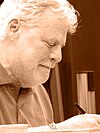
About Hermann Hesse
Hermann Karl Hesse (2 July 1877 – 9 August 1962) was a German-Swiss poet, novelist, and painter. In 1946, he received the Nobel Prize in Literature. His most famous works include Steppenwolf, Siddhartha, and The Glass Bead Game (also known as Magister Ludi) all of which explore an individual's search for spirituality.