Henry Ford as quoted in The Zanesville Sunday Times-Signal [Zanesville, Ohio] (15 March 1931): On reasons for the Great Depression.
“
The average man won't really do a day's work unless he is caught and cannot get out of it. There is plenty of work to do if people would do it.
— Henry Ford on Great Depression
What It Means
This is a placeholder explanation generated by the low-overhead model. It interprets "The average man won't really do a day's work unless he is caught and cannot get out of it. There is plenty of work to do if people would do it." in the context of "Henry Ford as quoted in The Zanesville Sunday Times-Signal [Zanesville, Ohio] (15 March 1931): On reasons for the Great Depression." to mean that wisdom is timeless.
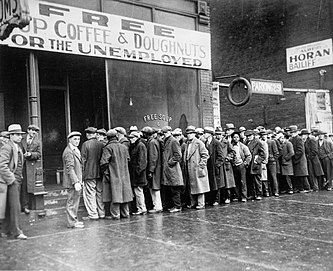
Source: Wikiquote: "Great Depression" (Quotes: Quotes are arranged alphabetically by author, A - F)
The 'What it means' explanation text was generated by Google Gemini Flash (accessed January 18, 2026). https://gemini.google.com/app

About Henry Ford
Henry Ford (July 30, 1863 – April 7, 1947) was an American industrialist and business magnate, founder of the Ford Motor Company, and chief developer of the assembly line technique of mass production. By creating the first automobile that middle-class Americans could afford, he converted the automobile from an expensive curiosity into an accessible utility that profoundly impacted the landscape of the 20th century. Ford was an antisemite who promoted The Protocols of the Meetings of the Learned Elders of Zion in the collection of articles known as The International Jew.
About Henry Ford
Henry Ford (July 30, 1863 – April 7, 1947) was an American industrialist and business magnate, founder of the Ford Motor Company, and chief developer of the assembly line technique of mass production. By creating the first automobile that middle-class Americans could afford, he converted the automobile from an expensive curiosity into an accessible utility that profoundly impacted the landscape of the 20th century. Ford was an antisemite who promoted The Protocols of the Meetings of the Learned Elders of Zion in the collection of articles known as The International Jew.
View all quotes →