Link Copied!
Henri Fayol Quotes (1841-1925)
Director, King

About Henri Fayol
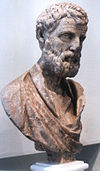
Henri Fayol (29 July 1841, Istanbul – 19 November 1925, Paris) was a French mining engineer and director of mines who developed a general theory of business administration.
Best Henri Fayol Quotes
Shortest
Earliest
Explore our curated collection of the most famous and impactful Henri Fayol quotes.
“The manner in which the subordinates do their work has incontestably a great effect upon the ultimate result, but the operation of management has much greater effect.”
“[In France] a minister has twenty assistants, where the Administrative Theory says that a manager at the head of a big undertaking should not have more than five or six.”
“Are there principles of administration? Nobody doubts it. What do they consist of? That is what I propose to discuss today. The subjects of recruitment, organization and direction of personnel will form the subject of the second part of this study.”
“Management plays a very important part in the government of undertakings: of all undertakings, large or small, industrial, commercial, political, religious or other. I intend to set forth my ideas here on the way in which that part should be played.”

“In my opinion, it is the industry concerned which should have the chief say in the question of the amount of theoretical training required. It is the industry which uses the products of the schools, and, like every consumer, it has the right to make its wishes known.”

“This code is indispensable. Be it a case of commerce, industry, politics, religion, war or philanthropy in every concern there is a management function to be performed and for its performance there must be principles, that is to say acknowledged truths regarded as proven on which to rely.”
“The control of an undertaking consists of seeing that everything is being carried out in accordance with the plan which has been adopted, the orders which have been given, and the principles which have been laid down. Its object is to point out mistakes in order that they may be rectified and prevented from recurring.”
“Administration, which calls for the application of wide knowledge and many personal qualities, is above all the art of handling men, and in this art, as in many others, it is practice that makes perfect. This is one of the reasons why we should release our future engineers for practical work as early as possible; there are many drawbacks to staying too long at school.”

“The technical and commercial functions of a business are clearly defined, but the same cannot be said of the administrative function. Not many people are familiar with its constitution and powers; our senses cannot follow its workings - we do not see it build or forge, sell or buy - and yet we all know that, if it does not work properly, the undertaking is in danger of failure.”
“To manage is to forecast and plan, to organize, to command, to coordinate and to control. To foresee and plan means examining the future and drawing up the plan of action. To organize means building up the dual structure, material and human, of the undertaking. To command means binding together, unifying and harmonizing all activity and effort. To control means seeing that everything occurs in conformity with established rule and expressed demand.”
“Industry, which needs young men who are healthy, tractable, unpretentious and, I would even say, full of illusions, often receives engineers who are tired out, weak in body, and less ready than one could wish to take modest jobs and work so hard that everything seems easy to them. I am convinced that they could begin practical work much earlier and just as well prepared, by leaving things which are not used in practice out of their school education.”
“Every employee in an undertaking — workman, foreman, shop manager, head of division, head of department, manager, and if it is a state enterprise the series extends to the minister or head of a state department — takes a larger or smaller share in the work of administration, and has, therefore, to use and display his administrative faculties. By administrative knowledge we mean planning, organization, command, coordination, and control: it can be elementary for the workman, but must be very wide in the case of employees of high rank, especially managers of big concerns. Everyone has some need of administrative knowledge.”

“One could define the administrative department by saying that it includes everything that is not part of the other departments, but one can define it in a more positive manner by saying that it is specifically responsible for;
1. ensuring that unity of action, discipline, anticipation, activity, order, etc., exist in all parts of the enterprise;
2. recruiting, organizing and directing the workforce;
3. ensuring good relations between the various departments and with the outside world;
4. coordination of all efforts towards the overall goal;
5. satisfying shareholders and employees; labor and management.”
“According to the dictionary, to administer is to govern, or to manage a public or private business. It means, therefore, to seek to make the best possible use of the resources available in achieving the goal of the enterprise. Administration includes, therefore, all the operations of the enterprise. But as a result of the usual way of organizing things to facilitate the running of the business, a certain number of activities constitute the special departments; the technical department, the commercial department, the financial department, etc., and the scope of the administrative department is found to be reduced accordingly.”
“Every employee in an undertaking, then, takes a larger or smaller share in the work of administration, and has, therefore, to use and display his administrative faculties. This is why we often see men, who are specially gifted, gradually rise from the lowest to the highest level of the industrial hierarchy, although they have only had an elementary education. But young men, who begin practical work as engineers soon after leaving industrial schools, are in a particularly good position both for learning administration and for showing their ability in this direction, for in administration, as in all other branches of industrial activity, a man’s work is judged by its results.”
“The meaning that I have given to the word administration and which has been generally adopted, broadens considerably the field of administrative science. It embraces not only the public service but enterprises of every size and description, of every form and every purpose. All undertakings require planning, organization, command, co-ordination and control, and in order to function properly, all must observe the same general principles. We are no longer confronted with several administrative sciences but with one alone, which can be applied equally well to public and to private affairs and whose principal elements are today summarized in what we term the Administrative Theory.”
“The administrative function has many duties. It has to foresee and make preparations to meet the financial, commercial, and technical conditions under which the concern must be started and run. It deals with the organization, selection, and management of the staff. It is the means by which the various parts of the undertaking communicate with the outside world, etc. Although this list is incomplete, it gives us an idea of the importance of the administrative function. The sole fact that it is in charge of the staff makes it in most cases the predominant function, for we all know that, even if a firm has perfect machinery and manufacturing processes, it is doomed to failure if it is run by an inefficient staff.”
“An examination of the characteristics required by the employees and heads of undertakings of every kind leads to the same conclusions as the foregoing study, which was confined largely to industrial concerns. In the home and in affairs of State, the need for administrative ability is proportional to the importance of the undertaking. Like every other undertaking, the home requires administration, that is to say planning, organization, command, coordination and control. Nothing but a theory of administration, which can be taught and then discussed by everybody, can put an end to the general uncertainty as to proper methods, which exists in the isolation of our households. There is therefore a universal need for a knowledge of administration.”
“The. manager must never be lacking in knowledge of the special profession which is characteristic of the undertaking: the technical profession in industry, commercial in commerce, political in the State, military in the Army, religious in the Church, medical in the hospital, teaching in the school, etc. The technical function has long been given the degree of importance which is its due, and of which we must not deprive it, but the technical function by itself cannot endure the successful running of a business; it needs the help of the other essential functions and particularly of that of administration. This fact is so important from the point of view of the organization and management of a business that I do not mind how often I repeat it in order that it may be fully realized.”
“Would you like to know, for instance, to what extent higher mathematics is used in our two great industries? Well, it is never used at all. Having found this to be the case in my own experience, after quite a long career, I wondered whether I was not an exception; so I made enquiries, and I found that it was a general rule that neither engineers nor managers used higher mathematics in carrying out their duties. We must, of course, learn mathematics that goes without saying but the question is how much must we learn? Up to the present this point has nearly always been decided simply by professors, but it seems to me to be a question in which professors do not count very much, and in which they count less as they become more learned and more devoted to their work. They would like to pass on all their scientific knowledge and they find that their pupils always leave them too soon.”

Henri Fayol Quotes by Topic
Find exactly what you are looking for by browsing this categorized list of Henri Fayol quotes by topic.
Henri Fayol on Business 3 quotes
“There is no one doctrine of administration for business and another for affairs of state; administrative doctrine is universal. Principles and general rules which hold good for business hold good for the state too, and the reverse applies.”

Henri Fayol on Principles of administration 3 quotes
“Are there principles of administration? Nobody doubts it. What do they consist of? That is what I propose to discuss today. The subjects of recruitment, organization and direction of personnel will form the subject of the second part of this study.”

Henri Fayol on Management 2 quotes
“To manage is to forecast and plan, to organize, co-ordinate and to control.”
Henri Fayol on Manager 2 quotes
“[In France] a minister has twenty assistants, where the Administrative Theory says that a manager at the head of a big undertaking should not have more than five or six.”

Henri Fayol on Business administration 2 quotes
“The technical and commercial functions of a business are clearly defined, but the same cannot be said of the administrative function. Not many people are familiar with its constitution and powers; our senses cannot follow its workings - we do not see it build or forge, sell or buy - and yet we all know that, if it does not work properly, the undertaking is in danger of failure.”

Henri Fayol on Accounting
“Accounting reveals the state of the business. It is a kind of thermometer of its condition and its health. One must consult it continually. Every employee in the enterprise, from the lowest up to the Director, must know the results for that part of the service for which he is responsible.”

Henri Fayol on Illusion
“This has been the cause of a great deal of wasted time and effort, and industry, which needs young men who are healthy, tractable, unpretentious and, I would even say, full of illusions, often receives engineers who are tired out, weak in body, and less ready than one could wish to take modest jobs and work so hard that everything seems easy to them.”

Henri Fayol on Management theory
“To manage is to forecast and plan, to organize, to command, to coordinate and to control. To foresee and plan means examining the future and drawing up the plan of action. To organize means building up the dual structure, material and human, of the undertaking. To command means binding together, unifying and harmonizing all activity and effort. To control means seeing that everything occurs in conformity with established rule and expressed demand.”
Henri Fayol on Industry
“Industry, which needs young men who are healthy, tractable, unpretentious and, I would even say, full of illusions, often receives engineers who are tired out, weak in body, and less ready than one could wish to take modest jobs and work so hard that everything seems easy to them. I am convinced that they could begin practical work much earlier and just as well prepared, by leaving things which are not used in practice out of their school education.”
Henri Fayol on Principles of management
“One could define the administrative department by saying that it includes everything that is not part of the other departments, but one can define it in a more positive manner by saying that it is specifically responsible for;
1. ensuring that unity of action, discipline, anticipation, activity, order, etc., exist in all parts of the enterprise;
2. recruiting, organizing and directing the workforce;
3. ensuring good relations between the various departments and with the outside world;
4. coordination of all efforts towards the overall goal;
5. satisfying shareholders and employees; labor and management.”

Henri Fayol on Work
“Every employee in an undertaking, then, takes a larger or smaller share in the work of administration, and has, therefore, to use and display his administrative faculties. This is why we often see men, who are specially gifted, gradually rise from the lowest to the highest level of the industrial hierarchy, although they have only had an elementary education. But young men, who begin practical work as engineers soon after leaving industrial schools, are in a particularly good position both for learning administration and for showing their ability in this direction, for in administration, as in all other branches of industrial activity, a man’s work is judged by its results.”

Henri Fayol on Organization
“The administrative function has many duties. It has to foresee and make preparations to meet the financial, commercial, and technical conditions under which the concern must be started and run. It deals with the organization, selection, and management of the staff. It is the means by which the various parts of the undertaking communicate with the outside world, etc. Although this list is incomplete, it gives us an idea of the importance of the administrative function. The sole fact that it is in charge of the staff makes it in most cases the predominant function, for we all know that, even if a firm has perfect machinery and manufacturing processes, it is doomed to failure if it is run by an inefficient staff.”
Henri Fayol on Unity of command
“There is only a small number of principles and even these flow from a single, fundamental principle; ``Unity of Command.’’ In practice, the principal is as follows:
Every action must be ordered by one person only or equally ``For any act the person who carries it out should receive orders from only one boss.’’
Why should this be so? Why do all associations, all groups of men need one boss and one boss only? One could explain it as follows: it arises because of the near impossibility that two people have exactly the same feeling, the same point of view, the same conception of execution on any subject whatsoever: or equally, through a sense of justice which makes us desire that each person has responsibility for his actions and for his actions alone. And there are other considerations as well, but I will limit myself with the statement ``No one can serve two masters at the same time’’ says the proverb. And a popular saying adds, `Two people cannot both run the show.’’”

Quotes About Henri Fayol
Gain deeper perspective through quotes about Henri Fayol from others.
Albert Lepawsky on Henri Fayol
“One motive for Henri Fayol's vigorous defense of administration as a subject for serious scientific study was the fact that he saw France, in the period between the Franco-Prussian War and World War I, disintegrating for lack of administrative ability and managerial efficiency. Hoping to make sounder administrative practices available to French civil and military agencies, he fostered the "Center of Studies in Administration" in Paris, as a kind of French Public Administration Clearing House. Fayol was one of the principal consultants to the French government during the crisis period of World War I and a leading participant in the International Congress of Administrative Sciences. Despite his conservative views about French politics, he was in complete agreement on questions of governmental organization with the rising French socialist of those days, Leon Blum, who, as Prime Minister, was later to try out some of the administrative ideas they both held in common. This is... but one of several such instances of agreement on administrative matters among political opposites, an instance which helps to establish the view Fayol insisted upon, namely, that administration is a subject of universal importance.”
Nancy M. Carter on Henri Fayol
“The contribution of Henri Fayol is well known to even the beginning student of management. Most principles of management textbooks acknowledge Fayol as the father of the first theory of administration ans his 14 principles as providing a framework for the process of thought.”
Frank Sullivan on Henri Fayol
“Henri Fayol (1949) is generally considered as the father of planning. As early as 1917, he led a nationally owned French mining concern from the brink of bankruptcy to international dominance. This was clearly the result of his development of a specific system. This system involved forecasts from various levels and persons within the organization. Managers from each level submitted their best estimates of the coming years activity and, based on this information, the Chief Executive Officer would make up a one to five year plan. Financial evaluations and control of departments were then based upon these projections. Based on the business practices and policies of 1917, this was a radical and unsettling approach. Prior to Fayol’s innovation, the charisma and entrepreneurial abilities of the firm’s leadership was believed to be the major factor leading to its success. As more firms became corporations and the size of business entities continued to grow, Fayol’s planning approach became widely accepted. General Motors adopted this approach (during the 1930s and 1940s and provided an excellent example of this (Sloane, 1963) in the United States.”
Prakash Chandra Tripathi on Henri Fayol
“He wrote a monograph in French in 1916, entitled "General and Industrial Administration". Until this book was translated into English in 1929, little was known about him by the western world”
About Henri Fayol
Henri Fayol (29 July 1841, Istanbul – 19 November 1925, Paris) was a French mining engineer and director of mines who developed a general theory of business administration.