Link Copied!
Heinz Guderian Quotes (1888-1954)



About Heinz Guderian
Heinz Guderian (17 June 1888 – 14 May 1954) was a Nazi German World War II general and tank commander, theorist of tank combat and one of the developers of blitzkrieg strategy. He was not charged with any war crimes during the Nuremberg Trials since his actions and behavior were ruled to be consistent with those of a professional soldier. Heinz Guderian died at the age of 65, in Schwangau near Füssen (Southern Bavaria) and is buried at the Friedhof Hildesheimerstrasse in Goslar.
Best Heinz Guderian Quotes
Shortest
Earliest
Explore our curated collection of the most famous and impactful Heinz Guderian quotes.
“Fahrkarte bis zur Endstation.”

“Es gibt keine verzweifelten Lagen, es gibt nur verzweifelte Menschen.”
“Man schlägt jemanden mit der Faust und nicht mit gespreizten Fingern.”
“We have severely underestimated the Russians, the extent of the country and the treachery of the climate. This is the revenge of reality.”

“It has been deduced from Hitler's great power over the masses that the Germans are an unusually suggestible race. But in all countries and at all times men have succumbed to the suggestive powers of unusual personalities, even if the wielders of those powers were not always good men in the Christian sense.”
“The moral and intellectual condition of a nation may certainly prove of decisive importance on its own account, but all due attention must also be paid to material considerations. When a nation has to reckon with a struggle against superior forces on several fronts, it must neglect nothing that may conduce to the betterment of its situation.”

“To imitate the ostrich in political matters has never been a satisfactory method of avoiding danger; yet this is what Hitler, as well as his more important political, economic and even military advisers, chose to do over and over again. The consequences of this deliberate blindness in the face of hard facts were devastating; and it was we who now had to bear them.”
Heinz Guderian Quotes by Topic
Find exactly what you are looking for by browsing this categorized list of Heinz Guderian quotes by topic.
Heinz Guderian on War
What Heinz Guderian Said About Others
Discover personal opinions Heinz Guderian shared regarding contemporaries.
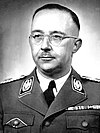
Heinz Guderian on Heinrich Himmler 4 quotes
“Himmler ended his life by committing suicide though he had previously consistently condemned such an action, which he had claimed to regard as contemptible and which he had forbidden the SS. He therefore escaped his judges here below and left behind less responsible men to carry on the burden of his great guilt.”
Heinz Guderian on Martin Bormann 2 quotes
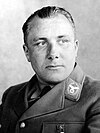
“The sicker that Hitler grew and the worse the military situation became, the fewer were the number of people who could reach the dictator. Everything had to be done through this sinister guttersnipe, Bormann, and thus his methods became increasingly successful. I had repeated angry altercations with him, because over and over again he would sabotage the taking of necessary military measures for the sake of the obscure political game that he was playing. He would also attempt to interfere in matters that purely concerned the Army, always with unfortunate results. Bormann was the éminence grise of the Third Reich.”
Heinz Guderian on Carl von Clausewitz
“It was during the period of calm that one of the most important works of military science was composed, Vom Kriege (‘On War’), by the director of the Prussian War Academy, Carl von Clausewitz. This little-read but much-criticised book contains the first attempt to create a philosophy of war and to analyse its characteristics from a detached standpoint. It played a great part in forming the attitude of mind of several generations of German General Staff Corps officers. From it derives that striving to observe both men and affairs coolly and sensibly which has been the foremost quality of all outstanding members of the German General Staff. It served also to strengthen the patriotism and the idealism which inspired such officers.”

Heinz Guderian on Hermann Göring
“The blame for the faulty use of the Air Force must be apportioned equally to Hitler and to Goering. Neither the bravery nor the military and technical ability of the Luftwaffe sufficed to compensate for the vanity of its Commander-in-Chief and for the indulgence that Hitler showed towards the ambitions of his principle disciple. Only much later did Hitler form a true picture of Goering's worth- or rather worthlessness- but it is significant that on 'grounds of policy' he always refused to replace him in an appointment that was, for better or for worse, decisive to the outcome of the war. It has often been maintained that Hitler showed unshakable loyalty to his 'old comrades'. So far as Goering is concerned this was unfortunately true. It is also true that he frequently complained about him, but he never drew the correct conclusions from his own observations.”

Heinz Guderian on B. H. Liddell Hart
“It was principally the books and articles of the Englishmen, Fuller, Liddell Hart and Martel, that excited my interest and gave me food for thought. These far-sighted soldiers were even then trying to make of the tank something more than just an infantry support weapon. They envisaged it in relationship to the growing motorization of our age, and thus they became the pioneers of a new type of warfare on the largest scale. I learned from them the concentration of armour, as employed in the battle of Cambrai. Further, it was Liddell Hart who emphasized the use of armoured forces for long-range strokes, operations against the opposing army's communications, and also proposed a type of armoured division combining panzer and panzer-infantry units. Deeply impressed by these ideas I tried to develop them in a sense practicable for our own army. So I owe many suggestions of our further development to Captain Liddell Hart.”

Heinz Guderian on Joseph Goebbels
“One of the cleverest men in Hitler's close circle was Dr. Joseph Goebbels, the Gauleiter of Berlin and also Minister for People's Enlightenment and Propaganda. He was a skilled orator and in the struggle against the Communists for Berlin's vote he had demonstrated great personal courage. But he was also a dangerous demagogue, quite unscrupulous in his agitations against parents and school teachers; and he was largely responsible for the notorious pogrom, the so-called 'Crystal night', of November 1938. He was certainly in a position to recognize the errors and weaknesses of the National-Socialist system, but he lacked the courage necessary to lay his knowledge before Hitler. In Hitler's presence he- like Goering and Himmler- was a little man. He both feared and idolised him. Hitler's powers of suggestions were seldom so apparent as in his relationship with Goebbels. The highly skilled demagogue fell silent in Hitler's presence. He did his best to unravel his master's wishes, and in his propaganda- at which he might almost be called a genius- he seldom, if ever, displeased the dictator.”

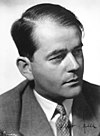
Heinz Guderian on Albert Speer
“Speer preserved a sensitive heart through all the horrors of the closing years of the Third Reich. He was a good comrade, with an open character and an intelligent, natural manner. Originally an independent architect, he became Minister after Todt's early death. He disliked bureaucratic methods and attempted to act according to a healthy understanding of human nature. We worked together without friction and always did our best to give one another such assistance as lay within our power, which is surely the obvious and sensible way to behave. But of how many prominent men in the Third Reich could it be said that they pursued this obvious and sensible course? Speer always retained his objectivity. I never saw him become exaggeratedly excited. He managed to calm down his occasionally highly temperamental colleagues, and when inter-departmental strife arose he always did his best to pacify both parties. Speer possessed sufficient courage to speak his mind to Hitler. At an early stage he explained to him clearly and fully why the war could no longer be won and why it must therefore be ended. This brought Hitler's anger down upon him.”
Quotes About Heinz Guderian
Gain deeper perspective through quotes about Heinz Guderian from others.
Niall Ferguson on Heinz Guderian 2 quotes
“The good news for Liddell Hart was that his work was hugely influential. The bad news was that it was hugely influential not in Britain but in Germany. With the notable exception of Major-General J. F. C. Fuller, senior British commanders like Field Marshal Earl Haig simply refused to accept that 'the aeroplane, the tank [and] the motor car [would] supersede the horse in future wars', dismissing motorized weapons as mere 'accessories to the man and horse'. Haig's brother concurred: the cavalry would 'never be scrapped to make room for the tanks'. By contrast, younger German officers immediately grasped the significance of Liddell Hart's work. Among his most avid fans was Heinz Guderian, commander of the 19th German Army Corps in the invasion of Poland. As Guderian recalled, it was from Liddell Hart and other British pioneers of 'a new type of warfare on the largest scale' that he learned the importance of 'the concentration of armour'.”

About Heinz Guderian
Heinz Guderian (17 June 1888 – 14 May 1954) was a Nazi German World War II general and tank commander, theorist of tank combat and one of the developers of blitzkrieg strategy. He was not charged with any war crimes during the Nuremberg Trials since his actions and behavior were ruled to be consistent with those of a professional soldier. Heinz Guderian died at the age of 65, in Schwangau near Füssen (Southern Bavaria) and is buried at the Friedhof Hildesheimerstrasse in Goslar.