Kshitish Vedalankar: Storm in Punjab, quoted in Elst, Koenraad (2002). Who is a Hindu?: Hindu revivalist views of Animism, Buddhism, Sikhism, and other offshoots of Hinduism. ISBN 978-8185990743
“
Guru Nanak 'called himself a Hindu. According to Janamsâkhî, he wore a sacred thread (yajñopavît) and had a lock of hair (chotî) on his head. After him till the fifth Guru, each had his sacred thread ceremony performed, were married according to Vedic rites, used to apply tilak and used to hear tales from Vedas and Puranas.'
— Kshitish Vedalankar
What It Means
This is a placeholder explanation generated by the low-overhead model. It interprets "Guru Nanak 'called himself a Hindu. According to Janamsâkhî, he wore a sacred thread (yajñopavît) and had a lock of hair (chotî) on his head. After him till the fifth Guru, each had his sacred thread ceremony performed, were married according to Vedic rites, used to apply tilak and used to hear tales from Vedas and Puranas.'" in the context of "Kshitish Vedalankar: Storm in Punjab, quoted in Elst, Koenraad (2002). Who is a Hindu?: Hindu revivalist views of Animism, Buddhism, Sikhism, and other offshoots of Hinduism. ISBN 978-8185990743" to mean that wisdom is timeless.
Source: Wikiquote: "Guru Nanak" (About Guru Nanak)
The 'What it means' explanation text was generated by Google Gemini Flash (accessed January 18, 2026). https://gemini.google.com/app
Tags
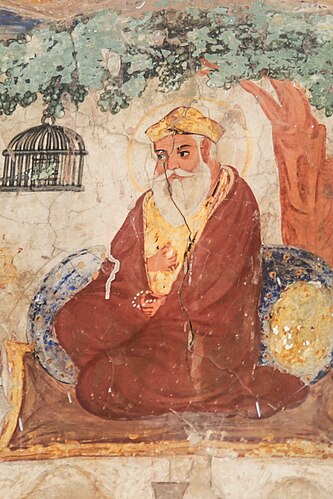
About Guru Nanak
Guru Nanak (15 April 1469 – 22 September 1539) also addressed as Baba Nanak or Nanak Shah founded the religion of Sikhism. He was the first of the ten Sikh Gurus, while the Guru Granth Sahib is considered as the eleventh guru. He travelled widely through out the country propagating the message of one God who dwells in every one of God's creations and constitutes the eternal Truth. His birth is celebrated world-wide on Kartik Puranmashi, the full-moon day which falls on different dates each year in the month of Kartik, October–November.
View all quotes →