Link Copied!
Grady Booch Quotes (1955-)

About Grady Booch
Grady Booch (born February 27, 1955) is an American software engineer. Booch is best known for developing the Unified Modeling Language with Ivar Jacobson and James Rumbaugh.
Best Grady Booch Quotes
Shortest
Earliest
Explore our curated collection of the most famous and impactful Grady Booch quotes.
“Good people with a good process will outperform good people with no process every time.”
“The entire history of software engineering is that of the rise in levels of abstraction.”

“The entire history of software engineering is that of the rise in levels of abstraction.”
“Typically, a subclass augments or redefines the existing structure and behavior of its superclasses.”
“In a quality object-oriented software system, you will find many classes that speak the language of the domain expert”

“Where We Are Going
2010s age of transparency
2020s total dependence
2030s rise of the machines”
2010s age of transparency
2020s total dependence
2030s rise of the machines”
“The class Dog is functionally cohesive if its semantics embrace the behavior of a dog, the whole dog, and nothing but the dog.”

“[A class category is] a collection of classes, some of which are visible to other class categories, and others of which are hidden.”
“Perhaps the greatest strength of an object-oriented approach to development is that it offers a mechanism that captures a model of the real world.”
“The object-oriented paradigm is useful when building software systems where there is a hierarchy defined as a ranking or ordering of abstractions.”
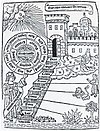
“If an abstraction is a kind of some other abstraction, or if it is exactly equal to the sum of its components, then inheritance is a better approach”
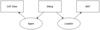
“Object-oriented analysis is a method of analysis that examines requirements from the perspective of the classes and objects found in the vocabulary of the problem domain.”

“Structured design does not scale up well for extremely complex systems, and this method is largely inappropriate for use with object-based and object-oriented programming languages.”
“Object-oriented design is a method of design encompassing the process of object-oriented decomposition and a notation for depicting both logical and physical as well as static and dynamic models of the system under design.”

“Ultimately, discovery and invention are both problems of classification, and classification is fundamentally a problem of finding sameness. When we classify, we seek to group things that have a common structure or exhibit a common behavior.”
“The amateur software engineer is always in search of magic, some sensational method or tool whose application promises to render software development trivial. It is the mark of the professional software engineer to know that no such panacea exist.”
“In object-oriented analysis, we seek to model the world by identifying the classes and objects that form the vocabulary of the problem domain, and in object-oriented design, we invent the abstractions and mechanisms that provide the behavior that this model requires.”
“Whereas object-oriented analysis typically focuses upon one specific problem at a time, domain analysis seeks to identify the classes and objects that are common to all applications within a given domain, such as missile avionics systems, compilers, or accounting software.”
“Object-oriented programming is a method of implementation in which programs are organized as cooperative collections of objects, each of which represents an instance of some class, and whose classes are all members of a hierarchy of classes united via inheritance relationships.”
“Model Driven Architecture is a style of enterprise application development and integration, based on using automated tools to build system independent models and transform them into efficient implementations.”

“Every software system needs to have a simple yet powerful organizational philosophy (think of it as the software equivalent of a sound bite that describes the system's architecture)... [A] step in [the] development process is to articulate this architectural framework, so that we might have a stable foundation upon which to evolve the system's function points.”
“How We Got Here
1910s beginning of automation
1920s beginning of expansion
1930s beginning of dependence
1940s beginning of von Neuman machines
1950s rise of the machines
1960s rise of the languages and methods
1970s death of the mainframe
1980s age of the personal computer
1990s age of the Internet and new methods
2000s retrenchment”
Grady Booch Quotes by Topic
Find exactly what you are looking for by browsing this categorized list of Grady Booch quotes by topic.
Grady Booch on Object-orientation 4 quotes
“Perhaps the greatest strength of an object-oriented approach to development is that it offers a mechanism that captures a model of the real world.”
Grady Booch on Software architecture 2 quotes
“All architecture is design but not all design is architecture. Architecture represents the significant design decisions that shape a system, where significant is measured by cost of change.”
Grady Booch on Software engineering 2 quotes
“The amateur software engineer is always in search of magic, some sensational method or tool whose application promises to render software development trivial. It is the mark of the professional software engineer to know that no such panacea exist.”

Grady Booch on Approach
“Perhaps the greatest strength of an object-oriented approach to development is that it offers a mechanism that captures a model of the real world.”

Grady Booch on C++
“Today, we're at the beginning stages of the next level. Executable UML is the next logical, and perhaps inevitable, evolutionary step in the ever-rising level of abstraction at which programmers express software solutions. Rather than elaborate an analysis product into a design product and then write code, application developers of the future will use tools to translate abstract application constructs into executable entities. Someday soon, the idea of writing an application in Java or C++ will seem as absurd as writing an application in assembler does today.”

Grady Booch on Java (programming language)
“Today, we're at the beginning stages of the next level. Executable UML is the next logical, and perhaps inevitable, evolutionary step in the ever-rising level of abstraction at which programmers express software solutions. Rather than elaborate an analysis product into a design product and then write code, application developers of the future will use tools to translate abstract application constructs into executable entities. Someday soon, the idea of writing an application in Java or C++ will seem as absurd as writing an application in assembler does today.”

Grady Booch on Civil engineering
“A physician, a civil engineer, and a computer scientist were arguing about what was the oldest profession in the world. The physician remarked, "Well, in the Bible, it says that God created Eve from a rib taken out of Adam. This clearly required surgery, and so I can rightly claim that mine is the oldest profession in the world." The civil engineer interrupted, and said, "But even earlier in the book of Genesis, it states that God created the order of the heavens and the earth from out of the chaos. This was the first and certainly the most spectacular application of civil engineering. Therefore, fair doctor, you are wrong: mine is the oldest profession in the world." The computer scientist leaned back in her chair, smiled, and then said confidently, "Ah, but who do you think created the chaos?"”

Grady Booch on Design
“As a noun, design is the named (although sometimes unnamable) structure or behavior of a system whose presence resolves or contributes to the resolution of a force or forces on that system. A design thus represents one point in a potential decision space. A design may be singular (representing a leaf decision) or it may be collective (representing a set of other decisions).
As a verb, design is the activity of making such decisions. Given a large set of forces, a relatively malleable set of materials, and a large landscape upon which to play, the resulting decision space may be large and complex. As such, there is a science associated with design (empirical analysis can point us to optimal regions or exact points in this design space) as well as an art (within the degrees of freedom that range beyond an empirical decision; there are opportunities for elegance, beauty, simplicity, novelty, and cleverness).
All architecture is design but not all design is architecture. Architecture represents the significant design decisions that shape a system, where significant is measured by cost of change.”
Grady Booch on Executable UML
“The entire history of software engineering is that of the rise in levels of abstraction. Executable UML is the next logical, and perhaps inevitable, evolutionary step in the ever-rising level of abstraction at which programmers express software solutions. Rather than elaborate an analysis product into a design product and then write code, application developers of the future will use tools to translate abstract application constructs into executable entities... This shift is made possible by the confluence of four factors:
1. The development of the Model Driven Architecture (MDA) standards by the Object Management Group (OMG)
2. The adoption of the Precise Action Semantics for the Unified Modeling Language specification by the OMG in November of 2001
3. A proposed profile of UML—Executable UML—supports creating a complete and implementation-neutral self-contained expression of application functionality. Steven J. Mellor and Marc J. Balcer define this profile in their book Executable UML: A Foundation for Model-Driven Architecture
4. The availability of high-quality Model Compilers and Virtual Execution Environments (VEEs) that provide "out of the box" platforms upon which Executable UML models can execute. These VEEs, which exist today in a somewhat incipient stage, will someday soon reduce low-level system architectures to near-commodity status.”
Quotes About Grady Booch
Gain deeper perspective through quotes about Grady Booch from others.
Ulrich Frank on Grady Booch
“Being a protagonist within the Ada-scene for long Booch is one of the pioneers of object-oriented modelling. After a number of early publications in the 1980s he as presented a design methodology within an extensive textbook (Booch 1990). Although Booch conceptualizes objects similar to Rumbaugh et al. he does not distinguish between three partial models. His methodology is primarily focused on the specification of classes. In order to allow for a detailed description of classes Booch suggests various templates. The methodology not only covers conceptual design ("logical view") but includes also techniques which are clearly associated with implementation issues ("module architecture", "process architecture"). The following description of Booch’s approach is mainly focused on the logical view.”
Martin Fowler on Grady Booch
“The key books about object-oriented graphical modeling languages appeared between 1988 and 1992. Leading figures included Grady Booch [Booch,OOAD]; Peter Coad [Coad, OOA], [Coad, OOD]; Ivar Jacobson (Objectory) [Jacobson, OOSE]; Jim Odell [Odell]; Jim Rumbaugh (OMT) [Rumbaugh, insights], [Rumbaugh, OMT]; Sally Shlaer and Steve Mellor [Shlaer and Mellor, data], [Shlaer and Mellor, states] ; and Rebecca Wirfs-Brock (Responsibility Driven Design) [Wirfs-Brock].”

About Grady Booch
Grady Booch (born February 27, 1955) is an American software engineer. Booch is best known for developing the Unified Modeling Language with Ivar Jacobson and James Rumbaugh.