Link Copied!
Giordano Bruno Quotes (1548-1600)
Philosopher, Poet, Mathematician




About Giordano Bruno
Giordano Bruno (1548 – 17 February 1600) was an Italian universalist pantheist monist philosopher, mathematician, astronomer and poet, who, following an Inquisition for heresy and the denial of several Catholic doctrines, was burned at the stake in Rome, 1600; born Filippo Bruno, in Nola, Italy, he often called himself Il Nolano (The Nolan).
Best Giordano Bruno Quotes
Shortest
Earliest
Explore our curated collection of the most famous and impactful Giordano Bruno quotes.

“Maiori forsan cum timore sententiam in me fertis quam ego accipiam.”
“I pray you, magnificent Sir, do not trouble yourself to return to us, but await our coming to you.”
“The Divine light is always in man, presenting itself to the senses and to the comprehension, but man rejects it.”

“The single spirit doth simultaneously temper the whole together; this is the single soul of all things; all are filled with God.”
“A constellation of the most pedantic, obstinate ignorance and presumption, mixed with a kind of rustic incivility, which would try the patience of Job.”
“All things are in the Universe, and the universe is in all things: we in it, and it in us; in this way everything concurs in a perfect unity.”

“The infinity of All ever bringing forth anew, and even as infinite space is around us, so is infinite potentiality, capacity, reception, malleability, matter.”
“Oh holy asinity! holy ignorance!
Holy foolishness and pious devotion!
You who alone do more to advance and make souls good
Than human ingenuity and study...”
Holy foolishness and pious devotion!
You who alone do more to advance and make souls good
Than human ingenuity and study...”


“The wise soul feareth not death; rather she sometimes striveth for death, she goeth beyond to meet her. Yet eternity maintaineth her substance throughout time, immensity throughout space, universal form throughout motion.”

“The one infinite is perfect, in simplicity, of itself, absolutely, nor can aught be greater or better, This is the one Whole, God, universal Nature, occupying all space, of whom naught but infinity can give the perfect image or semblance.”

“Chi vuole che la quaresima gli paia corta, si faccia debito per pagare a Pasqua.
• Translation: He who wants Lent to seem short, should contract a debt to be repaid at Easter.”
• Translation: He who wants Lent to seem short, should contract a debt to be repaid at Easter.”

“We find that everything that makes up difference and number is pure accident, pure show, pure constitution. Every production, of whatever kind, is an alteration, but the substance remains always the same, because it is only one, one divine immortal being.”
“Given that annihilation of nature in its entirety is impossible, and that death and dissolution are not appropriate to the whole mass of this entire globe or star, from time to time, according to an established order, it is renewed, altered, changed, and transformed in all its parts.”
“Those wise men knew God to be in things, and Divinity to be latent in Nature, working and glowing differently in different subjects and succeeding through diverse physical forms, in certain arrangements, in making them participants in her, I say, in her being, in her life and intellect.”
“When we consider the being and substance of that universe in which we are immutably set, we shall discover that neither we ourselves nor any substance doth suffer death; for nothing is in fact diminished in its substance, but all things, wandering through infinite space, undergo change of aspect.”

Giordano Bruno Quotes by Topic
Find exactly what you are looking for by browsing this categorized list of Giordano Bruno quotes by topic.
Giordano Bruno on Monism 8 quotes
View all 8 quotes on Monism →Giordano Bruno on The All 4 quotes
View all 4 quotes on The All →Giordano Bruno on Absurdism 4 quotes
“The Divine Light is always in man, presenting itself to the senses and to the comprehension, but man rejects it.”
Giordano Bruno on World Soul 4 quotes
“The single spirit doth simultaneously temper the whole together; this is the single soul of all things; all are filled with God.”
Giordano Bruno on Essence 3 quotes
“I understand Being in all and over all, as there is nothing without participation in Being, and there is no being without Essence. Thus nothing can be free of the Divine Presence.”
Giordano Bruno on Open individualism 2 quotes
“The universal Intellect is the intimate, most real, peculiar and powerful part of the soul of the world. This is the single whole which filleth the whole, illumineth the universe and directeth nature to the production of natural things, as our intellect with the congruous production of natural kinds.”
Giordano Bruno on Debt
Giordano Bruno on Reverence
“...that all motives of hope and fear from invisible powers, which are not immediately derived from, and absolutely coincident with, the reverence due to the supreme reason of the universe, are all alike dangerous superstitions.”
Giordano Bruno on Intelligibility
“We see that pedantry has never been held in such esteem for the government of the world as in our times, and it offers as many paths of the true intelligible species and objects of infallible and sole truth as there are individual pedants.”

Giordano Bruno on Planet
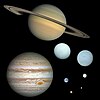
“In space there are countless constellations, suns and planets; we see only the suns because they give light; the planets remain invisible, for they are small and dark. There are also numberless earths circling around their suns, no worse and no less than this globe of ours. For no reasonable mind can assume that heavenly bodies that may be far more magnificent than ours would not bear upon them creatures similar or even superior to those upon our human earth.”
What Giordano Bruno Said About Others
Discover personal opinions Giordano Bruno shared regarding contemporaries.
Giordano Bruno on Nicolaus Copernicus
“He was a man of grave and cultivated mind, of rapid and mature intelligence; inferior to no preceding astronomer, unless in order of succession and time ; a man, who in natural ability was far superior to Ptolemy, Hipparchus, Eudoxus, and all those others who followed in their footsteps. What he was, he became through having liberated himself from certain false axioms of the common and vulgar philosophy — I will not say blindness. Nevertheless, he did not depart far from them ; because, studying mathematics rather than Nature, he failed to penetrate and dig deep enough altogether to cut away the roots of incongruous and vain principles, and thus, removing perfectly all opposing difficulties, free himself and others from so many empty investigations into things obvious and unchangeable. In spite of all this, who can sufficiently praise the magnanimity of this Pole, who, having little regard to the foolish multitude, stood firm against the torrent of contrary opinion, and, although well-nigh unarmed with living arguments, resuming those rusty and neglected fragments which antiquity had transmitted to him, polished, repaired, and put them together with reasonings more mathematical than philosophical ; and so rendered that cause formerly contemned and contemptible, honourable, estimable, more probable than its rival, and certainly convenient and expeditious for purposes of theory and calculation ? Thus this Teuton, although with means insufficient to vanquish, overthrow, and suppress falsehood, as well as resist it, nevertheless resolutely determined in his own mind, and openly confessed this final and necessary conclusion : that it is more possible that this globe should move with regard to the universe, than that the innumerable multitude of bodies, many of which are known to be greater and more magnificent than our earth, should be compelled, in spite of Nature and reason, which, by means of motions evident to the senses, proclaim the contrary, to acknowledge this globe as the centre and base of their revolutions and influences. Who then will be so churlish and discourteous towards the efforts of this man, as to cover with oblivion all he has done, by being ordained of the Gods as an Aurora - which was to precede the rising of this Sun of the true, ancient philosophy, buried during so many centuries in the tenebrous caverns of blind, malignant, froward, envious ignorance ; and, taking note only of what he failed to accomplish, rank him amongst the number of the herded multitude, which discourses, guides itself, precipitates to destruction, according to the oral sense of a brutal and ignoble belief, rather than amongst those who, by the use of right reason, have been able to rise up, and resume the true course under the faithful guidance of the eye of divine intelligence.”

Quotes About Giordano Bruno
Gain deeper perspective through quotes about Giordano Bruno from others.
Official judgment on charges of heresy on Giordano Bruno
“We hereby, in these documents, publish, announce, pronounce, sentence, and declare thee the aforesaid Brother Giordano Bruno to be an impenitent and pertinacious heretic, and therefore to have incurred all the ecclesiastical censures and pains of the Holy Canon, the laws and the constitutions, both general and particular, imposed on such confessed impenitent pertinacious and obstinate heretics... We ordain and command that thou must be delivered to the Secular Court... that thou mayest be punished with the punishment deserved... Furthermore, we condemn, we reprobate, and we prohibit all thine aforesaid and thy other books and writings as heretical and erroneous, containing many heresies and errors, and we ordain that all of them which have come or may in future come into the hands of the Holy Office shall be publicly destroyed and burned in the square of St. Peter before the steps and that they shall be placed upon the Index of Forbidden Books, and as we have commanded, so shall it be done..”
Albert Edwin Avey on Giordano Bruno
“Bruno embraced a pantheistic doctrine, identifying God and Nature, the active and the passive sides of reality. Each is infinite, he insisted, and there could not be two infinities, for they would limit each other. God is all Being, and the universe is his manifestation.”
William Boulting on Giordano Bruno 2 quotes
“Bruno is the first thinker who based the soul's duty to itself on its own nature: not on external authority, but on inner light. ... Of Bruno, as of Spinoza, it may be said that he was "God-intoxicated." He felt that the Divine Excellence had its abode in the very heart of Nature and within his own body and spirit. Indwelling in every dewdrop as in the innumerable host of heaven, in the humblest flower and in the mind of man, he found the living spirit of God, setting forth the Divine glory, making the Divine perfection and inspiring with the Divine love. The Eroici is full of the pantings of his soul for intellectual enfranchisement and contact with Truth, the divine object.... The heroic soul, says Bruno, shall seek truth and find it. The time had not then come for Pilate's question to be put again. Bruno was happily unvexed by the problem of truth... there is a view implicit in the Eroici and in all but the earliest of his philosophical writings, and this is that our truth is a progressive, ideal approximation towards that whole Truth which is one with the inmost nature of Being.”
Edwin Arthur Burtt on Giordano Bruno
“Now during the half-century after Copernicus, no one was bold enough to champion his theory save a few eminent mathematicians like Rheticus and a few incorrigible intellectual radicals like Bruno. In the late eighties and early nineties, however, certain corollaries of Copernicus' work were seized upon by the youthful Kepler, then in his student days...”
Daniel Cardó on Giordano Bruno
“Against Bruno, Ratzinger is critical of what other commentators have described as his pandeism.”
Samuel Taylor Coleridge on Giordano Bruno 2 quotes
“I propose to give an account of the life of Giordano Bruno... who was burnt under pretence of atheism, at Rome, in the year 1600 and of his works which are perhaps the scarcest books ever printed... The most industrious historians of speculative philosophy have not been able to procure more than a few of his works... out of eleven, the titles of which are preserved to us I have had an opportunity of perusing six.”

James Daniel Collins on Giordano Bruno
“Like Cusanus and Calvin, Bruno has an unknown and ineffable God. But his God is unknown not in virtue of His infinite actuality and real transcendence of the universe, but in virtue of the immensity of the universe itself and the relative disproportion between it and the human way of knowing and loving.”
John Crowley on Giordano Bruno
“The immense laughter of Bruno when he understood that Copernicus had inverted the universe — what was it but joy in the confirmation of his knowledge that Mind, in the center of all, contains within it all that it is the center of?”

Thomas Davidson on Giordano Bruno
“His view with regard to morals and their relation to religion may best be seen from the following words addressed by Momus to Jove: “It will be sufficient if you put an end to that lazy tribe of pedants, who, without doing good, according to the divine and natural law, consider themselves, and wish to be considered, as religious men, agreeable to the gods, and declare that it is not by pursuing good and shunning evil that men become worthy and pleasing to the gods, but by believing and hoping according to their catechism." Elsewhere, he makes Wisdom say: “Wherefore, it is an unworthy, foolish, profane, and reprehensible thing to think that the gods demand reverence, fear, love, worship, and respect for any other good end or utility than those of men themselves, inasmuch as being perfectly glorious in themselves, and therefore unable to add any glory to themselves from without, they have made laws, not so much to obtain glory from men as to communicate glory to them. Hence, laws and judgments fall short of the goodness and truth of law and judgment, just in proportion as they fail to order and approve, above all other things, that which consists in the moral actions of men with respect to each other." I doubt whether the Society for Ethical Culture could frame a better statement of the relation between ethics and religion than this of Bruno's. Reading this, we are at no loss to understand why Bruno, though he spent some time in Geneva, and afterward in Protestant England and Germany, never became a Protestant. He appears, from recently discovered documents, to have got into considerable trouble at Geneva; and no wonder, when he puts into the mouth of Wisdom words like the following, concerning the chief reformers: “While they say that all their care is about invisible things, which neither they nor anybody else ever understood, they maintain that, in order to obtain grace, all that is required is fate, which is immutable, but which is determined by certain affections and fancies on which the gods are especially fond of feeding." Indeed, his contempt for the doctrines of the reformers, who exalted faith as all-potent for salvation and despised works and a moral life, is without bounds. His treatment of the doctrine of predestination is not only contemptuous, but funny. I think I need not say anything more to convince you that Bruno was one of the mighty, one of those strange, incomprehensible, pioneer geniuses that lived centuries before their time, destined, apparently, to lay out the tasks for many succeeding ages. He rose not only above the dogmas and superstitions of half-obsolete mediaeval Catholicism, but, with equal ease and firmness, above the new follies of growing Protestantism. He belongs not to the sixteenth century, but to the nineteenth, and even to the elite of it. Great in philosophy, great in science,— physical and moral, — he was greater still in practice, in life and in death. No man ever labored more or suffered more, in order to be free himself and help others to be so. No one ever met death more firmly and heroically. Among the martyrs for truth and freedom, — those first essentials of manhood, — he occupies the highest place.”
Harlan Ellison on Giordano Bruno
“The real story of our times is seldom told in the horse-puckey-filled memoirs of dopey, self-serving presidents or generals, but in the outrageous, demented lives of guys like Lenny Bruce, Giordano Bruno, Scott Fitzgerald — and Paul Krassner. The burrs under society's saddle. The pains in the ass.”

Disputed Quotes
Quotes attributed to Giordano Bruno that are questionable.
“Heroic love is the property of those superior natures who are called insane (insano) not because they do not know (no sanno), but because they over-know (soprasanno).”
About Giordano Bruno
Giordano Bruno (1548 – 17 February 1600) was an Italian universalist pantheist monist philosopher, mathematician, astronomer and poet, who, following an Inquisition for heresy and the denial of several Catholic doctrines, was burned at the stake in Rome, 1600; born Filippo Bruno, in Nola, Italy, he often called himself Il Nolano (The Nolan).