Link Copied!
Friedrich Engels Quotes (1820-1895)
Philosopher, King, Scientist

























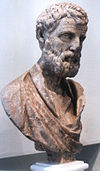






About Friedrich Engels
Friedrich Engels (November 28, 1820 – August 5, 1895) was a 19th-century German philosopher, social scientist, and journalist. He created Marxist theory together with Karl Marx. In 1845, he published The Condition of the Working Class in England, based on personal observations and research in Manchester.
Best Friedrich Engels Quotes
Shortest
Earliest
Explore our curated collection of the most famous and impactful Friedrich Engels quotes.
“Abolish competition and replace it with association.”

“It is a universal revolution and will, accordingly, have a universal range.”
“The slave is outside competition; the proletarian is in it and experiences all its vagaries.”
“Comedy is in act superior to tragedy and humourous reasoning superior to grandiloquent reasoning.”
“Communism is the doctrine of the conditions of the liberation of the proletariat.”
“The capitalists soon had everything in their hands and nothing remained to the workers.”
“What each individual wills is obstructed by everyone else, and what emerges is something that no one willed.”
“It is no longer a question anywhere of inventing interconnections from out of our brains, but of discovering them in the facts.”
“Big industry, competition and generally the individualistic organization of production have become a fetter which it must and will shatter.”
“The abolition of private property has become not only possible but absolutely necessary. ... The outcome can only be the victory of the proletariat.”
“Only sound common sense, respectable fellow that he is, in the homely realm of his own four walls, has very wonderful adventures directly he ventures out into the wide world of research.”
“Diese aus dem gegenseitigen Neid und der Habgier der Kaufleute entstandene Nationalökonomie oder Bereicherungswissenschaft trägt das Gepräge der ekelhaftesten Selbstsucht auf der Stirne.”
“Freedom does not consist in any dreamt-of independence from natural laws, but in the knowledge of these laws, and in the possibility this gives of systematically making them work towards definite ends.”

“The way in which the vast mass of the poor are treated by modern society is truly scandalous. They are herded into great cities where they breathe a fouler air than in the countryside which they have left.”
“Democracy would be wholly valueless to the proletariat if it were not immediately used as a means for putting through measures directed against private property and ensuring the livelihood of the proletariat.”
“Industry controlled by society as a whole, and operated according to a plan, presupposes well-rounded human beings, their faculties developed in balanced fashion, able to see the system of production in its entirety.”
“History has proved us, and all who thought like us, wrong. It has made it clear that the state of economic development on the Continent at that time [1848] was not, by a long way, ripe for the removal of capitalist production.”

“The class of the wholly propertyless, who are obliged to sell their labor to the bourgeoisie in order to get, in exchange, the means of subsistence for their support. This is called the class of proletarians, or the proletariat.”
“The slave frees himself when, of all the relations of private property, he abolishes only the relation of slavery and thereby becomes a proletarian; the proletarian can free himself only by abolishing private property in general.”

“The proletarian works with the instruments of production of another, for the account of this other, in exchange for a part of the product. ... The proletarian liberates himself by abolishing competition, private property, and all class differences.”
Friedrich Engels Quotes by Topic
Find exactly what you are looking for by browsing this categorized list of Friedrich Engels quotes by topic.
Friedrich Engels on Working class 13 quotes
“Bourgeoisie and proletariat have become the decisive classes, and the struggle between them the great struggle of the day.”

Friedrich Engels on Private property 9 quotes
“Prostitution is based on private property and falls with it.”

Friedrich Engels on Bourgeoisie 9 quotes
“Bourgeoisie and proletariat have become the decisive classes, and the struggle between them the great struggle of the day.”

Friedrich Engels on Competition 6 quotes
“Abolish competition and replace it with association.”
Friedrich Engels on Communism 6 quotes
“Communism is the doctrine of the conditions of the liberation of the proletariat.”

Friedrich Engels on Industry 6 quotes
“Big industry, competition and generally the individualistic organization of production have become a fetter which it must and will shatter.”

Friedrich Engels on Means of production 6 quotes
“The class of the wholly propertyless, who are obliged to sell their labor to the bourgeoisie in order to get, in exchange, the means of subsistence for their support. This is called the class of proletarians, or the proletariat.”
Friedrich Engels on Proletarian revolution 6 quotes
“The abolition of private property is, doubtless, the shortest and most significant way to characterize the revolution in the whole social order which has been made necessary by the development of industry – and for this reason it is rightly advanced by communists as their main demand.”

Friedrich Engels on Economic liberalism 5 quotes
“The term national wealth has only arisen as a result of the liberal economists’ passion for generalisation. As long as private property exists, this term has no meaning.”

Friedrich Engels on Freedom 4 quotes
“The free development of each is the condition for the free development of all.”

Friedrich Engels on Work 4 quotes
“The capitalists soon had everything in their hands and nothing remained to the workers.”

Friedrich Engels on Productive forces 4 quotes
“So long as it is not possible to produce so much that there is enough for all, with more left over for expanding the social capital and extending the forces of production – so long as this is not possible, there must always be a ruling class directing the use of society’s productive forces, and a poor, oppressed class. How these classes are constituted depends on the stage of development.”

What Friedrich Engels Said About Others
Discover personal opinions Friedrich Engels shared regarding contemporaries.
Friedrich Engels on Thomas Carlyle 3 quotes
“Search as you will, Carlyle's book is the only one which strikes a human chord, presents human relations and shows traces of a human point of view.”

Friedrich Engels on Thomas Robert Malthus 2 quotes
“Malthus ... quotes the words of a poet, that the poor man comes to the feast of Nature and finds no cover laid for him, and adds that 'she bids him begone', for he did not before his birth ask of society whether or not he is welcome. This is now the pet theory of all genuine English bourgeois, and very naturally, since it is the most specious excuse for them.”

Friedrich Engels on Georg Wilhelm Friedrich Hegel
Friedrich Engels on Denis Diderot
“If ever anybody dedicated his whole life to the "enthusiasm for truth and justice" — using this phrase in the good sense — it was Diderot.”

Friedrich Engels on Lajos Kossuth
“For the first time after a long period we meet with a truly revolutionary figure, a man who in the name of his people dares to accept the challenge of a desperate struggle, who for his nation is Danton and Carnot in one person — Lajos Kossuth.”
Friedrich Engels on Baruch Spinoza
“It is to the highest credit of the philosophy of the time that it did not let itself be led astray by the restricted state of contemporary natural knowledge, and that — from Spinoza down to the great French materialists — it insisted on explaining the world from the world itself and left the justification in detail to the natural science of the future.”

Friedrich Engels on Friedrich von Waldersee
“He is a man of very high standing in the Prussian army, where he has particularly distinguished himself by revolutionising the old pedantic system of teaching the soldier skirmishing, patrolling, outpost, and light infantry duty generally. His new method is now introduced in that army. It is remarkable for doing away with all pedantry of forms, and exclusively appealing to the intellectual resources of the soldier in the performance of a duty which can only be carried out well by the intelligent and harmonious co-operation of a number of men.”
Friedrich Engels on Nicolaus Copernicus
“What Luther's burning of the Papal Bull was in the religious field, in the field of natural science was the great work of Copernicus, in which he, although timidly... threw down a challenge to ecclesiastical superstition. From then on natural science was in essence emancipated from religion, although the complete settlement of accounts in all details has gone on to the present day and in many minds is still far from being complete. But from then on the development of science went forward with giant strides, increasing, so to speak, proportionately to the square of the distance in time from its point of departure, as if it wanted to show the world that for the motion of the highest product of organic matter, the human mind, the law that holds good is the reverse of that for the motion of inorganic matter.”

Friedrich Engels on Robert Owen
“At this juncture, there came forward as a reformer a manufacturer 29-years-old – a man of almost sublime, childlike simplicity of character, and at the same time one of the few born leaders of men. Robert Owen had adopted the teaching of the materialistic philosophers: that man’s character is the product, on the one hand, of heredity; on the other, of the environment of the individual during his lifetime, and especially during his period of development. In the industrial revolution most of his class saw only chaos and confusion, and the opportunity of fishing in these troubled waters and making large fortunes quickly. He saw in it the opportunity of putting into practice his favorite theory, and so of bringing order out of chaos. ...The newly-created gigantic productive forces, hitherto used only to enrich individuals and to enslave the masses, offered to Owen the foundations for a reconstruction of society; they were destined, as the common property of all, to be worked for the common good of all.”
Friedrich Engels on Keir Hardie
“The Independent Labour Party is extremely indefinite in its tactics, and its leader, Keir Hardie, is a super-cunning Scot, whose demagogic tricks are not to be trusted for a minute. Although he is a poor devil of a Scottish coal miner, he has founded a big weekly, The Labour Leader, which could not have been established without considerable money, and he is getting this money from Tory or Liberal-Unionist, that is, anti-Gladstone and anti-Home Rule sources. There can be no doubt about this, and his notorious literary connections in London as well as direct reports and his political attitude confirm it. Consequently, owing to desertions by Irish and radical voters, he may very easily lose his seat in Parliament at the 1895 general elections and that would be a stroke of good luck — the man is the greatest obstacle at present. He appears in Parliament only on demagogic occasions, in order to cut a figure with phrases about the unemployed — without getting anything done — or to address imbecilities to the Queen on the occasion of the birth of a prince, which is infinitely banal and cheap in this country, and so forth. Otherwise there are very good elements both in the Social-Democratic Federation and in the Independent Labour Party, especially in the provinces, but they are scattered; yet they have at least managed to foil all the efforts of the leaders to incite the two organisations against each other.”

Quotes About Friedrich Engels
Gain deeper perspective through quotes about Friedrich Engels from others.
Paula Gunn Allen on Friedrich Engels
“The vision that impels feminists to action was the vision of the Grandmothers' society, the society that was captured in the words of the sixteenth-century explorer Peter Martyr nearly five hundred years ago. It is the same vision repeated over and over by radical thinkers of Europe and America, from François Villon to John Locke, from William Shakespeare to Thomas Jefferson, from Karl Marx to Friedrich Engels, from Benito Juarez to Martin Luther King, from Elizabeth Cady Stanton to Judy Grahn, from Harriet Tubman to Audre Lorde, from Emma Goldman to Bella Abzug, from Malinalli to Cherrie Moraga, and from Iyatiku to me. That vision as Martyr told it is of a country where there are "no soldiers, no gendarmes or police, no nobles, kings, regents, prefects, or judges, no prisons, no lawsuits... All are equal and free."”

Lord Acton on Friedrich Engels
“That the Materialistic Socialists will improve H. [History] for the poor. Their best writer, Engels, made known the errors and the horrors of our Factory System.”
John Kenneth Galbraith on Friedrich Engels
“Engels always considered himself a junior partner, and so, without doubt, he was. But that does not lessen his role. Had he not been the junior partner, much for which his senior partner is known would not have been done.”

Rosa Luxemburg on Friedrich Engels
“Friedrich Engels once said: “Bourgeois society stands at the crossroads, either transition to socialism or regression into barbarism.” What does “regression into barbarism” mean to our lofty European civilization? Until now, we have all probably read and repeated these words thoughtlessly, without suspecting their fearsome seriousness. A look around us at this moment shows what the regression of bourgeois society into barbarism means. This world war is a regression into barbarism. The triumph of imperialism leads to the annihilation of civilization.”
Margaret S Marsh on Friedrich Engels
“Engels's analysis has faced criticism in the twentieth century, both for its anthropological inaccuracy and for its theoretical confusion. Simone de Beauvoir found the materialist position inadequate to describe the nature of female subordination. "Historical materialism takes for granted facts that call for explanations.... It cannot provide solutions for the problems we have raised, because these concern the whole man and not that abstraction: Homo economicus." Simone de Beauvoir argued that woman's oppression is at bottom not based on economic factors, for "if the human consciousness had not included the original category of the Other and an original aspiration to dominate the Other, the invention of the bronze tool could not have caused the oppression of woman." More recently Ann Lane has attacked not materialism but Engels's inconsistency in applying it. She has argued that Engels mistakenly believed "that the responsibilities of home and family, and the economic ties that bind them together, are not an important part of what establishes their cohesion, that society can remove a vital function of an institution in order to perfect it. Socialist society will strip the family of most of its traditional jobs, but the family itself, in its pristine state, untouched by history or reality, shall remain."”
Paul Robeson on Friedrich Engels
“Today in Korea—in Southeast Asia—in Latin America and the West Indies, in the Middle East—in Africa, one sees tens of millions of long oppressed colonial peoples surging toward freedom. What courage—what sacrifice—what determination never to rest until victory!...And arrayed against them, the combined powers of the so-called Free West, headed by the greedy, profit-hungry, war-minded industrialists and financial barons of our America. The illusion of an “American Century” blinds them for the immediate present to the clear fact that civilization has passed them by—that we now live in a people’s century—that the star shines brightly in the East of Europe and of the world. Colonial peoples today look to the Soviet Socialist Republics...One reverently speaks of Marx, Engels, Lenin and Stalin—the shapers of humanity’s richest present and future.”

Anna Strunsky on Friedrich Engels
“You cannot conquer an awakened people. You cannot Prussianize Belgium and France. You cannot eradicate the teachings of Marx and Engels from the minds of hundreds of thousands of German Socialists. Surely they would find some way of uniting in spirit and in deed with the comrades of other nations in case of such an invasion on the part of a government which they had always understood and denounced.”

About Friedrich Engels
Friedrich Engels (November 28, 1820 – August 5, 1895) was a 19th-century German philosopher, social scientist, and journalist. He created Marxist theory together with Karl Marx. In 1845, he published The Condition of the Working Class in England, based on personal observations and research in Manchester.