Link Copied!
Frederick Winslow Taylor Quotes (1856-1915)
Author, King
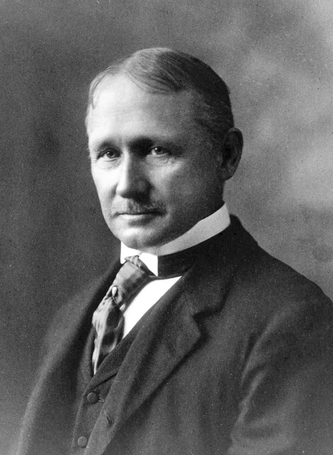
About Frederick Winslow Taylor
Frederick Winslow Taylor (March 20, 1856 – March 21, 1915) was an American mechanical engineer, one of the first management consultants, and is regarded as the father of scientific management.
Best Frederick Winslow Taylor Quotes
Shortest
Earliest
Explore our curated collection of the most famous and impactful Frederick Winslow Taylor quotes.
“I think no book is more stimulating than the history of a devoted and successful life.”

“The principal object of management should be to secure the maximum prosperity for the employer coupled with the maximum prosperity for each employee.”

“The writer feels that management is also destined to become more of an art, and that many of the, elements which are now believed to be outside the field of exact knowledge will soon be standardized tabulated, accepted, and used, as are now many of the elements of engineering.”
“It is only through enforced standardization of methods, enforced adoption of the best implements and working conditions, and enforced cooperation that this faster work can be assured. And the duty of enforcing the adoption of standards and enforcing this cooperation rests with management alone.”

“That there is a difference between the average and the first class man is known to all employers, but that the first class man can do in most cases from two to four times as much is known to few, and is fully realized only by those who have made a thorough and scientific study of the possibilities of men.”

“After a workman has had the price per piece of the work he is doing lowered two or three times as a result of his having worked harder and increased his output, he is likely to entirely lose sight of his employer's side of the case and to become imbued with a grim determination to have no more cuts if soldiering can prevent it.”
“I dare say that most of you gentlemen know that a good many pig-iron handlers can never learn to shovel right; the ordinary pig-iron handler is not the type of man well suited to shoveling. He is to stupid; there is too much mental strain, too much knack required of a shoveled for the pig-iron handler to take kindly to shoveling.”
“The Chairman: Mr. Taylor, do you believe that any system of scientific management induced by a desire for greater profits would revolutionize the minds of the employers to such an extent that they would immediately, voluntarily and generally enforce the golden rule.?
Mr. Taylor: If they had any sense, they would.”
Mr. Taylor: If they had any sense, they would.”
“In the past the man has been first; in the future the system must be first. This in no sense, however, implies that great men are not needed. On the contrary, the first object of any good system must be that of developing first-class men; and under systematic management the best man rises to the top more certainly and more rapidly than ever before.”

“Broadly speaking, then, the best type of management in ordinary use may be defined as management in which the workmen give their best initiative and in return receive some special incentive from their employers. This type of management will be referred to as the management of “initiative and incentive” in contradistinction to scientific management, or task management, with which it is to be compared.”

“Scientific management... has for its very foundation the firm conviction that the true interests of the two are one and the same; that prosperity for the employer cannot exist through a long term of years unless it is accompanied by prosperity for the employe, and vice versa; and that it is possible to give the workman what he most wants high wages and the employer what he wants a low labor cost for his manufactures.”
“The greater part of the systematic soldiering, however, is done by the men with the deliberate object of keeping their employers ignorant of how fast work can be done.
So universal is soldiering for this purpose, or under any of the ordinary systems of compensating labor, who does not devote a considerable part of his time to studying just how slowly he can work and still convince his employer that he is going at a good pace.”
So universal is soldiering for this purpose, or under any of the ordinary systems of compensating labor, who does not devote a considerable part of his time to studying just how slowly he can work and still convince his employer that he is going at a good pace.”
“The art of management has been defined, "As knowing exactly what you want men to do, and then seeing that they do it in the best and cheapest way." No concise definition can fully describe an art, but the relations between employers and men form without question the most important part of this art. In considering the subject, therefore, until this part of the problem has been fully discussed, the remainder of the art may be left in the background.”

“The differential rate system of piece-work consists briefly in offering two different rates for the same job: a high price per piece, in case the work is finished in the shortest time possible and in perfect condition, and a low price, if it takes a longer time to do the job, or if there are any imperfections in the work. (The high rate should be such that the workman can earn more per day than is usually paid in similar establishments.) This is directly the opposite of the ordinary plan of piece-work, in which the wages of the workmen are reduced when they increase their productivity.”
“The labor should include rest breaks so that the worker has time to recover from fatigue. Now one of the very first requirements for a man who is fit to handle pig iron as a regular occupation is that he shall be so stupid and so phlegmatic that he more nearly resembles in his mental make-up the ox than any other type. The man who is mentally alert and intelligent is for this very reason entirely unsuited to what would, for him, be the grinding monotony of work of this character. Therefore the workman who is best suited to handling pig iron is unable to understand the real science of doing this class of work.”

“In concluding let me say that we are now but on the threshold of the coming era of true cooperation. The time is fast going by for the great personal or individual achievement of any one man standing alone and without the help of those around him. And the time is coming when all great things will be done by the cooperation of many men in which each man performs that function for which he is best suited, each man preserves his individuality and is supreme in his particular function, and each man at the same time loses none of his originality and proper personal initiative, and yet is controlled by and must work harmoniously with many other men.”
“Perhaps the most prominent single element in modern scientific management is the task idea. The work of every workman is fully planned out by the management at least one day in advance, and each man receives in most cases complete written instructions, describing in detail the task which he is to accomplish, as well as the means to be used in doing the work. And the work planned in advance in this way constitutes a task which is to be solved, as explained above, not by the workman alone, but in almost all cases by the joint effort of the workman and the management. This task specifies not only what is to be done but how it is to be done and the exact time allowed for doing it.”
“In order to have any hope of obtaining the initiative of his workmen the manager must give some special incentive to his men beyond that which is given to the average of the trade. This incentive can be given in several different ways, as, for example, the hope of rapid promotion or advancement; higher wages, either in the form of generous piecework prices or of a premium or bonus of some kind for good and rapid work; shorter hours of labor; better surroundings and working conditions than are ordinarily given, etc., and, above all, this special incentive should be accompanied by that personal consideration for, and friendly contact with, his workmen which comes only from a genuine and kindly interest in the welfare of those under him.”
“What I want to try to prove to you and make clear to you is that the principles of scientific management when properly applied, and when a sufficient amount of time has been given to make them really effective, must in all cases produce far large and better results, both for the employer and the employees, than can possibly be obtained under even this very rare type of management which I have been outlining, namely, the management of ‘initiative and incentive’, in which those on the management’s side deliberately give a very large incentive to their workmen, and in return the workmen respond by working to the very best of their ability at all times in the interest of their employers. I want to show you that scientific management is even far better than this rare type of management.”
“These new duties are grouped under four heads:
First. They develop a science for each element of a man's work, which replaces the old rule-of- thumb method.
Second. They scientifically select and then train, teach, and develop the workman, whereas in the past he chose his own work and trained himself as best he could.
Third. They heartily cooperate with the men so as to insure all of the work being done in accordance with the principles of the science which has been developed.
Fourth. There is an almost equal division of the work and the responsibility between the management and the workmen. The management take over all work for which they are better fitted than the workmen, while in the past almost all of the work and the greater part of the responsibility were thrown upon the men.”

“This paper has been written:
First. To point out, through a series of simple illustrations, the great loss which the whole country is suffering through inefficiency in almost all of our daily acts.
Second. To try to convince the reader that the remedy for this inefficiency lies in systematic management, rather than in searching for some unusual or extraordinary man.
Third. To prove that the best management is a true science, resting upon clearly defined laws, rules, and principles, as a foundation. And further to show that the fundamental principles of scientific management are applicable to all kinds of human activities, from our simplest individual acts to the work of our great corporations, which call for the most elaborate cooperation. And, briefly, through a series of illustrations, to convince the reader that whenever these principles are correctly applied, results must follow which are truly astounding.
This paper was originally prepared for presentation to The American Society of Mechanical Engineers. The illustrations chosen are such as, it is believed, will especially appeal to engineers and to managers of industrial and manufacturing establishments, and also quite as much to all of the men who are working in these establishments.”
“I have read with very great interest Mr. Metcalfe's paper, as we at the Midvale Steel Co. have had the experience, during the past ten years, of organizing a system very similar to that of Mr. Metcalfe. The chief idea in our system, as in his, is, that the authority for doing all kinds of work should proceed from one central office to the various departments, and that there proper records should be kept of the work and reports made daily to the central office, so that the superintending department should be kept thoroughly informed as to what is taking place throughout the works, and at the same time no work could be done in the works without proper authority. The details of the system have been very largely modified as time went on, and a consecutive plan, such as Mr. Metcalfe proposed, would have been of great assistance to us in carrying out our system. There are certain points, however, in Mr. Metcalfe's plan, which I think our experience shows to be somewhat objectionable. He issues to each of the men a book, something like a check-book, containing sheets which they tear out, and return to the office after stating on them the work which they have done. We have found that any record which passes through the average workman's hands, and which he holds for any length of time, is apt either to be soiled or torn. We have, therefore, adopted the system of having our orders sent from the central office to the small offices in the various departments of the works, in each of which there is a clerk who takes charge of all orders received from, and records returned to, the central office, as well as of all records kept in the department.”
“You gentlemen may laugh, but that is true, all right; it sounds ridiculous, I know, but it is fact. Now if the problem were put up to any of you man to develop science of shoveling as it was put up to us, that is, to a group of men who had deliberately set out to develop the science of all kinds of all laboring work, where do you think you would begin? When you started to study the science of shoveling I make the assertion that you would be within two days – just as we were in two days –well on the way toward development of the science of shoveling. At least you would outlined in your minds those elements which required careful, scientific study in order to understand science of shoveling. I do not want to go into all of the details of shoveling, but I will give you some of the elements, one or two of the most important elements of the science of shoveling; that is, the elements that reach further and have more serious consequences than any other. Probably the most important element in the science of shoveling is this: There must be some shovel load at which a first-class shoveler will do his biggest day’s work. What is that load? To illustrate: when we went to the Bethlehem Steel Works and observed the shoveler in the yard of that company, we found that each of the good shovelers in that yard owned his own shovel; they preferred to buy their own shovels rather than to have the company furnish them. There was a larger tonnage of ore shoveled in that woks than of any other material and rice coal came next in tonnage. We would see a first-class shoveler go from shoveling rice coal with a load of 3.5 ponds to the shovel to handling ore from the Massaba Range, with 38 pounds to the shove Now, is 3.5 pounds the proper shovel load or is the 38 pounds the proper load? They cannot both be right. Under scientific management the answer to this question is not a matter of anyone’s opinion; it is a question for accurate, careful, scientific investigation.”

“I ordinarily begin with a description of the pig-iron handler. For some reason, I don’t know exactly why, this illustration has been talked about a great deal, so much, in fact, that some people seem to think that the whole of scientific management consists in handling pig-iron. The only reason that I ever gave this illustration, however, was that pig-iron handling is the simplest kind of human effort; I know of nothing that is quite so simple as handling pig-iron. A man simply stoops down and with his hands picks up a piece of iron, and then walks a short distance and drops it on the ground. Now, it doesn’t look as if there was very much room for the development of a science; it doesn’t seem as if there was much room here for the scientific selection of the man nor for his progressive training, nor for cooperation between the two sides; but, I can say, without the slightest hesitation, that the science of handing pig-iron is so great that the man who is fit to handle pig-iron as his daily work cannot possibly understand the science; the man who is physically able to handle pig-iron and is sufficiently phlegmatic and stupid to choose this for his occupation is rarely able to comprehend the science of handling pig-iron; and this in ability of the man who is fit to do the work to understand the science of doing his work becomes more and more evident as the work becomes more complicated, all the way up the scale. I assert, without the slightest hesitation, that the high-class mechanic has a far smaller chance of ever thoroughly understanding the science of his work than the pig-iron handler has of understanding the science of his work, and I am going to try and prove to your satisfaction, gentlemen, that the man who is fit to work at any particular trade is unable to understand the science of that trade without the kindly help and cooperation of men of a totally different type of education, men whose education is not necessarily higher but a different type from his own.”
Frederick Winslow Taylor Quotes by Topic
Find exactly what you are looking for by browsing this categorized list of Frederick Winslow Taylor quotes by topic.
Frederick Winslow Taylor on Iron 2 quotes
“The labor should include rest breaks so that the worker has time to recover from fatigue. Now one of the very first requirements for a man who is fit to handle pig iron as a regular occupation is that he shall be so stupid and so phlegmatic that he more nearly resembles in his mental make-up the ox than any other type. The man who is mentally alert and intelligent is for this very reason entirely unsuited to what would, for him, be the grinding monotony of work of this character. Therefore the workman who is best suited to handling pig iron is unable to understand the real science of doing this class of work.”
Frederick Winslow Taylor on System
“In the past the man has been first; in the future the system must be first. This in no sense, however, implies that great men are not needed. On the contrary, the first object of any good system must be that of developing first-class men”
Frederick Winslow Taylor on Management
“In the past the man has been first; in the future the system must be first. This in no sense, however, implies that great men are not needed. On the contrary, the first object of any good system must be that of developing first-class men.”
Frederick Winslow Taylor on Organization
“In the past the man has been first; in the future the system must be first. This in no sense, however, implies that great men are not needed. On the contrary, the first object of any good system must be that of developing first-class men.”

Frederick Winslow Taylor on Scientific management
“In the past the man has been first; in the future the system must be first. This in no sense, however, implies that great men are not needed. On the contrary, the first object of any good system must be that of developing first-class men.”

Frederick Winslow Taylor on Efficiency
“Scientific management is not any efficiency device, not a device of any kind for securing efficiency; nor is it may bunch or group of efficiency devices. It is not a new system of figuring costs; it is not a new scheme of paying men; it is not a piece work system; it is not a bonus system; it is not a premium system; it is no scheme for paying men; it is not holding a stop watch on a man and writing things down about him; it is not time study; it is not motion study, not an analysis of the movements of men; it is not the printing and loading & unloading of a ton or two of blanks on a set of men and saying "Here's your system; go and use it". It is not divided foremanship or functional foremanship; it is not any of the devices which the average man calls to mind when scientific management is spoken of.”
Frederick Winslow Taylor on Time and motion study
“Scientific management is not any efficiency device, not a device of any kind for securing efficiency; nor is it may bunch or group of efficiency devices. It is not a new system of figuring costs; it is not a new scheme of paying men; it is not a piece work system; it is not a bonus system; it is not a premium system; it is no scheme for paying men; it is not holding a stopwatch on a man and writing things down about him; it is not time study; it is not a motion study, not an analysis of the movements of men; it is not the printing and loading & unloading of a ton or two of blanks on a set of men and saying "Here's your system; go and use it". It is not divided foremanship or functional foremanship; it is not any of the devices which the average man calls to mind when scientific management is spoken of.”

Quotes About Frederick Winslow Taylor
Gain deeper perspective through quotes about Frederick Winslow Taylor from others.
Henry L. Gantt on Frederick Winslow Taylor
“There is another and higher leadership, that of the intellect, by which the methods and thoughts of one man may affect the whole civilized world. Industrial leaders who have most prominently attracted our attention in the past are those who have, by their inventions or their direction of activities, accumulated large fortunes ; but none of these are as great as the man who by the force of his intellect leads people throughout the civilized world to benefit themselves and others. Such a man was the late Frederick Winslow Taylor who, in his determination to eliminate error and to base our industrial relations on fact, set an example which will have an effect all over the world.”
Ida Tarbell on Frederick Winslow Taylor
“Mr. Frederick Taylor's system in part or whole had been applied in many factories which I visited in my four years. You knew its outward sighs as soon as you entered the yard. Order, routing, were first laws, and the old cluttered shops where you fell over scattered material and picked your way around dump heaps were now models of classified order. A man knew where to find the thing he needed, and things were placed where it took the fewest steps to reach them. Quite as conspicuous as the physical changes in the shop was the change in what may be called its human atmosphere. Under the Taylor System the business of management was not only planning but controlling what it planned. Management laid out ahead the day's work for each man at his machine; to him they went with their instructions, to them he went for explanations and suggestions. Office and shop intermingled. They realized their mutual dependence as never before, learned to respect each other for what they were worth. Watching the functioning, one realized men had come to feel more or less as Taylor himself felt: that nothing of moment was ever accomplished save by cooperation, which must be "intimate and friendly." Praised once for his work on the art of cutting metal he said a thing all leaders would do well to heed: "I feel strongly that work of any account in order to be done rightly should be done through true cooperation, rather than through the individual effort of any one man; and, in fact, I should feel rather ashamed of any achievement in which I attempted to do the whole thing myself."”

Henry R. Towne on Frederick Winslow Taylor
“Among the names of those who have led the great advance of the industrial arts during the past thirty years, that of Frederick Winslow Taylor will hold an increasingly high place. Others have led in electrical development, in the steel industry, in industrial chemistry, in railroad equipment, in the textile arts, and in many other fields, but he has been the creator of a new science, which underlies and will benefit all of these others by greatly increasing their efficiency and augmenting their productivity. In addition, he has literally forged a new tool for the metal trades, which has doubled, or even trebled, the productive capacity of nearly all metal-cutting machines. Either achievement would entitle him to high rank among the notable men of his day; — the two combined give him an assured place among the world's leaders in the industrial arts.
Others without number have been organizers of industry and commerce, each working out, with greater or less success, the solution of his own problems, but none perceiving that many of these problems involved common factors and thus implied the opportunity and the need of an organized science. Mr. Taylor was the first to grasp this fact and to perceive that in this field, as in the physical sciences, the Baconian system could be applied, that a practical science could be created by following the three principles of that system, viz.: the correct and complete observation oi facts, the intelligent and unbiased analysis of such facts, and the formulating of laws by deduction from the results so reached. Not only did he comprehend this fundamental conception and apply it; he also grasped the significance and possibilities of the problem so fully that his codification of the fundamental principles of the system he founded is practically complete and will be a lasting monument to its founder.”
Henri Le Chatelier on Frederick Winslow Taylor
“The near future will show us the service which has been rendered to the mechanical arts by this generous publication of researches pursued with such uncommon perseverance. But even now we can admire without reserve the scientific method which has controlled this whole work. It is an example unique in the history of the mechanic arts. We have all admired the researches of Sir Lothian Bell, on blast furnaces, and those of Sir William Siemens on the regenerative furnace; but notwithstanding the high scientific value of the work of these two great engineers, on reading their papers neither of them leaves an impression on the mind which can be compared with that of Mr. Taylor's paper. It is a model which every young engineer will have to study.”
Charles E. Sorensen on Frederick Winslow Taylor
“One of the hardest-to-down myths about the evolution of mass production at Ford is one which credits much of the accomplishment to 'scientific management.' No one at Ford—not Mr. Ford, Couzens, Flanders, Wills, Pete Martin, nor I—was acquainted with the theories of the 'father of scientific management,' Frederick W. Taylor. Years later I ran across a quotation from a two-volume book about Taylor by Frank Barkley Copley, who reports a visit Taylor made to Detroit late in 1914, nearly a year after the moving assembly line had been installed at our Highland Park plant. Taylor expressed surprise to find that Detroit industrialists 'had undertaken to install the principles of scientific management without the aid of experts.' To my mind this unconscious admission by an expert is expert testimony on the futility of too great reliance on experts and should forever dispose of the legend that Taylor's ideas had any influence at Ford.”

Peter Drucker on Frederick Winslow Taylor
“Frederick W. Taylor was the first man in recorded history who deemed work deserving of systematic observation and study. On Taylor's 'scientific management' rests, above all, the tremendous surge of affluence in the last seventy-five years which has lifted the working masses in the developed countries well above any level recorded before, even for the well-to-do. Taylor, though the Isaac Newton (or perhaps the Archimedes) of the science of work, laid only first foundations, however. Not much has been added to them since – even though he has been dead all of sixty years.”
Howard Scott on Frederick Winslow Taylor
“We never had any use for Taylor or any of the efficiency or scientific management crowd. They never realized that human toil was the last thing in the world you had to be efficient about; the only way to be really efficient is to eliminate it entirely, and this would have been heresy to any of the Taylor, Gant, Barth, Cook efficiency crowd.
It is sad to contemplate that men of the technical ability of the names mentioned in this paragraph were so lame in their thinking and social outlook that they missed the boat so completely. Who in hell wants to be efficient with a shovel, and what sense would there be even if you succeeded? They should have had their heads opened with a shovel; it might have been more effective.”
David Montgomery on Frederick Winslow Taylor
“With the triumph of scientific management, unions would have nothing left to do, and they would have been cleansed of their most evil feature: the restriction of output. To underscore this idea, Taylor fashioned the myth that 'there has never been a strike of men working under scientific management', trying to give it credibility by constant repetition. In similar fashion he incessantly linked his proposals to shorter hours of work, without bothering to produce evidence of "Taylorized" firms that reduced working hours, and he revised his famous tale of Schmidt carrying pig iron at Bethlehem Steel at least three times, obscuring some aspects of his study and stressing others, so that each successive version made Schmidt's exertions more impressive, more voluntary and more rewarding to him than the last. Unlike Harrington Emerson, Taylor was not a charlatan, but his ideological message required the suppression of all evidence of worker's dissent, of coercion, or of any human motives or aspirations other than those his vision of progress could encompass.”
John Zerzan on Frederick Winslow Taylor 3 quotes
“When Taylor began his efforts at the Midvale Steel Company in the 1880s, several members of the American Society of Mechanical Engineers were likewise interested in labor management. Industrial capitalism was running up against renewed resistance from the growing ranks of labor, still committed to a sense of work integrity and craftsmanship. Task management, or scientific management as it came to be called, began to take shape in the eighties as the way to break the worker's threatening resistance. The heart of this approach is the systematic reduction of work into discrete, routinized tasks, totally separated from any policy decisions about the job. ... For capitalism to be firmly in control, it must monopolize information and techniques as surely as it controls the rest of the means of production. The worker must be permitted only to perform certain specific narrow tasks as planned by management.”

About Frederick Winslow Taylor
Frederick Winslow Taylor (March 20, 1856 – March 21, 1915) was an American mechanical engineer, one of the first management consultants, and is regarded as the father of scientific management.