Link Copied!
Frederick William Faber Quotes (1814-1863)
Writer, Theologian





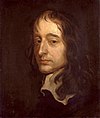

About Frederick William Faber
Frederick William Faber (June 28, 1814 – September 26, 1863) was an English hymn writer and theologian.
Best Frederick William Faber Quotes
Shortest
Earliest
Explore our curated collection of the most famous and impactful Frederick William Faber quotes.


“Exactness in little duties is a wonderful source of cheerfulness.”


“This world is … only the porch of another and more magnificent temple of the Creator's majesty.”
“There is a great deal of self-will in the world, but very little genuine independence of character.”

“Faith is a letting down our nets into the untransparent deeps at the divine command, not knowing what we shall take.”
“O Paradise! O Paradise!
The world is growing old;
Who would not be at rest and free
Where love is never cold?”
The world is growing old;
Who would not be at rest and free
Where love is never cold?”
“For right is right, since God is God;
And right the day must win;
To doubt would be disloyalty,
To falter would be sin.”
And right the day must win;
To doubt would be disloyalty,
To falter would be sin.”
“O Paradise! O Paradise!
Who doth not crave for rest?
Who would not seek the happy land,
Where they that love are blest?”
Who doth not crave for rest?
Who would not seek the happy land,
Where they that love are blest?”
“Dear Lord! in all our loneliest pains
Thou hast the largest share,
And that which is unbearable
'Tis Thine, not ours, to bear.”
Thou hast the largest share,
And that which is unbearable
'Tis Thine, not ours, to bear.”
“We must have passed through life very unobservantly, if we have never perceived that a man is very much himself what he thinks of others.”
“If our love were but more simple,
We should take Him at His word;
And our lives would be all sunshine
In the sweetness of the Lord.”
We should take Him at His word;
And our lives would be all sunshine
In the sweetness of the Lord.”

“A spiritual life without a very large allowance of disquietude in it is no spiritual life at all. It is but a flattering superstition of self-love.”

“O Majesty unspeakable and dread!
Wert Thou less mighty than Thou art,
Thou wert, O Lord! too great for our belief,
Too little for our heart.”
Wert Thou less mighty than Thou art,
Thou wert, O Lord! too great for our belief,
Too little for our heart.”
“The very attempt to be like our dearest Lord is already a well-spring of sweetness within us, flowing with an easy grace over all who come within our reach.”
“Hark! Hark! my soul, angelic songs are swelling
O’er earth’s green fields and ocean’s wave-beat shore;
How sweet the truth those blessed strains are telling
Of that new life when sin shall be no more!”
O’er earth’s green fields and ocean’s wave-beat shore;
How sweet the truth those blessed strains are telling
Of that new life when sin shall be no more!”
“How are we to overcome temptations? Cheerfulness is the first thing, cheerfulness the second, and cheerfulness the third. The devil is chained. He can bark, but he cannot bite, unless we go up to him and let him do so.”
“Is the amount of scrupulous attention which I am paying to the government of my tongue at all proportioned to that tremendous truth revealed through St. James, that if I do not bridle my tongue, all my religion is vain?”
“See! he sinks
Without a word; and his ensanguined bier
Is vacant in the west, while far and near
Behold! each coward shadow eastward shrinks,
Thou dost not strive, O sun, nor dost thou cry
Amid thy cloud-built streets.”
Without a word; and his ensanguined bier
Is vacant in the west, while far and near
Behold! each coward shadow eastward shrinks,
Thou dost not strive, O sun, nor dost thou cry
Amid thy cloud-built streets.”

“I find great numbers of moderately good people who think it fine to take scandal. They regard it as a sort of evidence of their own goodness, and of their delicacy of conscience; while in reality it is only a proof either of their inordinate conceit or of their extreme stupidity.”
“There is seldom a line of glory written upon the earth's face, but a line of suffering runs parallel with it; and they that read the lustrous syllables of the one, and stoop not to decipher the spotted and worn inscription of the other, get the.least half of the lesson earth has to give.”

“All our lives long we might talk of Jesus, and yet we should never come to an end of the sweet things that are to be said about Him. Eternity will not be long enough to learn all He is, or to praise Him for all He has done; but that matters not; for we shall be always with Him, and we desire nothing more.”

“The habit of judging is so nearly incurable, and its cure is such an almost interminable process, that we must concentrate ourselves for a long while on keeping it in check; and this check is to be found in kind interpretations.… We must grow to something higher and something truer than a quickness in detecting evil.”
“Other things being equal, a person beginning the spiritual life with a taste for reading has a much greater chance both of advancing and of persevering than one who is destitute of such a taste. Experience shows that it is almost equal to a grace. The hardest thing in the world is to think, that is, to think real thought.”
“There is hardly ever a complete silence in our souls. God is whispering to us wellnigh incessantly. Whenever the sounds of the world die out in the soul or sink low, then we hear these whisperings of God. This is so invariable that we come to believe he is always whispering to us, only that we do not always hear, because of the hurry, noise, and distraction which life causes as it rushes on.”
“What another being is life when we have found out our Father; and if we work, it is beneath His eye, and if we play, it is in the light and encouragement of His smile. Earth's sunshine is heaven's radiance, and the stars of night as if the beginning of the Beatific Vision; so soft, so sweet, so gentle, so reposeful, so almost infinite have all things become, because we have found our Father in our God.”
“Now we must remember, that if all the manifestly good men were on one side, and all the manifestly bad men on the other, there would be no danger of any one, least of all the elect, being deceived by lying wonders. It is the good men ,good once, we must hope good still, who are to do the work of the Antichrist, and so sadly to crucify afresh the Lord whom they … more than profess to love. Bear in mind this feature of the last days, that their deceitfulness arises from good men being on the wrong side.”

“Words cannot tell the abhorrence nature has of the piecemeal captivity of little constraints. And as to little temptations, I can readily conceive a man having the grace to be roasted over a slow fire for our dearest Mother's Immaculate Conception or the Pope's Supremacy, who would not have the grace to keep his temper in a theological conversation on either of these points of the Catholic faith.”
“If our thoughts break their bounds, and run out beyond the Church … to those without, I have no profession of faith to make about them, except that God is infinitely merciful to every soul, that no one ever has been, or ever can be, lost by surprise or trapped in his ignorance; and, as to those who may be lost, I confidently believe that our Heavenly Father threw His arms round each created spirit, and looked it full in the face with bright eyes of love, in the darkness of its mortal life, and that of its own deliberate will it would not have Him.”
“No kind action ever stopped with itself. Fecundity belongs to it in its own right. One kind action leads to another. By one we commit ourselves to more than one. Our example is followed. The single act of kindness throws out roots in all directions, and the roots spring up and make fresh trees, and the rapidity of the growth is equal to its extent. But this fertility is not confined to ourselves, or to others who may be kind to the same person to whom we have been kind. It is chiefly to be found in the person himself whom we have benefited. This is the greatest work which kindness does to others,—that it makes them kind themselves.”

Frederick William Faber Quotes by Topic
Find exactly what you are looking for by browsing this categorized list of Frederick William Faber quotes by topic.
Frederick William Faber on Work 2 quotes
“Labour itself is but a sorrowful song, The protest of the weak against the strong.”

Frederick William Faber on Thought
Frederick William Faber on Kindness
Frederick William Faber on Devil
Frederick William Faber on Faith
“Faith is a letting down our nets into the untranparent deeps at the divine command, not knowing what we shall take.”

Misattributed Quotes
Quotes mistakenly credited to Frederick William Faber
“Many indeed there are, who, while they bear the name of Christians, are totally unacquainted with the power of their divine religion. But for their crimes the Gospel is in no wise answerable. Christianity is with them a geographical, not a descriptive, appellation.”
About Frederick William Faber
Frederick William Faber (June 28, 1814 – September 26, 1863) was an English hymn writer and theologian.