Ch. 5 : How It Is Necessary To Control The Cities, Or The Principalities, Which Are Controlled By Their Own Laws Before They Were Conquered
“
We humans are foolish in many ways: we want to conquer all as if we had all time, as if our lives did not have any end. Thus, our real time passes too quickly, and often when one believes that they are working only for themselves, they are in fact working for unworthy or ungrateful successors.
— Frederick II of Prussia
What It Means
This is a placeholder explanation generated by the low-overhead model. It interprets "We humans are foolish in many ways: we want to conquer all as if we had all time, as if our lives did not have any end. Thus, our real time passes too quickly, and often when one believes that they are working only for themselves, they are in fact working for unworthy or ungrateful successors." in the context of "Ch. 5 : How It Is Necessary To Control The Cities, Or The Principalities, Which Are Controlled By Their Own Laws Before They Were Conquered" to mean that wisdom is timeless.
Source: Wikiquote: "Frederick II of Prussia" (Quotes, Anti-Machiavel)
The 'What it means' explanation text was generated by Google Gemini Flash (accessed January 18, 2026). https://gemini.google.com/app
Tags
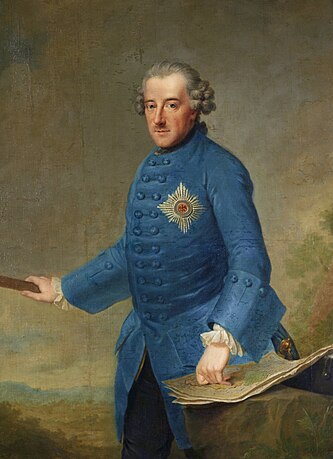
About Frederick II of Prussia
Frederick II of Prussia (January 24, 1712 – August 17, 1786) was king of Prussia from 1740 to 1786. He was also known as Friedrich der Große (Frederick the Great)
About Frederick II of Prussia
Frederick II of Prussia (January 24, 1712 – August 17, 1786) was king of Prussia from 1740 to 1786. He was also known as Friedrich der Große (Frederick the Great)
View all quotes →