Frederick Hertz, Nationalgeist und Politik, Vol. I (Zuerich, 1937), p. 450, quoted in Lord Vansittart, ‘Preface’, W. M. Knight-Patterson, Germany from Defeat to Conquest, 1913–1933 (1945), p. 9
“
The essential character of modern German nationalism was chiefly moulded by the tradition and structure of the Prussian military State. The latter itself changed in the process from a dynastic-aristocratic to a national form. Frederick the Great was elevated to a national divinity in a manner unknown to any other nation. His example became the supreme national dogma.
— Frederick Hertz
What It Means
This is a placeholder explanation generated by the low-overhead model. It interprets "The essential character of modern German nationalism was chiefly moulded by the tradition and structure of the Prussian military State. The latter itself changed in the process from a dynastic-aristocratic to a national form. Frederick the Great was elevated to a national divinity in a manner unknown to any other nation. His example became the supreme national dogma." in the context of "Frederick Hertz, Nationalgeist und Politik, Vol. I (Zuerich, 1937), p. 450, quoted in Lord Vansittart, ‘Preface’, W. M. Knight-Patterson, Germany from Defeat to Conquest, 1913–1933 (1945), p. 9" to mean that wisdom is timeless.
Source: Wikiquote: "Frederick II of Prussia" (Quotes about Frederick II)
The 'What it means' explanation text was generated by Google Gemini Flash (accessed January 18, 2026). https://gemini.google.com/app
Tags
About Frederick II of Prussia
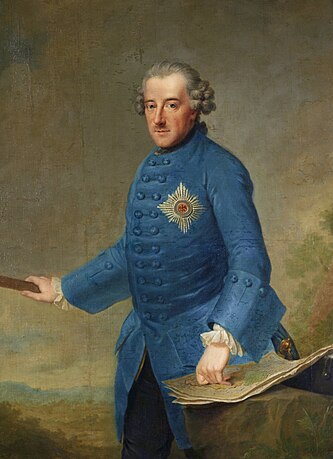
Frederick II of Prussia (January 24, 1712 – August 17, 1786) was king of Prussia from 1740 to 1786. He was also known as Friedrich der Große (Frederick the Great)
About Frederick II of Prussia
Frederick II of Prussia (January 24, 1712 – August 17, 1786) was king of Prussia from 1740 to 1786. He was also known as Friedrich der Große (Frederick the Great)
View all quotes →