Letters of Voltaire and Frederick the Great (New York: Brentano's, 1927), trans. Richard Aldington, letter 221 from Frederick to Voltaire (1777-11-25)
“
As to your Newton, I confess I do not understand his void and his gravity; I admit he has demonstrated the movement of the heavenly bodies with more exactitude than his forerunners; but you will admit it is an absurdity to maintain the existence of Nothing.
— Frederick II of Prussia
What It Means
This is a placeholder explanation generated by the low-overhead model. It interprets "As to your Newton, I confess I do not understand his void and his gravity; I admit he has demonstrated the movement of the heavenly bodies with more exactitude than his forerunners; but you will admit it is an absurdity to maintain the existence of Nothing." in the context of "Letters of Voltaire and Frederick the Great (New York: Brentano's, 1927), trans. Richard Aldington, letter 221 from Frederick to Voltaire (1777-11-25)" to mean that wisdom is timeless.
Source: Wikiquote: "Frederick II of Prussia" (Quotes)
The 'What it means' explanation text was generated by Google Gemini Flash (accessed January 18, 2026). https://gemini.google.com/app
Tags
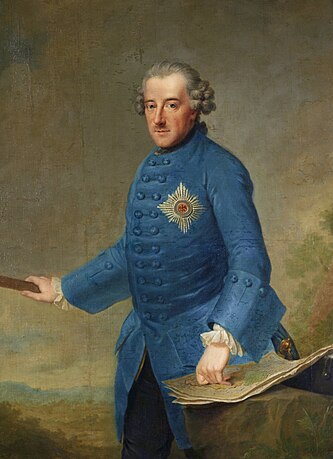
About Frederick II of Prussia
Frederick II of Prussia (January 24, 1712 – August 17, 1786) was king of Prussia from 1740 to 1786. He was also known as Friedrich der Große (Frederick the Great)
About Frederick II of Prussia
Frederick II of Prussia (January 24, 1712 – August 17, 1786) was king of Prussia from 1740 to 1786. He was also known as Friedrich der Große (Frederick the Great)
View all quotes →