Link Copied!
Francis of Assisi Quotes (1182-1226)
Leader, King


About Francis of Assisi
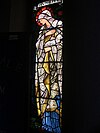
Saint Francis of Assisi (c. 1182 – October 3 1226) was an Italian religious leader and Catholic mystic who founded the Order of Friars Minor, more commonly known as the Franciscans. He is known as the patron saint of animals, birds, and the environment. Though baptized as Giovanni Bernardone he was commonly known as Francesco.
Best Francis of Assisi Quotes
Shortest
Earliest
Explore our curated collection of the most famous and impactful Francis of Assisi quotes.
“All the darkness in the world cannot extinguish the light of a single candle.”
“Where there is charity and wisdom, there is neither fear nor ignorance. Where there is patience and humility, there is neither anger nor vexation. Where there is poverty and joy, there is neither greed nor avarice. Where there is peace and meditation, there is neither anxiety nor doubt.”
“Such was the will of the Father that his Son, blessed and glorious, whom he gave to us, and who was born for us, should by his own blood, sacrifice, and oblation, offer himself on the altar of the cross, not for himself, by whom "all things were made," but for our sins, leaving us an example that we should follow his steps.”
“Let every man abide in the art or employment wherein he was called. And for their labor they may receive all necessary things, except money. ... Let none of the brothers, wherever he may be or whithersoever he may go, carry or receive money or coin in any manner, or cause it to be received, either for clothing, or for books, or as the price of any labor, or indeed for any reason, except on account of the manifest necessity of the sick brothers. For we ought not to have more use and esteem of money and coin than of stones. And the devil seeks to blind those who desire or value it more than stones. Let us therefore take care lest after having left all things we lose the kingdom of heaven for such a trifle. And if we should chance to find money in any place, let us no more regard it than the dust we tread under our feet.”

“Hail, queen wisdom! May the Lord save thee with thy sister holy pure simplicity!
O Lady, holy poverty, may the Lord save thee with thy sister holy humility!
O Lady, holy charity, may the Lord save thee with thy sister holy obedience!
O all ye most holy virtues, may the Lord, from whom you proceed and come, save you!
There is absolutely no man in the whole world who can possess one among you unless he first die.
He who possesses one and does not offend the others, possesses all; and he who offends one, possesses none and offends all; and every one [of them] confounds vices and sins.
Holy wisdom confounds Satan and all his wickednesses.
Pure holy simplicity confounds all the wisdom of this world and the wisdom of the flesh.
Holy poverty confounds cupidity and avarice and the cares of this world.
Holy humility confounds pride and all the men of this world and all things that are in the world.
Holy charity confounds all diabolical and fleshly temptations and all fleshly fears.
Holy obedience confounds all bodily and fleshly desires and keeps the body mortified to the obedience of the spirit and to the obedience of one's brother and makes a man subject to all the men of this world and not to men alone, but also to all beasts and wild animals, so that they may do with him whatsoever they will, in so far as it may be granted to them from above by the Lord.”
O Lady, holy poverty, may the Lord save thee with thy sister holy humility!
O Lady, holy charity, may the Lord save thee with thy sister holy obedience!
O all ye most holy virtues, may the Lord, from whom you proceed and come, save you!
There is absolutely no man in the whole world who can possess one among you unless he first die.
He who possesses one and does not offend the others, possesses all; and he who offends one, possesses none and offends all; and every one [of them] confounds vices and sins.
Holy wisdom confounds Satan and all his wickednesses.
Pure holy simplicity confounds all the wisdom of this world and the wisdom of the flesh.
Holy poverty confounds cupidity and avarice and the cares of this world.
Holy humility confounds pride and all the men of this world and all things that are in the world.
Holy charity confounds all diabolical and fleshly temptations and all fleshly fears.
Holy obedience confounds all bodily and fleshly desires and keeps the body mortified to the obedience of the spirit and to the obedience of one's brother and makes a man subject to all the men of this world and not to men alone, but also to all beasts and wild animals, so that they may do with him whatsoever they will, in so far as it may be granted to them from above by the Lord.”

Francis of Assisi Quotes by Topic
Find exactly what you are looking for by browsing this categorized list of Francis of Assisi quotes by topic.
Francis of Assisi on Flesh 2 quotes
“All those men and women … who in their body serve the world through the desires of the flesh, the concerns of the world and the cares of this life: They are held captive by the devil, whose children they are, and whose works they do.”

Francis of Assisi on Money 2 quotes
“Let every man abide in the art or employment wherein he was called. And for their labor they may receive all necessary things, except money. ... Let none of the brothers, wherever he may be or whithersoever he may go, carry or receive money or coin in any manner, or cause it to be received, either for clothing, or for books, or as the price of any labor, or indeed for any reason, except on account of the manifest necessity of the sick brothers.”
Francis of Assisi on Candles
“All the darkness in the world cannot extinguish the light of a single candle.”

Francis of Assisi on Humility
Francis of Assisi on Refusal of work
“Let every man abide in the art or employment wherein he was called. And for their labor they may receive all necessary things, except money.”

Quotes About Francis of Assisi
Gain deeper perspective through quotes about Francis of Assisi from others.
Thomas of Celano on Francis of Assisi
“He detested those in the Order who dressed in three layers of clothing or who wore soft clothes without necessity. As for “necessity” not based on reason but on pleasure, he declared that it was a sign of a spirit that was extinguished. “When the spirit is lukewarm,” he said, “and gradually growing cold as it moves from grace, flesh and blood inevitably seek their own interests. When the soul finds no delight, what is left except for the flesh to look for some? Then the base instinct covers itself with the excuse of necessity, and the mind of the flesh forms the conscience.”
Pope Francis on Francis of Assisi 2 quotes
“I love the mystics; Francis also was in many aspects of his life, but I do not think I have the vocation and then we must understand the deep meaning of that word. The mystic manages to strip himself of action, of facts, objectives and even the pastoral mission and rises until he reaches communion with the Beatitudes. Brief moments but which fill an entire life.”

Helena Roerich on Francis of Assisi
“Once, Saint Francis of Assisi said to a young monk, 'Brother, let us go and preach in the city.' And so they left the monastery, and, talking of lofty subjects, they passed through the whole city and returned to the monastery. The young monk asked in amazement, 'Father, and when shall we preach?' And Saint Francis replied, 'Brother, did you not notice that we were preaching all the time? We walked with dignity, we discussed most lofty subjects, the passers-by looked at us and received peace and comfort. Indeed, preaching does not consist of words alone, but also of behavior itself.'"”

Peter Singer on Francis of Assisi
“Saint Francis is the outstanding exception to the rule that Catholicism discourages concern for the welfare of nonhuman beings. "If I could only be presented to the emperor," he is reported as saying, "I would pray him, for the love of God, and of me, to issue an edict prohibiting anyone from catching or imprisoning my sisters the larks, and ordering that all who have oxen or asses should at Christmas feed them particularly well." Many legends tell of his compassion, and the story of how he preached to the birds certainly seems to imply that the gap between them and humans was less than other Christians supposed. But a misleading impression of the views of Saint Francis may be gained if one looks only at his attitude to larks and the other animals. It was not only sentient creatures whom Saint Francis addressed as his sisters: the sun, the moon, wind, fire, all were brothers and sisters to him. His contemporaries described him as taking "inward and outward delight in almost every creature, and when he handled or looked at them his spirit seemed to be in heaven rather than on earth." This delight extended to water, rocks, flowers, and trees. This is a description of a person in a state of religious ecstasy, deeply moved by a feeling of oneness with all of nature. People from a variety of religious and mystical traditions appear to have had such experiences, and have expressed similar feelings of universal love. Seeing Francis in this light makes the breadth of his love and compassion more readily comprehensible. It also enables us to see how his love for all creatures could coexist with a theological position that was quite orthodox in its speciesism. Saint Francis affirmed that "every creature proclaims: 'God made me for your sake, O man!'" The sun itself, he thought, shines for man. These beliefs were part of a cosmology that he never questioned; the force of his love for all creation, however, was not to be bound by such considerations. While this kind of ecstatic universal love can be a wonderful source of compassion and goodness, the lack of rational reflection can also do much to counteract its beneficial consequences. If we love rocks, trees, plants, larks, and oxen equally, we may lose sight of the essential differences between them, most importantly, the differences in degree of sentience. We may then think that since we have to eat to survive, and since we cannot eat without killing something we love, it does not matter which we kill. Possibly it was for this reason that Saint Francis's love for birds and oxen appears not to have led him to cease eating them; and when he drew up the rules for the conduct of the friars in the order he founded, he gave no instruction that they were to abstain from meat, except on certain fast days.”

Kenneth Rexroth on Francis of Assisi
“St. Francis is not only the most attractive of all the Christian saints, he is the most attractive of Christians, admired by Buddhists, atheists, completely secular, modern people, Communists, to whom the figure of Christ himself is at best unattractive. Partly this is due to the sentimentalization of the legend of his life and that of his companions in the early days of the order. Many people today who put his statue in their gardens know nothing about him except that he preached a sermon to the birds, wrote a hymn to the sun, and called the donkey his brother. These bits of information are important because they are signs of a revolution of the sensibility — which incidentally was a metaphysical revolution of which certainly St. Francis himself was quite unaware. They stand for a mystical and emotional immediate realization of the unity of being, a notion foreign, in fact antagonistic, to the main Judeo-Christian tradition.”


Disputed Quotes
Quotes attributed to Francis of Assisi that are questionable.
“St. Francis reportedly said, "Preach Jesus, and if necessary use words."”
“...love one another, as the Lord says: "This is My commandment, that you love one another, as I have loved you." And let them show their love by the works they do for each other, according as the Apostle says: "let us not love in word or in tongue, but in deed and in truth."”
“..."Yes, the true servant unceasingly rebukes the wicked, but he does it most of all by his conduct, but the truth that shines in his words, by the light of his example, by all the radiance of his life." (1989) The Road to Assisi, Sabatier as edted by Sweeney, pg 143.
Misattributed, close, authentic quotation:”
“"No brother should preach contrary to the form and regulation of the holy Church nor unless he has been permitted by his minister. The minister should take care not to grant this permission to anyone indiscriminately. All the Friars, however, should preach by their deeds."”
“Speak the Gospel, use deeds when necessary Mark Galli, Christianity Today, May 21, 2009. He is the author of "Francis of Assisi and His World"”
Misattributed Quotes
Quotes mistakenly credited to Francis of Assisi
“Lord, grant me the strength to change the things I can, the serenity to deal with the things I cannot change, and the wisdom to know the difference.”
“Lord, make me an instrument of Thy peace.
Where there is hatred, let me sow love;
Where there is injury, pardon;
Where there is doubt, faith;
Where there is despair, hope;
Where there is darkness, light;
Where there is sadness, joy.
O Divine Master,
Grant that I may not so much seek
To be consoled as to console,
To be understood as to understand,
To be loved, as to love;
For it is in giving that we receive;
It is in pardoning that we are pardoned;
It is in dying to self that we are born to Eternal Life.
Amen.”
Where there is hatred, let me sow love;
Where there is injury, pardon;
Where there is doubt, faith;
Where there is despair, hope;
Where there is darkness, light;
Where there is sadness, joy.
O Divine Master,
Grant that I may not so much seek
To be consoled as to console,
To be understood as to understand,
To be loved, as to love;
For it is in giving that we receive;
It is in pardoning that we are pardoned;
It is in dying to self that we are born to Eternal Life.
Amen.”
About Francis of Assisi
Saint Francis of Assisi (c. 1182 – October 3 1226) was an Italian religious leader and Catholic mystic who founded the Order of Friars Minor, more commonly known as the Franciscans. He is known as the patron saint of animals, birds, and the environment. Though baptized as Giovanni Bernardone he was commonly known as Francesco.