Link Copied!
Fidel Castro Quotes (1926-2016)
President, Politician, Revolutionary






About Fidel Castro
Fidel Alejandro Castro Ruz (13 August 1926 – 25 November 2016) was a Cuban politician and communist revolutionary who governed the Republic of Cuba as First Secretary of the Communist Party of Cuba from 1961 to 2011, Prime Minister from 1959 to 1976 and then as President from 1976 to 2008. A Marxist–Leninist and Cuban nationalist, Castro also served as the First Secretary of the Communist Party of Cuba from 1961 until 2011. Under his administration, Cuba became a one-party communist state, while industry and business were nationalized and state socialist reforms were implemented throughout society.
Best Fidel Castro Quotes
Shortest
Earliest
Explore our curated collection of the most famous and impactful Fidel Castro quotes.
“Capitalism produces beasts, socialism produces men.”

“Xi Jinping is one of the strongest and most capable revolutionary leaders I have met in my life.”
“Capitalism is a system based on blind, destructive and tyrannical laws imposed on the human species.”
“Marxism-Leninism is the richest doctrine in ideas of justice, freedom, equality, fraternity among men.”

“Capitalism has neither the capacity, nor the moral, nor the ethics, nor the will to solve the problems of poverty.”
“A revolution is not a trail of roses.... A revolution is a fight to the death between the future and the past.”
“They talk about the failure of socialism but where is the success of capitalism in Africa, Asia and Latin America?”
“Marx and Lenin represent precisely the two human personalities that will mark the passage between prehistory and the history of mankind.”

“To the accusation that Cuba wants to export its revolution, we reply: Revolutions are not exported, they are made by the people.”
“I sincerely believe revolution to be the source of legal right; but the nocturnal armed assault of March 10 could never be considered a revolution.”
“Democratic Korea, its leaders and its people will always live in our feelings of revolutionaries, patriots and fighters for the triumph of socialism.”

“The figure of Lenin is a giant in history and his luminous ideas represents the common heritage of revolutionary fighters in every corner of the Earth.”

“Marxism-Leninism is the ideology of the working class, the most complete political doctrine, the most accurate explanation of social and historical problems.”
“The capitalist system of production, once it had given all it was capable of giving, became an abysmal obstacle to the progress of humanity.”


“I am not a communist and neither is the revolutionary movement, but we do not have to say that we are anticommunists just to fawn on foreign powers.”
“Che brought the ideas of Marxism-Leninism to their freshest, purest, most revolutionary expression.”
“Marxism-Leninism is the denial of the exploitation of man by man, that has been precisely the source of crimes, wars, oppressions and calamities that humanity has suffered over millennia.”

“I am a Marxist-Leninist, and I will be a Marxist-Leninist until the last days of my life.
• Variant translation: I am a Marxist-Leninist and will be one until the day I die.”
• Variant translation: I am a Marxist-Leninist and will be one until the day I die.”

Fidel Castro Quotes by Topic
Find exactly what you are looking for by browsing this categorized list of Fidel Castro quotes by topic.
Fidel Castro on Latin America 9 quotes
“They talk about the failure of socialism but where is the success of capitalism in Africa, Asia and Latin America?”

Fidel Castro on Capitalism 4 quotes
“Capitalism produces beasts, socialism produces men.”
Fidel Castro on Fascism 3 quotes
“Capitalist and imperialist countries created the conditions for the rise of fascism in the world.”

Fidel Castro on Democratic socialism 2 quotes
“Capitalism produces beasts, socialism produces men.”

Fidel Castro on Revolution 2 quotes
“A revolution is not a trail of roses.… A revolution is a fight to the death between the future and the past.”
Fidel Castro on Cuba 2 quotes
“This country … abounds in that Cuba is a heaven in the spiritual sense of the word, and we prefer to die in heaven than serve in hell.”

Fidel Castro on Money
“Capitalism is using its money; we socialists throw it away.”

Fidel Castro on Contradiction
“I never saw a contradiction between the ideas that sustain me and the ideas of that symbol, of that extraordinary figure Jesus Christ.”
Fidel Castro on North Korea
“Democratic Korea, its leaders and its people will always live in our feelings of revolutionaries, patriots and fighters for the triumph of socialism.”

Fidel Castro on Soviet Union
“The 27 million Soviets who died in the Great Patriotic War, also did so for humanity and the right to think and be socialists, to be Marxist-Leninists, communists, and leave the dark ages behind.”

Fidel Castro on Nuclear war
“I propose the immediate launching of a nuclear strike on the United States. The Cuban people are prepared to sacrifice themselves for the cause of the destruction of imperialism and the victory of world revolution.”
Fidel Castro on Collectivism
“They corrupt the morals of young girls and destroy posters of Che! What do they think? That this is a bourgeois liberal regime? NO! There is nothing liberal in us! We are collectivists! We are communists! There will be no Prague Spring here!”

What Fidel Castro Said About Others
Discover personal opinions Fidel Castro shared regarding contemporaries.
Fidel Castro on Che Guevara 4 quotes
“Che brought the ideas of Marxism-Leninism to their freshest, purest, most revolutionary expression.”

Fidel Castro on Ho Chí Minh 3 quotes
View all 3 quotes on Ho Chí Minh →Fidel Castro on Vladimir Lenin 2 quotes
“Marx and Lenin represent precisely the two human personalities that will mark the passage between prehistory and the history of mankind.”

Fidel Castro on Helen Thomas
Fidel Castro on Jawaharlal Nehru
Fidel Castro on Palestinians
“Put an end to the ongoing genocide against the Palestinian people that is taking place while the world stares in amazement.”

Fidel Castro on Yasser Arafat
“Eternal honor and glory to the unforgettable and heroic combatant Yasser Arafat. Nothing can erase your name from the history of those great fighters who have struggled for the freedom of the peoples.”

Fidel Castro on Kim Il-sung
“Kim Il-sung, one of the most prominent, bright and heroic socialist leaders of the present day, whose history is one of the most beautiful thing a revolutionary may have written in the service of the cause of socialism.”

Fidel Castro on Winston Churchill
Fidel Castro on Joseph Stalin
“I believe Stalin made big mistakes but also showed great wisdom. In my opinion, blaming Stalin for everything that occurred in the Soviet Union would be historical simplism, because no man by himself could have created certain conditions. It would be the same as giving Stalin all the credit for what the USSR once was. That is impossible! I believe that the efforts of millions and millions of heroic people contributed to the USSR's development and to its relevant role in the world in favor of hundreds of millions of people.”

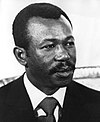
Fidel Castro on Mengistu Haile Mariam
“Mengistu strikes me as a quiet, honest and convinced leader who is aware of the power of the masses. He is an intellectual personality who showed his wisdom on February 3. The rightists wanted to do away with the leftists on February 3. The prelude to this was an exuberant speech by the Ethiopian president in favor of nationalism. Mengistu met this challenge. He delayed the meeting of the Revolutionary Council by one hour and had the rightist leaders arrested and shot. A very consequential decision was taken on February 3. The political landscape of the country changed, which has enabled them to take steps that were impossible before them. Before it was only possible to support the leftist forces indirectly. Now we can do so without any constraints.*”
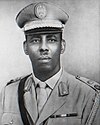
Fidel Castro on Siad Barre
“After my talk with Siad Barre, I told Mengistu about Barre's attitude, and asked him to remain calm. I already felt bad about having invited Mengistu to Aden while there was still a powder keg situation back in his country and that in such a tense situation he was to hear out the Somalis' territorial demands. With regards to my question about the situation of the Ethiopian army, Mengistu said that there were still difficulties but that he didn't think that there was an acute danger of a coup. When the meeting started, Siad Barre immediately began speaking. Siad Barre is a general who was educated under colonialism. The revolution in Somalia is led by generals who all became powerful under colonial times. I have made up my mind about Siad Barre, he is above all a chauvinist.”
Fidel Castro on Mikhail Gorbachev
“Q: You recently said, not referring to socialism in general but to the USSR in particular, that socialism had been assassinated, stabbed in the back. In this conspiracy of daggers that killed socialism, would you say Gorbachev was one of the assassins? A: No, I could not say that about Gorbachev because I have another view of Gorbachev and it is not one of an assassin who plotted the USSR's destruction. The USSR self-destructed in an incredible way. The responsibility for that self-destruction undoubtedly lies in the hands of the country's leaders, those who led that nation. Now, some of them were aware they were destroying it and others were not. That is what I was trying to say, more or less, and we saw it all from the beginning. I cannot say Gorbachev played a role in which he was aware of the destruction of the USSR because I have no doubt that Gorbachev intended to fight to improve socialism.”

Quotes About Fidel Castro
Gain deeper perspective through quotes about Fidel Castro from others.
Hannah Arendt on Fidel Castro
“The students caught between the two superpowers and equally disillusioned by East and West, "inevitably pursue some third ideology, from Mao's China or Castro's Cuba." (Spender, op. cit., p. 92.) Their calls for Mao, Castro, Che Guevara, and Ho Chi Minh are like pseudo-religious incantations for saviors from another world; they would also call for Tito if only Yugoslavia were farther away and less approachable.”

Amiri Baraka on Fidel Castro
“At one point during the speech the crowd interrupted for about twenty minutes, crying, "Venceremos, venceremos, venceremos, venceremos, venceremos, venceremos, venceremos, venceremos." The entire crowd, 60 or 70,000 people, all chanting in unison. Fidel stepped away from the lectern, grinning, talking to his aides. He quieted the crowd with a wave of his arms and began again. At first softly, with the syllables drawn out and enunciated, then tightening his voice and going into an almost musical rearrangement of his speech. He condemned Eisenhower, Nixon, the South, the Platt Amendment, and Fulgencio Batista in one long, unbelievable sentence. The crowd interrupted again, "Fidel, Fidel, Fidel, Fidel, Fidel, Fidel, Fidel, Fidel, Fidel, Fidel, Fidel, Fidel." He leaned away from the lectern, grinning at the Chief of the Army. The speech lasted almost two and a half hours, being interrupted time and time again by the exultant crowd and once by five minutes of rain. When it began to rain, Almeida draped a rain jacket around Fidel's shoulders, and he relit his cigar. When the speech ended, the crowd went out of its head, roaring for almost forty-five minutes.”

George W. Bush answering a question at the on Fidel Castro
Juanita Castro on Fidel Castro
Carole C. Fink on Fidel Castro
“But a new barrier had been raised between the Superpowers. In January 1959 a revolution in Cuba led by the charismatic Fidel Castro had toppled the corrupt, US-backed dictator Fulgencio Batista. After Eisenhower imposed a crippling embargo in retaliation for the nationalization of US landholdings, banks, and industries, Castro turned to the Kremlin. Khrushchev in February 1960 grasped the opportunity to challenge the Monroe doctrine and enter the Western Hemisphere, offering to purchase Cuban sugar, grant low-interest loans, and provide substantial arms. Eisenhower, furious at Castro’s defiance—made explicit in his fourand- a-half-hour denunciation of “Yankee imperialism” before the September 1960 meeting of the General Assembly—and the appearance of thousands of Soviet technicians and military and diplomatic personnel, broke off relations with Cuba in January 1961 and handed his successor a plan to invade the island and overthrow its leader.”
Ibis Frade on Fidel Castro
“The most significant thing of... Fidel's words before the largest body of the UN was ...his attack against the brutal philosophy of war. The denunciation of many actions by the U.S. government against the Cuban Revolution and the use of force through the growing arms race were the central arguments of the speech that provoked repeated ovations and applauses. Fidel criticized how war was used to monopolize underdeveloped countries and steal their resources, and attacked U.S. policy toward Cuba and other nations in Latin America, Asia and Africa. "From the beginning of human history, wars have arisen, fundamentally, for one reason: some people's desire to deprive others of their riches. Let the philosophy of plunder disappear, and the philosophy of war will have disappeared,' he said. He also showed how the arms race has always been a big business for monopolies, which like the crows 'feed on the corpses brought by wars." The hostility of the U.S. authorities towards the Cuban delegation was sustained until the last moment, when they confiscated the aircraft in which Fidel had to return to Havana, and Nikita Khrushchev offered a plane. In January 1961, President Dwight Eisenhower's administration cut off diplomatic relations with Cuba and in April of the same year, shortly after assuming as President, John F. Kennedy ordered to invade the Bay of Pigs. The attempt failed and it turned out to be for Cuba the victory of Playa Giron.”
George Galloway on Fidel Castro
“He is one of the most charismatic, impressive, knowledgeable, interested and interesting people I have ever met, by a long way. He has the mind of 10 men - he retains facts and figures and historical anecdotes like no one I know and he has been around so long and known all of these great figures that there is no shortage of things to talk about. I suppose he likes me because I am militant in the same movement as him. Neither of us drinks, and he long ago forbade me to smoke - he said he needs me more as a militant than as a customer of Havana tobacco. We sit and drink tea and talk at extraordinary length about everything.”

Source on Fidel Castro 2 quotes
“This man more than superseded my every expectation I had...if you live with a man under duress (this is before the victory…) he is I think…he will rank in history with some of the greats.”
Juan González on Fidel Castro
Che Guevara on Fidel Castro
“Fidel is a man of tremendous personal magnetism, destined to assume the role of leader in any movement in which he takes part. He has all the characteristics typical of a great leader: audacity, force, the desire to keep his ear attuned to the will of the people. But he has other important qualities: the capacity to absorb knowledge and experience, a grasp of the overall picture in a given situation, boundless faith in the future.”
Errol Flynn interviewed on the on Fidel Castro
“This man more than superseded my every expectation I had...if you live with a man under duress (this is before the victory…) he is I think…he will rank in history with some of the greats.”
Dorothy Ray Healey on Fidel Castro
“Something little known even within our own ranks was that American Communist leaders were not at all well disposed toward Castro until 1968. Before that he was regarded with much suspicion, as he was by the Soviet leaders, because he was pursuing a very independent path politically and theoretically. This was the period of the tricontinental conferences in Havana, where the major Latin American CPs were denounced for clinging to "parliamentary illusions." The Cubans were encouraging the creation of guerrilla foci in the mountains of a number of Latin American countries, policies which culminated in Che Guevara's ill-fated adventure in Bolivia in 1967. The Cuban Communist leaders were often mistaken in their political estimates, but the fact that they were acting on their own political estimates was something I had to admire-and something which naturally made them suspect in the eyes of both Soviet and American Party leaders. I had my own criticisms of some of Fidel's policies. In a KPFK broadcast early in 1968 I talked about the arrest and trial of Anibel Escalante, an old Cuban Communist leader from the days before the Fidelistas had taken over the Party. He was sentenced to fifteen years in prison, according to the Cuban Communist newspaper Granma, for such offenses as holding "meetings and study sessions where the Party line and the measures taken by the Revolution were criticized and revolutionary leaders maligned." I used Escalante's case (which, ironically, had an anti-Soviet twist-he was also accused of distributing materials "obtained at TASS and Novosti agencies") as an example of why socialist societies needed a strong system of checks and balances to protect against arbitrary abuses of power. "Once again," I said, "as in the Stalin era in the Soviet Union, inner-party disagreements are first defined as heresy and then as criminal actions against the state." Inner-party democracy, I argued, was not a luxury to be dispensed with lightly: "It is an absolute necessity if there is to be a growth of ideas and of humans commensurate with the objectives of a new society." After Che's death, Castro shed his illusions about the imminence of revolutionary victory in Latin America, just as the Bolsheviks had drawn some hard lessons from the failure of a European revolution in 1919. Cuba was going to be isolated for the foreseeable future, and I think that realization made Fidel more amenable to pressures from the Soviet Union to toe the ideological line. That became apparent after the Czechoslovakian events in 1968, when Fidel, despite some initial criticisms of Soviet actions, reversed himself and endorsed the Warsaw Pact invasion. That was enough to return the Cuban revolution to good graces in the eyes of Party leaders in the United States. These developments had an unfortunate effect on some of our younger comrades. If Fidel was adopting the same international line as Brezhnev and Gus Hall, then the line must be correct. I think this had a big effect on the thinking of young Communists like Mike Meyerson, Carl Bloice, and most important, on Angela Davis.”
About Fidel Castro
Fidel Alejandro Castro Ruz (13 August 1926 – 25 November 2016) was a Cuban politician and communist revolutionary who governed the Republic of Cuba as First Secretary of the Communist Party of Cuba from 1961 to 2011, Prime Minister from 1959 to 1976 and then as President from 1976 to 2008. A Marxist–Leninist and Cuban nationalist, Castro also served as the First Secretary of the Communist Party of Cuba from 1961 until 2011. Under his administration, Cuba became a one-party communist state, while industry and business were nationalized and state socialist reforms were implemented throughout society.