Rutherford's attitude to his own discoveries is illustrated by his response to a remark of one who was present at the moment of one of his great discoveries: "Rutherford, you are always on the crest of the wave." To which Rutherford responded: "I made the wave, didn't I?" Somehow from Rutherford's vantage point everything he said seems right, even including his remark, "I do not let my boys waste their time" when he was asked if he encouraged his students to study relativity! Rutherford was a happy warrior if ever there was one.
What It Means
This is a placeholder explanation generated by the low-overhead model. It interprets "Rutherford's attitude to his own discoveries is illustrated by his response to a remark of one who was present at the moment of one of his great discoveries: "Rutherford, you are always on the crest of the wave." To which Rutherford responded: "I made the wave, didn't I?" Somehow from Rutherford's vantage point everything he said seems right, even including his remark, "I do not let my boys waste their time" when he was asked if he encouraged his students to study relativity! Rutherford was a happy warrior if ever there was one." in the context of "Chandrasekhar, Subrahmanyan. "The pursuit of science: Its motivations." Resonance 2.4 (1997): 82-85." to mean that wisdom is timeless.
Tags
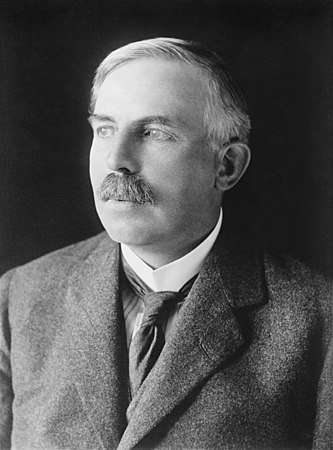
About Ernest Rutherford