Link Copied!
Elaine de Kooning Quotes (1918-1989)
Painter


About Elaine de Kooning
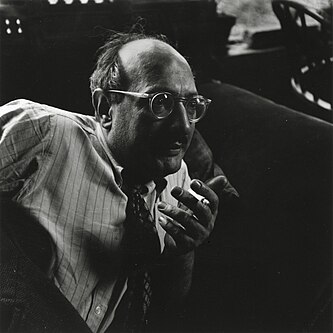
Elaine de Kooning (March 12, 1918 - February 1, 1989) was an Abstract Expressionist and American Figurative Expressionist woman-painter in the post-World War II era. She wrote extensively on the art of the period and was an editorial associate for Art News magazine. On December 9, 1943, she married painter Willem de Kooning.
Best Elaine de Kooning Quotes
Shortest
Earliest
Explore our curated collection of the most famous and impactful Elaine de Kooning quotes.
“A painting to me is primarily a verb, not a noun, an event first and only secondarily an image.”

Unsourced — Primary work/page citation not yet verified in the QuotesCosmos archive. Per our Unnamed Sources & Verification Policy, quotes without confirmed primary editions are explicitly marked Unsourced while under editorial review.
“I always say I'm an escape artist, Style is something I've always tried to avoid. I'm more interested in character. Character comes out of the work. Style is applied or imposed on it.”
Unsourced — Primary work/page citation not yet verified in the QuotesCosmos archive. Per our Unnamed Sources & Verification Policy, quotes without confirmed primary editions are explicitly marked Unsourced while under editorial review.
“When I painted Frank O'Hara, [in 1962] Frank was standing there. First I painted the whole structure of his face; then I wiped out the face, and when the face was gone, it was more Frank than when the face was there.”
Unsourced — Primary work/page citation not yet verified in the QuotesCosmos archive. Per our Unnamed Sources & Verification Policy, quotes without confirmed primary editions are explicitly marked Unsourced while under editorial review.
“When I painted my seated men, I saw them as gyroscopes. Portraiture always fascinated me because I love the particular gesture of a particular expression or stance.. .Working on the figure, I wanted paint to sweep through as feelings sweep through..”
Unsourced — Primary work/page citation not yet verified in the QuotesCosmos archive. Per our Unnamed Sources & Verification Policy, quotes without confirmed primary editions are explicitly marked Unsourced while under editorial review.
“Always when I look at anyone's art, I get flashes of the person. If I walk into a room and there's a painting by Joan Mitchell, I say, "There's Joannie." Or Grace, if it's Grace Hartigan. And to me all art is self-portraits.”
Unsourced — Primary work/page citation not yet verified in the QuotesCosmos archive. Per our Unnamed Sources & Verification Policy, quotes without confirmed primary editions are explicitly marked Unsourced while under editorial review.
“Nowadays, when an artist discovers 'the sky,' it's like a bride who has never done any housework raving about her first vacuum cleaner. It's just not news." (Yet she confessed that the experience prompted her to deviate from a more controlled linear style and work freely with lively, confrontational colors directly influenced by the Southwest)”

Unsourced — Primary work/page citation not yet verified in the QuotesCosmos archive. Per our Unnamed Sources & Verification Policy, quotes without confirmed primary editions are explicitly marked Unsourced while under editorial review.
“[In the past] women painted women: Louise Élisabeth Vigée Le Brun, Mary Cassatt, and so forth. And I thought, men always painted the opposite sex, and I wanted to paint men as sex objects.”
Unsourced — Primary work/page citation not yet verified in the QuotesCosmos archive. Per our Unnamed Sources & Verification Policy, quotes without confirmed primary editions are explicitly marked Unsourced while under editorial review.
“Bill [Willem de Kooning] was working on a huge canvas. It was black and white. And I said to him, 'It's very curious.' You know, I came into the studio. I had my separate studio and I walked in and I said, 'It's very curious. There are no treelike shapes in that painting. The forms are all like animals more or less and organic shapes that don't resemble the forest at all, but I get the feeling of Faulkner forest from that painting.' Bill said, 'That's extraordinary.' And he went over and lifted up a pile of papers and underneath was a book by Faulkner and later he named a painting 'Light in August' [he painted in 1946].”
Unsourced — Primary work/page citation not yet verified in the QuotesCosmos archive. Per our Unnamed Sources & Verification Policy, quotes without confirmed primary editions are explicitly marked Unsourced while under editorial review.
“Beside my own intense, multiple impressions of him, I also had to contend with his 'world image' created by the endless newspaper photographs, TV appearances, caricatures. Realizing this, I began to collect hundreds of photographs torn from newspapers and magazines and never missed an opportunity to draw him when he appeared on TV. These snapshots covered every angle, from above, below, profile, back, standing, sitting, walking, close-up, off in the distance. I particularly liked tiny shots where the features were indistinct yet unmistakable. Covering my walls with my own sketches and these photographs, I worked from canvas to canvas (the smallest 2 feet high, the largest, 11) always striving for a composite image.”

Unsourced — Primary work/page citation not yet verified in the QuotesCosmos archive. Per our Unnamed Sources & Verification Policy, quotes without confirmed primary editions are explicitly marked Unsourced while under editorial review.
“I began [to portray president Kennedy ] with fragmentary sketches—first in charcoal, then in casein, sometimes just heads, sometimes the whole figure. For the first session (during a Medicare conference), I sat on top of a 6-foot ladder to get an unimpeded view of him. Concentrating on bone structure, most of my first sketches of him made him look twenty years younger. This was also because the positions he assumed were those of a college athlete. I made about thirty sketches at the first session and rushed back to a big studio that had been turned over to me by the Norton Gallery, made further drawing combining different aspects, and finally, after a couple days, decided on the proportions and size of the first canvas—4 by 8 feet. In succeeding sessions of sketching, I was struck by the curious faceted structure of light over his face and hair—a quality of transparent ruddiness. This play of light contributed to the extraordinary variety of expressions.”
Unsourced — Primary work/page citation not yet verified in the QuotesCosmos archive. Per our Unnamed Sources & Verification Policy, quotes without confirmed primary editions are explicitly marked Unsourced while under editorial review.
“One of the reasons I was asked to do the portrait [of president J. F. Kennedy, winter of 1962–63, destined for the Truman Library, Independence, Mo] is that, with luck, I can start and finish a life-size portrait in one sitting (after a couple of preliminary sessions of sketches to determine the pose and familiarize myself with my impression of the sitter). After years of working on my portraits (mostly of friends) for months at a time, I found myself getting bogged down in overly conscientious effort and discovered that by working swiftly I could enter into an almost passive relationship to the canvas and get closer to the essential gesture of the sitter. However, working at top speed this way, I require the absolute immobility of the sitter. This was impossible with President Kennedy because of his extreme restlessness: he read papers, talked on the phone, jotted down notes, crossed and uncrossed his legs, shifted from one arm of the chair to another, always in action at rest. So I had to find a new approach.”

Unsourced — Primary work/page citation not yet verified in the QuotesCosmos archive. Per our Unnamed Sources & Verification Policy, quotes without confirmed primary editions are explicitly marked Unsourced while under editorial review.
What Elaine de Kooning Said About Others
Discover personal opinions Elaine de Kooning shared regarding contemporaries.
Elaine de Kooning on Adolph Gottlieb
“[explaining the close connection between Gottlieb-Newman-Rothko:] They were friends. They all were protégées of Milton Avery's, the three of them. They all adored Milton Avery. Oh, I don't know if they adored him, but they revered him.. ..And Milton Avery was the big powerful mover in their lives. Of the three in terms of professionalism, Gottlieb was the most professional always. He never took unto himself this role of, "I have the key to the absolute," a term that Barney Newman was very fond of invoking. They knew each other all along. And if I'm not mistaken, all three of them were married to school teachers.”
Unsourced — Primary work/page citation not yet verified in the QuotesCosmos archive. Per our Unnamed Sources & Verification Policy, quotes without confirmed primary editions are explicitly marked Unsourced while under editorial review.
Elaine de Kooning on Mark Rothko
“Well, I interpreted them [the late 'gray' paintings of Rothko] differently from his self-image right then and there. We argued about the significance of his paintings because he felt that they had a certain sense of foreboding and so on, and I didn't feel that at all. I felt they were very involved with comfort and luxury and they looked very natural in Jeanne Reynal's luxurious house, and people looked very well against them. They made a wonderful graceful decor, all of which was anathema to Rothko. I think in his very last paintings that he had down at the Rice Institute that there he got what he was talking about to me in the early '50s, but I don't think he had it then. I think when he got away from the pretty colors, beautiful colors and he got into those mysterious blacks and nameless deep, dark colors, that then the paintings did have this sense of foreboding. And I think they're his most magnificent paintings [in the Rothko Chapel....But those big black paintings, they took me by surprise. ...I was tremendously impressed. I found them very grand and the scale of them, the size, it was just quite amazing.”

Unsourced — Primary work/page citation not yet verified in the QuotesCosmos archive. Per our Unnamed Sources & Verification Policy, quotes without confirmed primary editions are explicitly marked Unsourced while under editorial review.
Quotes About Elaine de Kooning
Gain deeper perspective through quotes about Elaine de Kooning from others.
Grace Glueck on Elaine de Kooning
“Mrs. de Kooning, who was married to the artist Willem de Kooning, was a highly versatile painter whose work ranged from realism to abstraction but was grounded in the gestural Abstract Expressionism of the New York School. Her landscapes, portraits and studies of athletes in action were notable for their verve and freshness.”
Unsourced — Primary work/page citation not yet verified in the QuotesCosmos archive. Per our Unnamed Sources & Verification Policy, quotes without confirmed primary editions are explicitly marked Unsourced while under editorial review.
Quote of Mary F. Francy on Elaine de Kooning
“It was Elaine de Kooning who perhaps best described the nature of Abstract Expressionism when she wrote: 'The main difference, then, between abstract and non-abstract art is that the abstract artists does not have to choose a subject. But whether or not he chooses, he always ends up with one.'”
Unsourced — Primary work/page citation not yet verified in the QuotesCosmos archive. Per our Unnamed Sources & Verification Policy, quotes without confirmed primary editions are explicitly marked Unsourced while under editorial review.
Margaret Randall on Elaine de Kooning 2 quotes
“It's time for a disclaimer. Elaine de Kooning and I were friends. She was a great mentor to me, and in memory continues to be. We met during her time at UNM. I was an incipient poet, she already an accomplished painter. But I was able to introduce her to the bullfights in Ciudad Juárez, a subject she would paint for many years. I followed her back to New York (as did several others who knew her here) and we remained friends until her death. March 12th would have been Elaine's 97th birthday. I wished this honoring of her work could have happened when she was alive, or that she might have lived to experience it.”
Unsourced — Primary work/page citation not yet verified in the QuotesCosmos archive. Per our Unnamed Sources & Verification Policy, quotes without confirmed primary editions are explicitly marked Unsourced while under editorial review.
Susan Stamburg on Elaine de Kooning
“One of Elaine's friends asked her later in life what it was like to work in the shadow of Willem de Kooning, curator Brandon Fortune says. And her reply was: 'I don't paint in his shadow, I paint in his light.'”
Unsourced — Primary work/page citation not yet verified in the QuotesCosmos archive. Per our Unnamed Sources & Verification Policy, quotes without confirmed primary editions are explicitly marked Unsourced while under editorial review.
About Elaine de Kooning
Elaine de Kooning (March 12, 1918 - February 1, 1989) was an Abstract Expressionist and American Figurative Expressionist woman-painter in the post-World War II era. She wrote extensively on the art of the period and was an editorial associate for Art News magazine. On December 9, 1943, she married painter Willem de Kooning.