Link Copied!
Edward Snowden Quotes (1983-)
Actor





About Edward Snowden
Edward Joseph Snowden (born June 21, 1983) is an American former technical contractor for the United States National Security Agency (NSA) and a former employee of the Central Intelligence Agency (CIA) who leaked details of several top-secret U.S. and British government mass surveillance programs to the press. His disclosures revealed numerous global surveillance programs, many run by the NSA and the Five Eyes Intelligence Alliance with the cooperation of telecommunication companies and European governments. Snowden came to international attention after stories based on the material appeared in The Guardian and The Washington Post. Further disclosures were made by other publications including Der Spiegel and The New York Times.
Best Edward Snowden Quotes
Shortest
Earliest
Explore our curated collection of the most famous and impactful Edward Snowden quotes.
“Abandoning open society for fear of terrorism is the only way to be defeated by it.”
“Politics: the art of convincing decent people to forget the lesser of two evils is also evil.”

“We have to raise our expectations for the centers of power in society if we want to have a fairer society.”



“No system of mass surveillance has existed in any society that we know of to this point that has not been abused.”
“You can't come up against the world's most powerful intelligence agencies and not accept the risk. If they want to get you, over time they will.”

“And history also shows that seemingly ordinary people who are sufficiently resolute about justice can triumph over the most formidable adversaries.”
“I never imagined that I would live to see our courts condemn the NSA’s activities as unlawful and in the same ruling credit me for exposing them.”
“All I can say right now is the US Government is not going to be able to cover this up by jailing or murdering me. Truth is coming, and it cannot be stopped.”

“There have been times throughout American history where what is right is not the same as what is legal. Sometimes to do the right thing you have to break the law.”
“I don't want to live in a world where everything that I say, everything I do, everyone I talk to, every expression of creativity or love or friendship is recorded.”

“If you ever wonder where we're at on the dystopia scale, consider that it's normal to believe the government is spying on you, and crazy to believe that they're not.”
“"When you are in the position privileged access, like a system administrator, you are exposed to a lot more information on a broader scale then the average employee...”

“The true measurement of a person's worth isn't what they say they believe in, but what they do in defense of those beliefs. If you're not acting on your beliefs, then they probably aren't real.”

“For example, AT&T has been storing all of our movements... cell-site location information - for every handset [customers & non-customers]... that happens to be connected to one of their towers....”

“Unfortunately, the mainstream media now seems far more interested in what I said when I was 17 or what my girlfriend looks like rather than, say, the largest program of suspicionless surveillance in human history.”
“The Fourth Amendment... Is not a basic privacy law. That's a specific prohibition against the government to engage in particular kinds of searches, but it does nothing to protect you from sort of the predatory activities of companies.”

“The government and intelligence services of the United States of America have attempted to make an example of me, a warning to all others who might speak out as I have. I have been made stateless and hounded for my act of political expression.”
“Seeing someone in the position of James Clapper - the Director of National Intelligence - baldly lying to the public without repercussion is the evidence of a subverted democracy. The consent of the governed is not consent if it is not informed.”

“The types of collection in the book -– microphones and video cameras, TVs that watch us –- are nothing compared to what we have available today. We have sensors in our pockets that track us everywhere we go. Think about what this means for the privacy of the average person.”
“A child born today will grow up with no conception of privacy at all. They’ll never know what it means to have a private moment to themselves an unrecorded, unanalyzed thought. And that’s a problem because privacy matters; privacy is what allows us to determine who we are and who we want to be.”

“I did not reveal any US operations against legitimate military targets. I pointed out where the NSA has hacked civilian infrastructure such as universities, hospitals, and private businesses because it is dangerous.”

“These technical services are intentionally designed to be monopolies, to exploit...the network effect, particularly in secure messengers, things like Whatsapp or Facebook itself, which is not secure at all, so that the only way you can talk to someone or the only way you can read this is that you must use this service...”
“The conversation occurring today will determine the amount of trust we can place both in the technology that surrounds us and the government that regulates it. Together we can find a better balance, end mass surveillance, and remind the government that if it really wants to know how we feel, asking is always cheaper than spying.”
“Hi and Merry Christmas. I’m honored to have a chance to speak with you and your family this year. Recently we learned that our governments, working in concert, have created a system of worldwide system of mass surveillance watching everything we do. Great Britain’s George Orwell warned us of the danger of this kind of information.”

“And then they sell... or... rent this capability. Facebook says they don't sell data, which is absurd because...they're collecting all of the data and then they're selling... to the highest bidder... what they're selling is access to your eyeballs...access to your mind.... It's you being exploited, and you don't see it happening....”
“If you love the truth, as I think everyone here does — you wouldn’t be listening to this, you wouldn’t be watching this, you wouldn’t be participating in this, you wouldn’t care about this, unless something in you told you that something important was happening here... We are unindicted co-conspirators in his quest to raise a lantern in the halls of power.”
“When we've got these people who have practically limitless powers within a society, if they get a pass without so much as a slap on the wrist, what example does that set for the next group of officials that come into power? To push the lines a little bit further, a little bit further, a little bit further, and we'll realize that we're no longer citizens - we're subjects.”
“The NSA has the greatest surveillance capabilities that we've ever seen in history. Now, what they will argue, is that they don't use this for nefarious purposes against American citizens. In some ways, that's true but the real problem is that they're using these capabilities to make us vulnerable to them and then saying, 'well I have a gun pointed at your head. I'm not going to pull the trigger. Trust me.'”
“Some hentai games are very good. While wanton sexuality, ironically enough, seems to turn most people off, in some (admittedly rare) cases it can actually deepen your attachment to a character and really make you appreciate a plot that much more. There are hentai games that are funny as hell, emotionally touching (even through a language barrier), and there are also games that are just straight up twisted.”
“Here's the thing - they sell that as a service to law enforcement agencies without a warrant. They don't have to go to court and say, you know, we need a warrant... They can do it on much lower authorities, like subpoenas and things like that... that's just this location information... What about your actual calling records? ...calling records are a proxy for what's called a person's social graph... that's the state of play today.”
“Saying that you don’t care about the right to privacy because you have nothing to hide is no different than saying you don’t care about freedom of speech because you have nothing to say. It’s a deeply anti social principle because rights are not just individual, they’re collective, and what may not have value to you today may have value to an entire population, an entire people, an entire way of life tomorrow. And if you don’t stand up for it, then who will?”
“When Facebook is sort of grinding down your privacy, you don't see it. And although you will feel it, you won't feel it for years.... these companies have quietly created perfect records of everything you've done, everywhere you've gone, everything you've clicked, everything you've liked, how long you've stayed on a page, you know, when you had to scroll up to reread a section. All of that is captured, and they use this to model ways to influence your behavior to actually shape and manipulate the decisions you make as a human being.”
“When I came forward in 2013, I said the reason that I came forward was that we have a right to know that which is done to us and that which is done in our name by our governments. That was already under threat. And when you look at the world since, it seems that that trend is accelerating. Do we still have that right? Do we have any rights if we don’t defend them? Well, today we see someone who has stood up to defend that right, who has aggressively championed that right, at an extreme cost. And it’s time for us to defend his rights.”
“The NSA has built an infrastructure that allows it to intercept almost everything. With this capability, the vast majority of human communications are automatically ingested without targeting. If I wanted to see your emails or your wife's phone, all I have to do is use intercepts. I can get your emails, passwords, phone records, credit cards.
I don't want to live in a society that does these sort of things... I do not want to live in a world where everything I do and say is recorded. That is not something I am willing to support or live under.”
I don't want to live in a society that does these sort of things... I do not want to live in a world where everything I do and say is recorded. That is not something I am willing to support or live under.”
“My act of conscience began with a statement: "I don't want to live in a world where everything that I say, everything I do, everyone I talk to, every expression of creativity or love or friendship is recorded. That's not something I'm willing to support, it's not something I'm willing to build, and it's not something I'm willing to live under." Days later, I was told my government had made me stateless and wanted to imprison me. The price for my speech was my passport, but I would pay it again: I will not be the one to ignore criminality for the sake of political comfort. I would rather be without a state than without a voice... when all of us band together against injustices and in defense of privacy and basic human rights, we can defend ourselves from even the most powerful systems."”
“I grew up in the shadow of government. Both my parents worked for the government, and I expected that I would, as well. September 11th happened when I was 18 years old... And when everybody else was protesting the Iraq War, I was volunteering to join it. And that’s because I believed the things that the government was saying — not all of them, of course, but I believed that the government was mostly honest, because it seemed to me unreasonable that the government would be willing to risk sort of our long-term faith in the institution of government for short-term political advantage. As I said, I was a very young man. And I ended up going to work for the CIA undercover overseas out in the diplomatic platforms. Then I moved into contracting... because most people go into contracting still working for the government in these classified spaces because you make basically twice as much for the same work....”
“There's good cops out there. I had a lot of interactions with cops as a young man that were nothing but positive. It's not that the police as an idea are the enemy. It is the system is that is rotten... i think even honest cops recognize that the system is fundamentally broken.... There are a lot of cops who've given their lives to stop very bad people... we should honor them... we should provide for their families... but the way that we do that is by providing a better society that's more fair to police by being more fair to everyone...
As long as we have an occupation that is invested with extreme authority, they must be invested with an extraordinary standard of accountability. It's that simple from my perspective.... Today in the world of business.. government... policing... anywhere you look it's a common issue. What we have is a disproportionate allocation of influence... of economic resources... a disproportionate allocation of authority without an equal allocation of responsibility. (~2:09:10)”
As long as we have an occupation that is invested with extreme authority, they must be invested with an extraordinary standard of accountability. It's that simple from my perspective.... Today in the world of business.. government... policing... anywhere you look it's a common issue. What we have is a disproportionate allocation of influence... of economic resources... a disproportionate allocation of authority without an equal allocation of responsibility. (~2:09:10)”
“The end of it, the finish line, was you’ve delivered the secret to journalists, that the government has violated the rights of Americans and the Constitution of the United States. They can then publish that information, and that was the end of the process... And so, then, when the story comes out — and my biggest fear was this was going to be a two-day story that everybody stopped talking about, it just blew over, the government sort of suppressed it — it became the biggest story on the planet that year. Suddenly, everybody was interested... The government made me public enemy number one. I was the most wanted man in the world. It was a question of: “All right, what now?” And I didn’t really have an idea... I talked with lawyers that were introduced to me by the journalists — human rights lawyers — and tried to plan my next stage....I talked to the United Nations. And ultimately, the United Nations came back and went..."...the U.S. has enormous sway in our organization. They pay an enormous amount of our budget. And the U.S. gets what the U.S. wants. We probably can’t help you...””
“What does the Office of Information Sharing do? Well...Think about someone who’s supposed to know all the secrets to everything... When they say, “I need to know what’s going on with this,” or, “Show me this program,” somebody has to get that, right? They don’t know how to get it themselves. And that means somebody has all the access as these directors have all of these other things... I was sitting, for the first time in my career, really, with absolute awareness, not of the little picture, but the big picture, how all the pieces fit together. And I created a system called the HEARTBEAT... new technological platform... that pulls from all of these different newspapers and says, “Here’s what’s interesting for you, based on who you are,”... a kind of crude proof of concept system to do this... this meant that I now was sitting on top of a mountain of secrets. And it turned out that a lot of those secrets were criminal. So now I had to find a way to collect the evidence of wrongdoing, get it out of one of the most highly secured buildings on the planet...and somehow get it to journalists without getting caught.”
“I think some of the reporting that WikiLeaks has done is tremendously important, both for the historic record and also for contemporary politics... what had happened in the wake of the 2009 Manning disclosures — this is where WikiLeaks published the “Collateral Murder” video of U.S. helicopter pilots killing not just a journalist, but also the first responders that came to their aid, and the classified histories of the wars in Iraq and Afghanistan and the State Department’s diplomatic cables, that in some ways are argued to have sort of helped spark or at least catalyze the Arab Spring movement. What had happened is, in the early parts of WikiLeaks’ reporting, they worked in concert with newspapers, with sort of The New York Times, The Washington Post, The Guardian, Der Spiegel — major newspapers. angered the troops” — which has never borne out, by the way. We’re now more than 10 years on from those activities, and the government, even at Chelsea Manning’s trial, after they’ve convicted her, the government was invited by the judge to show evidence of harm, and they couldn’t show anyone was harmed as a result of the disclosures.”

“When you first enter on duty at the CIA, they take you in a dark room. It’s a very solemn ceremony. You raise your hand and say, you know, "I," — state your name, whatever — "do solemnly swear to support and defend the Constitution of the United States against all enemies, foreign and domestic." They talk about the oath of secrecy. There is no oath of secrecy. There is a Standard Form 312, classified nondisclosure agreement... that you sign, which is what they’re actually referring to, but it's not an oath.... you do take this oath of service, as they describe it... What happens when you have conflicting obligations? On one hand, you’re supposed to keep these secrets of government... The fact that the government is breaking the law is itself a secret. But when the government's lawbreaking is a violation of the Constitution that you entered into duty to uphold, what then do you do? ...I talked to my colleagues. I talked to my bosses.... Many of them agreed that it was wrong, but they said, "You know, it’s not my job to fix it. It’s not your job, either." ...Everybody knew the government was going to be extremely unhappy... But, for me, I felt that I had an obligation to do this. And so I gathered information that I believed was evidence of unlawful or unconstitutional activities.”
“My greatest fear was that no one would listen to my warning. Never have I been so glad to have been so wrong. The reaction in certain countries has been particularly inspiring to me... At the NSA, I witnessed with growing alarm the surveillance of whole populations without any suspicion of wrongdoing, and it threatens to become the greatest human rights challenge of our time. The NSA and other spying agencies... have revoked our right to privacy and broken into our lives. And they did it without asking the public in any country, even their own. Today, if you carry a cell phone in Sao Paolo, the NSA can and does keep track of your location... When someone in Florianopolis visits a website, the NSA keeps a record of when it happened and what you did there... They even keep track of who is having an affair or looking at pornography, in case they need to damage their target's reputation. There is a huge difference between legal programs, legitimate spying, legitimate law enforcement — where individuals are targeted based on a reasonable, individualized suspicion — and these programs of dragnet mass surveillance that put entire populations under an all-seeing eye... These programs were never about terrorism: they're about economic spying, social control, and diplomatic manipulation. They're about power.”
Edward Snowden Quotes by Topic
Find exactly what you are looking for by browsing this categorized list of Edward Snowden quotes by topic.
Edward Snowden on Central Intelligence Agency 4 quotes
“Within a year, the young agency had already slipped the leash of its intended role of intelligence collection and analysis to establish a covert operations division.”
Edward Snowden on Truth 3 quotes
“If you love the truth, as I think everyone here does — you wouldn’t be listening to this, you wouldn’t be watching this, you wouldn’t be participating in this, you wouldn’t care about this, unless something in you told you that something important was happening here... We are unindicted co-conspirators in his quest to raise a lantern in the halls of power.”

Edward Snowden on Politics
“Politics: the art of convincing decent people to forget the lesser of two evils is also evil.”
Edward Snowden on Big Tech
“The big tech companies understood that the government had not only damaged American principles, it had hurt their businesses.”

Edward Snowden on Unemployment
“If we do not find a way to provide a basic income for people who have no work, or no meaningful work, we’re going to have social unrest that could get people killed.”

What Edward Snowden Said About Others
Discover personal opinions Edward Snowden shared regarding contemporaries.
Edward Snowden on Julian Assange 3 quotes
“Julian Assange... has been charged as a political criminal — something that I understand quite well, but he has been charged as the purest sort of political criminal, for having committed the transgression of choosing the wrong side.... The charges, which are — they are absolutely an unadorned legal fiction. We are told to believe that the state has these powers over what can be said and what can’t be said...”

Edward Snowden on Donald Trump
Edward Snowden on Hillary Clinton
“When the unclassified systems of the United States government, which has a full-time information security staff, regularly gets hacked, the idea that someone keeping a private server in the renovated bathroom of a server farm in Colorado is more secure is completely ridiculous.”

Quotes About Edward Snowden
Gain deeper perspective through quotes about Edward Snowden from others.
Keith B. Alexander on Edward Snowden
“[Snowden] betrayed the trust and confidence we had in him. This was an individual with top secret clearance whose duty it was to administer these networks. He betrayed that confidence and stole some of our secrets.”
Glenn Beck on Edward Snowden

Jimmy Carter on Edward Snowden
“He's obviously violated the laws of America, for which he's responsible, but I think the invasion of human rights and American privacy has gone too far ... I think that the secrecy that has been surrounding this invasion of privacy has been excessive, so I think that the bringing of it to the public notice has probably been, in the long term, beneficial.”

Daniel Ellsberg on Edward Snowden 2 quotes
“Snowden did what he did because he recognised the NSA's surveillance programs for what they are: dangerous, unconstitutional activity. This wholesale invasion of Americans' and foreign citizens' privacy does not contribute to our security; it puts in danger the very liberties we're trying to protect.”

Dana Gold on Edward Snowden
“While we can see Snowden’s experience as an instructional primer on both the value of whistleblowers and the costs of vilifying them, there are elements of his story—fed by the character assassination reprisal tactics of the government—that perpetuate many of the misperceptions about whistleblowers and contribute to the view that whistleblowers are problems to be addressed, rather than potential solutions. Snowden’s case also typifies the most egregious manifestations of the institutional belief that whistleblowers are problems to be addressed rather than sources of risk management and mechanisms for promoting compliance—the focus on the “messenger” rather than the “message.””





About Edward Snowden
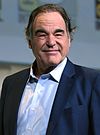
Edward Joseph Snowden (born June 21, 1983) is an American former technical contractor for the United States National Security Agency (NSA) and a former employee of the Central Intelligence Agency (CIA) who leaked details of several top-secret U.S. and British government mass surveillance programs to the press. His disclosures revealed numerous global surveillance programs, many run by the NSA and the Five Eyes Intelligence Alliance with the cooperation of telecommunication companies and European governments. Snowden came to international attention after stories based on the material appeared in The Guardian and The Washington Post. Further disclosures were made by other publications including Der Spiegel and The New York Times.