Link Copied!
Dmitri Mendeleev Quotes (1834-1907)
Inventor



About Dmitri Mendeleev
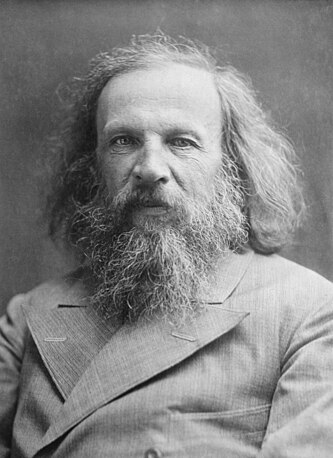
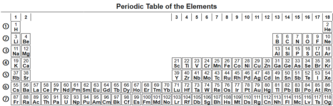
Dmitri Ivanovich Mendeleev, Russian: Дми́трий Ива́нович Менделе́ев, also romanized Mendeleyev or Mendeleef (8 February O.S. 27 January 1834 – 2 February O.S. 20 January 1907) was a Russian chemist and inventor. He is credited as being the creator of the first version of the periodic table of elements. Using the table, he predicted the properties of elements yet to be discovered.
Best Dmitri Mendeleev Quotes
Shortest
Earliest
Explore our curated collection of the most famous and impactful Dmitri Mendeleev quotes.


“In science we must all submit not to what seems to us attractive from one point of view or another, but to what represents an agreement between theory and experiment.”

“1. The elements, if arranged according to their atomic weights, exhibit an evident periodicity of properties.
2. Elements which are similar as regards their chemical properties have atomic weights which are either of nearly the same value (e.g., platinum, iridium, osmium) or which increase regularly (e.g., potassium, rubidium, caesium).
3. The arrangement of the elements, or of groups of elements in the order of their atomic weights corresponds to their so-called valencies as well as, to some extent, to their distinctive chemical properties--as is apparent among other series in that of lithium, beryllium, barium, carbon, nitrogen, oxygen and iron [sic. The printed speech in J. Chem. Soc. says barium and iron. Obviously boron (B) and fluorine (F) are meant. Mendeleev's 1869 paper lists the symbols B and F rather than the names of the elements.--CJG]
4. The elements which are the most widely diffused have small atomic weights.
5. The magnitude of the atomic weight determines the character of the element just as the magnitude of the molecule determines the character of a compound body.
6. We must expect the discovery of many yet unknown elements, for example, elements analogous to aluminium and silicon, whose atomic weight would be between 65 and 75.
7. The atomic weight of an element may sometimes be amended by a knowledge of those of the contiguous elements. Thus, the atomic weight of tellurium must lie between 123 and 126, and cannot be 128.
8. Certain characteristic properties of the elements can be foretold from their atomic weights.
...[R]elations ...exist between the atomic weights of dissimilar elements ...hitherto ...neglected. I believe that the solution of some of the most important problems of our science lies in researches of this kind. To-day, 20 years after the above conclusions were formulated, they may still be considered as expressing the essence of the now well-known periodic law.”
Dmitri Mendeleev Quotes by Topic
Find exactly what you are looking for by browsing this categorized list of Dmitri Mendeleev quotes by topic.
Dmitri Mendeleev on Chemical element 3 quotes
“[T]he purpose of my paper would be entirely attained if I succeed in turning the attention of investigators to the relationships in the size of the atomic weights of nonsimilar elements, which have, as far as I know, been almost entirely neglected until now.”

Dmitri Mendeleev on Principles

Dmitri Mendeleev on Chemistry

Dmitri Mendeleev on Metal
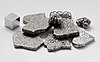
“Mercury as a liquid metal is capable of dissolving other metals and forming metallic solutions. These are generally called 'amalgams.' The formation of these solutions is often accompanied by the development of a large amount of heat—for instance when potassium and sodium are dissolved... but sometimes heat is absorbed, as... when lead is dissolved. ...[T]he solution of metals in mercury is accompanied by the formation of definite chemical compounds of the mercury with the metals dissolved. ...[I]n many cases such compounds have undoubtedly been obtained, and their existence is clearly shown by the evident crystalline structure and characteristic appearance of many amalgams.”
Quotes About Dmitri Mendeleev
Gain deeper perspective through quotes about Dmitri Mendeleev from others.
Patricia Fara on Dmitri Mendeleev
Anne Fullick on Dmitri Mendeleev
“His stroke of genius was to leave gaps for elements that were still to be discovered, predicting what their properties should be from his table. This was a tremendous publicity coup! A few years later, new elements were discovered with properties which matched almost exactly with Mendeleev's predictions - the case was won...”
Michael D. Gordin on Dmitri Mendeleev 3 quotes
“When Mendeleev began teaching at the University, there were 63 known elements, each identified by atomic weights newly determined by Avogadro's hypothesis. He had to develop some system of classification. The two basic methods for dividing the elements—into metals and metalloids (nonmetals) or by using the new concept of valency—seemed unhelpful to Mendeleev. He chose to write his own textbook instead and work out the challenges of classification himself.”
Jim Al-Khalili on Dmitri Mendeleev
“He made up a pack of cards and wrote an element and its atomic weight on each... So began the most memorable card game in the history of science. He called it "chemical solitaire" and began laying out the cards... to see if there was a pattern... [P]reviously chemists had grouped the elements in one of two ways, either by their properties... or by... their atomic weight, which is what Berzelius and Cannizzaro had done. Mendeleev's great genius was to combine those two methods together. ...Little more than half the elements ...had been discovered, so he was playing with an incomplete deck of cards. He stayed up for three days and three nights without... sleep... finally dozed off... [and] had an extraordinary dream. He saw almost all of the 63 known elements... in a grand table which related them together.”

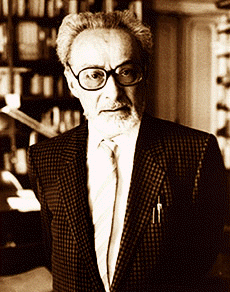
Primo Levi on Dmitri Mendeleev
“Sandro was surprised when I tried to explain to him some of the ideas that at the time I was confusedly cultivating. That the nobility of man, acquired in a hundred centuries of trial and error, lay in making himself the conquerer of matter, and that I had enrolled in chemistry because I wanted to remain faithful to this nobility. That conquering matter is to understand it, and understanding matter is necessary to understanding the universe and ourselves: and that therefore Mendeleev's Periodic Table, which just during those weeks we were laboriously learning to unravel, was poetry, loftier and more solemn than all the poetry we had swallowed down in liceo; and come to think of it, it even rhymed!”
William Masterton on Dmitri Mendeleev
“In writing a textbook of general chemistry, Mendeleev devoted separate chapters to families of elements with similar properties, including the alkali metals, the alkaline earth metals, and the halogens. Reflecting on the properties of these and other elements, he proposed in 1869 a primitive version of today's periodic table. Indeed, he predicted detailed properties for three such elements (scandium, gallium, and germanium). By 1886 all of these elements had been discovered and found to have properties very similar to those he had predicted.”
Mick Power on Dmitri Mendeleev 2 quotes
“Mendeleev noticed that there were regular repeating patterns and similarities between different elements when they were ordered in terms of their atomic weights. Atomic weight was originally calculated from the average mass of one mole of the element relative to hydrogen (though the modern comparison is with carbon-12...). However, even Mendeleev was aware that classification based on atomic weight was flawed; for example, the elements tellurium and iodine occurred in the wrong order on the basis of their atomic weight, with iodine having a lower atomic weight but rightly having the properties of the halogen group (chlorine, fluorine, etc)... Mendeleev therefore decided to reverse the periodic sequence in their case. It was only in the twentieth century, when the structure of the atom based on the protons and the neutrons was identified, that the use of atomic number rather than atomic weight provided the ideal basis for the periodic table classification system. The atomic number of an element refers to its number of protons... Because the chemical properties of an element are determined by the number of negatively charged electrons, which in the non-ionozed form of the element matches the number of protons, there are many elements that have a number of isotopes, that is, have different numbers of neutrons, affecting the atomic weight but not the atomic number. Hence, Mendeleev's tellurium and iodine anomoly turned out to be because the tellurium he had sourced contained a preponderance of a heavier tellurium isotope giving it a greater atomic weight than idodine.”
V.F. Richter corresondence on Dmitri Mendeleev
“Germanium, which name you should preserve since you are factually its father, is the element eka-silicon, Es-73, predicted by Mendeleev, the lowest homolog of tin, standing in the first large period between Ga (69.8) and As (79.9)... Eka-siicon is the element which we have awaited with great anticipation, and in any case the immediate study of germanium will be the most definitive experimentum crucis for the periodic system.”
About Dmitri Mendeleev
Dmitri Ivanovich Mendeleev, Russian: Дми́трий Ива́нович Менделе́ев, also romanized Mendeleyev or Mendeleef (8 February O.S. 27 January 1834 – 2 February O.S. 20 January 1907) was a Russian chemist and inventor. He is credited as being the creator of the first version of the periodic table of elements. Using the table, he predicted the properties of elements yet to be discovered.