David on Wild animal suffering
← Back to David Profile
“It is easy to romanticise, say, tigers or lions and cats. We admire their magnificent beauty, strength and agility. But we would regard their notional human counterparts as wanton psychopaths of the worst kind.”
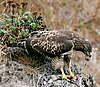
“People who accuse us of putting in too much violence, [should see] what we leave on the cutting-room floor. My conscience troubles me more about reducing the pain and savagery that there is in the natural world than the reverse.”
“If we already lived in a cruelty-free world, the notion of re-introducing suffering, exploitation and creatures eating each other would seem not so much frightful as unimaginable – no more seriously conceivable than reverting to surgery without anaesthesia today.”
“Humans already massively intervene in Nature, whether through habitat destruction, captive breeding programs for big cats, "rewilding", etc. So the question is not whether humans should "interfere", but rather what ethical principles should govern our interventions.”
“Much more seriously, in those traditional eco-systems that we chose to retain, millions of non-human animals will continue periodically to starve, die horribly of thirst and disease, or even get eaten alive. This is commonly viewed as "natural" and hence basically OK.”
“The whole earth, believe me ... is cursed and polluted. A perpetual war is kindled amongst all living creatures. Necessity, hunger, want, stimulate the strong and courageous: Fear, anxiety, terror, agitate the weak and infirm. The first entrance into life gives anguish to the new-born infant and to its wretched parent: Weakness, impotence, distress, attend each stage of that life: and it is at last finished in agony and horror.”
“The irrationality of the "appeal to Nature" is illustrated by a simple thought-experiment. Imagine, fancifully, if starvation, disease, parasitism, disembowelling, asphyxiation and being eaten alive were not endemic to the living world — or such miseries have already been abolished and replaced by an earthly paradise. Would anyone propose there is ethical case for (re)introducing them? Even proposing such a thought-experiment can sound faintly ridiculous.”
“Look round this universe. What an immense profusion of beings, animated and organised, sensible and active! You admire this prodigious variety and fecundity. But inspect a little more narrowly these living existences, the only beings worth regarding. How hostile and destructive to each other! How insufficient all of them for their own happiness! How contemptible or odious to the spectator! The whole presents nothing but the idea of a blind Nature, impregnated by a great vivifying principle, and pouring forth from her lap, without discernment or parental care, her maimed and abortive children!”
“Observe, too, says Philo, the curious artifices of nature, in order to embitter the life of every living being. The stronger prey upon the weaker, and keep them in perpetual terror and anxiety. The weaker too, in their turn, often prey upon the stronger, and vex and molest them without relaxation. Consider that innumerable race of insects, which either are bred on the body of each animal, or flying about infix their stings in him. These insects have others still less than themselves, which torment them. And thus on each hand, before and behind, above and below, every animal is surrounded with enemies, which incessantly seek his misery and destruction.”
“More controversially, technology can accelerate the transition from harming to helping free-living sentient beings: mankind's fitfully expanding "circle of compassion". The civilising process needn't be species-specific but instead extend to free-living dwellers in tomorrow's wildlife parks. Every cubic metre of the biosphere will soon be computationally accessible to surveillance, micro-management and control. Fertility regulation via immunocontraception can replace Darwinian ecosystems governed by starvation and predation. Any species of obligate carnivore we choose to preserve can be genetically and behaviourally tweaked into harmlessness. Asphyxiation, disembowelling, and agonies of being eaten alive can pass into the dustbin of history.”
“The first circumstance which introduces evil, is that contrivance or economy of the animal creation, by which pains, as well as pleasures, are employed to excite all creatures to action, and make them vigilant in the great work of self-preservation. Now pleasure alone, in its various degrees, seems to human understanding sufficient for this purpose. All animals might be constantly in a state of enjoyment: but when urged by any of the necessities of nature, such as thirst, hunger, weariness; instead of pain, they might feel a diminution of pleasure, by which they might be prompted to seek that object which is necessary to their subsistence. Men pursue pleasure as eagerly as they avoid pain; at least they might have been so constituted. It seems, therefore, plainly possible to carry on the business of life without any pain. Why then is any animal ever rendered susceptible of such a sensation? If animals can be free from it an hour, they might enjoy a perpetual exemption from it; and it required as particular a contrivance of their organs to produce that feeling, as to endow them with sight, hearing, or any of the senses. Shall we conjecture, that such a contrivance was necessary, without any appearance of reason? and shall we build on that conjecture as on the most certain truth?”