David on Infinity
← Back to David Profile
“When we turn to the question, what is the essence of the infinite, we must first give ourselves an account as to the meaning the infinite has for reality: let us then see what physics teaches us about it.”
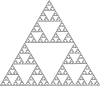
“The Infinite! No other question has ever moved so profoundly the spirit of man; no other idea has so fruitfully stimulated his intellect; yet no other concept stands in greater need of clarification than that of the infinite.”
“No priestly dogmas, invented on purpose to tame and subdue the rebellious reason of mankind, ever shocked common sense more than the doctrine of the infinitive divisibility of extension, with its consequences; as they are pompously displayed by all geometricians and metaphysicians, with a kind of triumph and exultation. A real quantity, infinitely less than any finite quantity, containing quantities infinitely less than itself, and so on in infinitum; this is an edifice so bold and prodigious, that it is too weighty for any pretended demonstration to support, because it shocks the clearest and most natural principles of human reason.”
“The first naive impression of nature and matter is that of continuity. Be it a piece of metal or a fluid volume, we cannot escape the conviction that it is divisible into infinity, and that any of its parts, however small, will have the properties of the whole. But wherever the method of investigation into the physics of matter has been carried sufficiently far, we have invariably struck a limit of divisibility, and this was not due to a lack of experimental refinement but resided in the very nature of the phenomenon. One can indeed regard this emancipation from the infinite as a tendency of modern science and substitute for the old adage natura non facit saltus its opposite: Nature does make jumps.”
“The second place in which we encounter the problem of the infinite in nature is when we regard the universe as a whole. Let us then examine the extension of this universe to ascertain whether there exists there an infinitely great. The opinion that the world was infinite was a dominant idea for a long time. Up to Kant and even afterward, few expressed any doubt in the infinitude of the universe. Here too modern science, particularly astronomy, raised the issue anew and endeavored to decide it not by means of inadequate metaphysical speculations, but on grounds which rest on experience and on the application of the laws of nature. There arose weighty objections against the infinitude of the universe. It is Euclidean geometry which leads to infinite space as a necessity. ...Einstein showed that Euclidean geometry must be given up. He considered this cosmological question too from the standpoint of his gravitational theory and demonstrated the possibility of a finite world; and all the results discovered by the astronomers are consistent with this hypothesis of an elliptic universe.”
“It is well known that matter consists of small particles, the atoms, and that the macroscopic phenomena are but manifestations of combinations and interactions among these atoms. But physics did not stop there: at the end of that last century it discovered atomic electricity of a still stranger behavior. Although up to then it had been held that electricity was a fluid and acted as a kind of continuous eye, it became clear then that electricity too, is built up of positive and negative electrons. Now besides matter and electricity there exists in physics another reality, for which the law of conservation holds; namely energy. But even energy, it is found, does not admit of simple and unlimited divisibility. Planck discovered the energy-quanta. And the verdict is that nowhere in reality does there exist a homogeneous continuum in which unlimited divisibility is possible, in which the infinitely small can be realized. The infinite divisibility of a continuum is an operation which exists in thought only, is just an idea which is refuted by our observations of nature, as well as by physical and chemical experiments.”