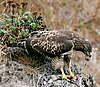
“The whole earth, believe me ... is cursed and polluted. A perpetual war is kindled amongst all living creatures. Necessity, hunger, want, stimulate the strong and courageous: Fear, anxiety, terror, agitate the weak and infirm. The first entrance into life gives anguish to the new-born infant and to its wretched parent: Weakness, impotence, distress, attend each stage of that life: and it is at last finished in agony and horror.”
“Look round this universe. What an immense profusion of beings, animated and organised, sensible and active! You admire this prodigious variety and fecundity. But inspect a little more narrowly these living existences, the only beings worth regarding. How hostile and destructive to each other! How insufficient all of them for their own happiness! How contemptible or odious to the spectator! The whole presents nothing but the idea of a blind Nature, impregnated by a great vivifying principle, and pouring forth from her lap, without discernment or parental care, her maimed and abortive children!”
“Observe, too, says Philo, the curious artifices of nature, in order to embitter the life of every living being. The stronger prey upon the weaker, and keep them in perpetual terror and anxiety. The weaker too, in their turn, often prey upon the stronger, and vex and molest them without relaxation. Consider that innumerable race of insects, which either are bred on the body of each animal, or flying about infix their stings in him. These insects have others still less than themselves, which torment them. And thus on each hand, before and behind, above and below, every animal is surrounded with enemies, which incessantly seek his misery and destruction.”
“The first circumstance which introduces evil, is that contrivance or economy of the animal creation, by which pains, as well as pleasures, are employed to excite all creatures to action, and make them vigilant in the great work of self-preservation. Now pleasure alone, in its various degrees, seems to human understanding sufficient for this purpose. All animals might be constantly in a state of enjoyment: but when urged by any of the necessities of nature, such as thirst, hunger, weariness; instead of pain, they might feel a diminution of pleasure, by which they might be prompted to seek that object which is necessary to their subsistence. Men pursue pleasure as eagerly as they avoid pain; at least they might have been so constituted. It seems, therefore, plainly possible to carry on the business of life without any pain. Why then is any animal ever rendered susceptible of such a sensation? If animals can be free from it an hour, they might enjoy a perpetual exemption from it; and it required as particular a contrivance of their organs to produce that feeling, as to endow them with sight, hearing, or any of the senses. Shall we conjecture, that such a contrivance was necessary, without any appearance of reason? and shall we build on that conjecture as on the most certain truth?”