

“There is no disease so destructive as lust.”
— Chanakya, Arthashastra
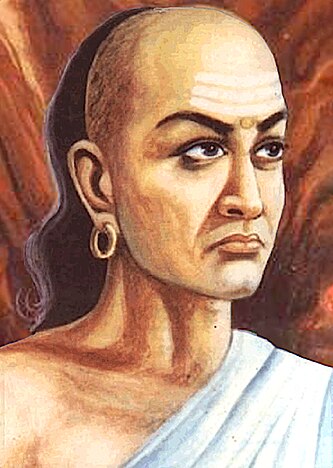
Explore our curated collection of the most famous and impactful Chanakya quotes.
“There is no disease so destructive as lust.”
“The world's biggest power is the youth and beauty of a woman.”

“Till the enemy's weakness is known , he should be kept on friendly terms.”
“Skills are called hidden treasure as they save like a mother in a foreign country.”
“नास्ति खलस्य मित्रम्Original / Translation (Sanskrit)“नास्ति खलस्य मित्रम्”
• The wicked have no friends.”
“सुखस्य मुलं धर्मःOriginal / Translation (Sanskrit)“सुखस्य मुलं धर्मः”
• Righteousness is the root of happiness.”

“A person should not be too honest. Straight trees are cut first and honest people are screwed first.”
“न कृतार्थानां मारणाभयम्Original / Translation (Sanskrit)“न कृतार्थानां मारणाभयम्”
• The contented have no fear of death.”

“All urgent calls he shall hear at once, but never put off; for when postponed, they will prove too hard or impossible to accomplish.”
“The wise man should restrain his senses like the crane and accomplish his purpose with due knowledge of his place, time and ability.”

“Don't judge the future of a person based on his present conditions, because time has the power to change black coal to shiny diamond.”

“Ravana, unwilling under the influence of vanity to restore a stranger's wife, as well as Duryodhana to part with a portion of his kingdom.”

“Our bodies are perishable, wealth is not at all permanent and death is always nearby. Therefore we must immediately engage in acts of merit.”
“We should always speak what would please the man of whom we expect a favour, like the hunter who sings sweetly when he desires to shoot a deer.”
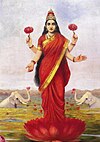
“Lakshmi, the Goddess of wealth, comes of Her own accord where fools are not respected, grain is well stored up, and the husband and wife do not quarrel.”
“The area extending from the Himalayas in the north to the sea and a thousand yojanas wide from east to west is the area of operation of the King-Emperor.”
“The serpent, the king, the tiger, the stinging wasp, the small child, the dog owned by other people, and the fool: these seven ought not to be awakened from sleep.”
“Treat your kid like a darling for the first five years. For the next five years, scold them. By the time they turn sixteen, treat them like a friend. Your grown up children are your best friends.”
“The king who is situated anywhere immediately on the circumference of the conqueror's territory is termed the enemy.
The king who is likewise situated close to the enemy, but separated from the conqueror only by the enemy, is termed the friend (of the conqueror).”
“If a king is energetic, his subjects will be equally energetic. If he is reckless, they will not only be reckless likewise, but also eat into his works. Besides, a reckless king will easily fall into the hands of his enemies. Hence the king shall ever be wakeful.”

“It is better to live under a tree in a jungle inhabited by tigers and elephants, to maintain oneself in such a place with ripe fruits and spring water, to lie down on grass and to wear the ragged barks of trees than to live amongst one's relations when reduced to poverty.”

“Whoever imposes severe punishment becomes repulsive to the people; while he who awards mild punishment becomes contemptible. But whoever imposes punishment as deserved becomes respectable. For punishment when awarded with due consideration, makes the people devoted to righteousness and to works productive of wealth and enjoyment; while punishment, when ill-awarded under the influence of greed and anger or owing to ignorance, excites fury even among hermits and ascetics dwelling in forests, not to speak of householders.”

Find exactly what you are looking for by browsing this categorized list of Chanakya quotes by topic.
“A reckless king will easily fall into the hands of his enemies. Hence the king shall ever be wakeful.”

“The king who is situated anywhere immediately on the circumference of the conqueror's territory is termed the enemy.
The king who is likewise situated close to the enemy, but separated from the conqueror only by the enemy, is termed the friend (of the conqueror).”
“A man is born alone and dies alone; and he experiences the good and bad consequences of his karma alone; and he goes alone to hell or the Supreme abode.”
“A man is born alone and dies alone; and he experiences the good and bad consequences of his karma alone; and he goes alone to hell or the Supreme abode.”

Gain deeper perspective through quotes about Chanakya from others.
“[Arvind] Sharma speculates that a reason for India's downfall was the eclipse of the category of Chakravarti as mentionned in the Arthashastra. A Chakravarti's domain was from ocean to ocean; he was above all the other kings who were local. He feels that the Arthashastra at some point ceased to be taught for learning realpolitik. There appears to have been an attack on it by liberal passivism. It is ironic, he says, that during British rule the Arthashastra text had disappeared until a copy suddenly surfaced with a farmer in Kerala in the early twentieth century... Sharma recommends introducing the study of Arthashastra in all schools in all languages.”