Link Copied!
Cesar Chavez Quotes (1927-1993)
Activist, Leader
About Cesar Chavez
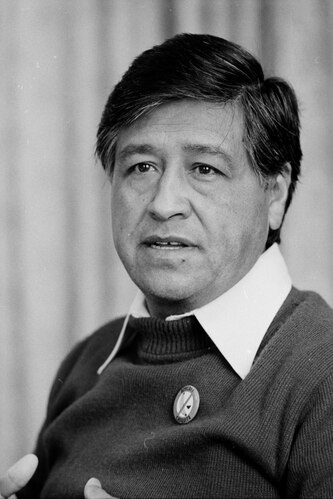
César Estrada Chávez (31 March 1927 – 23 April 1993) was an American farm worker, labor leader and civil rights activist, who, with Dolores Huerta, co-founded the National Farm Workers Association (later the United Farm Workers union, UFW).
Best Cesar Chavez Quotes
Shortest
Earliest
Explore our curated collection of the most famous and impactful Cesar Chavez quotes.

“I became a vegetarian after realizing that animals feel afraid, cold, hungry and unhappy like we (humans) do.”

“Our sweat and our blood have fallen on this land to make other men rich. The pilgrimage is a witness to the suffering we have seen for generations.”

“Just as Dr. King was a disciple of Gandhi and Christ, we must now be Dr. King's disciples.
Dr. King challenged us to work for a greater humanity. I only hope that we are worthy of his challenge.”
Dr. King challenged us to work for a greater humanity. I only hope that we are worthy of his challenge.”

“History will judge societies and governments — and their institutions — not by how big they are or how well they serve the rich and the powerful, but by how effectively they respond to the needs of the poor and the helpless.”
“Today, the growers are like a punch-drunk old boxer who doesn't know he's past his prime. The times are changing. The political and social environment has changed. The chickens are coming home to roost — and the time to account for past sins is approaching.”

“We seek, and have, the support of the Church in what we do. At the head of the pilgrimage we carry La virgen de la Guadalupe because she is ours, all ours, Patroness of the Mexican people. We also carry the Sacred Cross and the Star of David because we are not sectarians, and because we ask the help and prayers of all religions.”
“From time to time, you will hear our opponents declare that the union is weak, that the union has no support, that the union has not grown fast enough. Our obituary has been written many times. How ironic it is that the same forces that argue so passionately that the union is not influential are the same forces that continue to fight us so hard.”
“Today, thousands of farm workers live under savage conditions — beneath trees and amid garbage and human excrement — near tomato fields in San Diego County, tomato fields which use the most modern farm technology.
Vicious rats gnaw on them as they sleep. They walk miles to buy food at inflated prices. And they carry in water from irrigation pumps.”
Vicious rats gnaw on them as they sleep. They walk miles to buy food at inflated prices. And they carry in water from irrigation pumps.”
“Dr. King was also radical in his beliefs about violence. He learned how to successfully fight hatred and violence with the unstoppable power of nonviolence.
He once stopped an armed mob, saying: "We are not advocating violence. We want to love our enemies. I want you to love our enemies. Be good to them. This is what we live by. We must meet hate with love."”
He once stopped an armed mob, saying: "We are not advocating violence. We want to love our enemies. I want you to love our enemies. Be good to them. This is what we live by. We must meet hate with love."”

“We, the undersigned, gathered in Pilgrimage to the capital of the State in Sacramento in penance for all the failings of Farm Workers as free and sovereign men, do solemnly declare before the civilized world which judges our actions, and before the nation to which we belong, the propositions we have formulated to end the injustice that oppresses us.”
“I've traveled through every part of this nation. I have met and spoken with thousands of Hispanics from every walk of life, from every social and economic class. And one thing I hear most often from Hispanics, regardless of age or position, and from many non-Hispanics as well, is that the farm workers gave them the hope that they could succeed and the inspiration to work for change.”
“My friends, as we enter a new decade, it should be clear to all of us that there is an unfinished agenda, that we have miles to go before we reach the promised land.
The men who rule this country today never learned the lessons of Dr. King, they never learned that non-violence is the only way to peace and justice.
Our nation continues to wage war upon its neighbors, and upon itself.”
The men who rule this country today never learned the lessons of Dr. King, they never learned that non-violence is the only way to peace and justice.
Our nation continues to wage war upon its neighbors, and upon itself.”

“Many people will tell you of his wonderful qualities and his many accomplishments, but what makes him special to me, the truth many people don't want you to remember, is that Dr. king was a great activist, fighting for radical social change with radical methods.
While other people talked about change, Dr. King used direct action to challenge the system. He welcomed it, and used it wisely.”
While other people talked about change, Dr. King used direct action to challenge the system. He welcomed it, and used it wisely.”

“What do we want the Church to do? We don't ask for more cathedrals. We don't ask for bigger churches of fine gifts. We ask for its presence with us, beside us, as Christ among us. We ask the Church to sacrifice with the people for social change, for justice, and for love of brother. We don't ask for words. We ask for deeds. We don't ask for paternalism. We ask for servanthood.”

“All my life, I have been driven by one dream, one goal, one vision: to overthrow a farm labor system in this nation that treats farm workers as if they were not important human beings. Farm workers are not agricultural implements; they are not beasts of burden to be used and discarded. That dream was born in my youth, it was nurtured in my early days of organizing. It has flourished. It has been attacked.”
“We should be prepared to come to the defense of that priest, rabbi, minister, or layman of the Church, who out of commitment to truth and justice gets into a tight place with his pastor or bishop. It behooves us to stand with that man and help him see his trial through. It is our duty to see to it that his rights of conscience are respected and that no bishop, pastor or other higher body takes that God-given, human right away.”
“The ranchers want to keep us divided in order to keep us weak. Many of us have signed individual "work contracts" with the ranchers or contractors, contracts in which they had all power. These contracts were farces, one more cynical joke at our impotence. That is why we must get together and bargain collectively. We must use the only strength that we have, the force of our numbers. The ranchers are few; we are many. United we shall stand.”
“Dr. King was a powerful figure of destiny, of courage, of sacrifice, and of vision. Few people in the long history of this nation can rival his accomplishment, his reason, or his selfless dedication to the cause of peace and social justice.
Today we honor a wise teacher, an inspiring leader, and a true visionary, but to truly honor Dr. King we must do more than say words of praise.
We must learn his lessons and put his views into practice, so that we may truly be free at last.”
Today we honor a wise teacher, an inspiring leader, and a true visionary, but to truly honor Dr. King we must do more than say words of praise.
We must learn his lessons and put his views into practice, so that we may truly be free at last.”
“Across the San Joaquin Valley, across California, across the entire Southwest of the United States, wherever there are Mexican people, wherever there are farm workers, our movement is spreading like flames across ad dry plain. Our pilgrimage is the match that will light our cause for all farm workers to see what is happening here, so that they may do as we have done. The time has come for the liberation of the poor farm worker.
History is on our side. May the strike go on! Viva la causa!”
History is on our side. May the strike go on! Viva la causa!”
“We need, in a special way, to work twice as hard to make all people understand that animals are fellow creatures, that we must protect them and love them as we love ourselves... The basis for peace is respecting all creatures... That's the basis, the beginning for peace. ...We know we cannot defend or be kind to animals until we stop exploiting them - exploiting them in the name of science, exploiting animals in the name of sport, exploiting animals in the name of fashion, and yes, exploiting animals in the name of food.”
“When we refer to the Church we should define the word a little. We mean the whole Church, the Church as an ecumenical body spread around the world, and not just its particular form in a parish in a local community.
The Church we are talking about is a tremendously powerful institution in our society, and in the world. That Church is one form of the Presence of God on Earth, and so naturally it is powerful. It is powerful by definition. It is a powerful moral and spiritual force which cannot be ignored by any movement.”
The Church we are talking about is a tremendously powerful institution in our society, and in the world. That Church is one form of the Presence of God on Earth, and so naturally it is powerful. It is powerful by definition. It is a powerful moral and spiritual force which cannot be ignored by any movement.”
Cesar Chavez Quotes by Topic
Find exactly what you are looking for by browsing this categorized list of Cesar Chavez quotes by topic.
Cesar Chavez on Working class in the United States 8 quotes
“We Mexicans here in the United States, as well as all other farm workers, are engaged in another struggle for the freedom and dignity which poverty denies us. But it must not be a violent struggle, even if violence is used against us.”

Cesar Chavez on Suffering 3 quotes
“Our sweat and our blood have fallen on this land to make other men rich. The pilgrimage is a witness to the suffering we have seen for generations.”
Cesar Chavez on Boycott 2 quotes
“The boycott, as Gandhi taught, is the most nearly perfect instrument for nonviolent change, allowing masses of people to participate actively in a cause.”

Cesar Chavez on Social justice 2 quotes
“This is the beginning of a social movement in fact and not in pronouncements. We seek our basic, God-given rights as human beings. Because we have suffered — and are not afraid to suffer — in order to survive, we are ready to give up everything, even our lives, in our fight for social justice. We shall do it without violence because that is our destiny. To the ranchers, and to all those who opposes, we say, in the words of Benito Juárez: "El respeto al derecho ajeno es la paz." [Respect for another's right is the meaning of peace.]”

Cesar Chavez on Generosity
Cesar Chavez on Star of David
“We seek, and have, the support of the Church in what we do. At the head of the pilgrimage we carry La virgen de la Guadalupe because she is ours, all ours, Patroness of the Mexican people. We also carry the Sacred Cross and the Star of David because we are not sectarians, and because we ask the help and prayers of all religions.”

Cesar Chavez on Strike action
“We shall Strike. We shall pursue the revolution we have proposed. We are sons of the Mexican Revolution, a revolution of the poor seeking, bread and justice. Our revolution will not be armed, but we want the existing social order to dissolve, we want a new social order. We are poor, we are humble, and our only choices is to Strike in those ranchers where we are not treated with the respect we deserve as working men, where our rights as free and sovereign men are not recognized. We do not want the paternalism of the rancher; we do not want the contractor; we do not want charity at the price of our dignity. We want to be equal with all the working men in the nation; we want just wage, better working conditions, a decent future for our children. To those who oppose us, be they ranchers, police, politicians, or speculators, we say that we are going to continue fighting until we die, or we win. We shall overcome.”

What Cesar Chavez Said About Others
Discover personal opinions Cesar Chavez shared regarding contemporaries.
Cesar Chavez on John F. Kennedy
“Public employee unions were greatly helped, it is true, by the executive order of the late President John F. Kennedy and by similar policies adopted by certain state and local governments.”

Cesar Chavez on Robert F. Kennedy
“We should all express our thanks to Senator Robert Kennedy for his constant work on behalf of the poor, for his personal encouragement to me, and for taking time to break bread with us today.”

Cesar Chavez on Ronald Reagan
“President Reagan is a man with a very special sense of religion. Reagan sees a proper role for government and a proper role for God. It's very simple: Reagan's government helps the rich, and God helps the rest of us.”

Cesar Chavez on Gandhi
“Economic power has to precede political power. Gandhi understood this when, in 1930, he and his followers resolved to defy the British government's salt monopoly by making their own salt from the sea; this boycott was one of the crucial steps in the Indian fight for independence.”

Cesar Chavez on Coretta Scott King
“The visitors were a tremendous support. I talked to about 150 the 1st Saturday and about 300 the 2nd Saturday. A lot were women. It gives you a tremendous feeling. I was very happy that Coretta King, Ethel Kennedy and Bishop Flores came. They did a lot of good for me spiritually and an awful lot of good to the people.”
Cesar Chavez on Anita Bryant
“We sometimes refer to those who oppose the struggles of minorities and people in the Third World as the "super-Americans." They claim the melting-pot theory still applies. They would like all of us to be melted, poured, and cast... and cloned into the all-American boy and girl. So we will all come out looking like Pat Boone and Anita Bryant. They would like all of us to buy their argument that the strength of our country is in its conformity to one ethnic and cultural heritage.”

Cesar Chavez on Stokely Carmichael
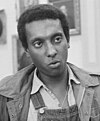
“The civil rights movement's biggest drawback is that they don't have a group that pays its own way. They don't have a membership group. This is the kind of power that is needed. Malcolm X was an organizer, but Stokely Carmichael is entirely different. I don't see any building. The approach that Malcolm X used was the house meeting. He was doing those things that we know pay: being patient and just accumulating, committing people and so forth. He's gone, but his spirit continues.”
Cesar Chavez on Jesse Jackson
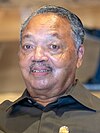
“Most Americans realize that the black civil rights revolution of the late Fifties and early Sixties effectively began with Dr. Martin Luther King's successful bus boycott in Montgomery, Alabama. This tool is being perfected, for blacks, by the Reverend Jesse Jackson in Chicago. Our own nationwide grape boycott is hurting corporate agriculture so much that the growers are eventually going to have to deal with us, no matter how hard the power class tries to weaken the boycott's effectiveness.”
Cesar Chavez on Benito Juárez
“This is the beginning of a social movement in fact and not in pronouncements. We seek our basic, God-given rights as human beings. Because we have suffered — and are not afraid to suffer — in order to survive, we are ready to give up everything, even our lives, in our fight for social justice. We shall do it without violence because that is our destiny. To the ranchers, and to all those who opposes, we say, in the words of Benito Juárez: "El respeto al derecho ajeno es la paz." [Respect for another's right is the meaning of peace.]”

Cesar Chavez on Richard Nixon
“How can we narrow the gap between the wealthy and the poor in this country? What concrete steps can be taken now to abolish poverty in America? There are a number of things that President Nixon could do immediately, if he wanted to. In terms of our own grape pickers' strike, he could tell the Pentagon to stop shipping extraordinary amounts of grapes to Vietnam-the Government's most obvious tool in its attempt to break our strike. And he could improve the lot of all the farmworkers in the Southwest-easily, under existing legislation-by putting an end to the importing and exploitation of cheap foreign labor.”

Cesar Chavez on Oscar Wilde
“We see these insane practices reflected in the buy-outs and takeovers on Wall Street. It's the same thing: exchanging long-term security for short-term gain. You sacrifice a company for the immediate rewards. But you destroy what produces jobs and livelihoods and economic health. If you eat the seed corn, you won't have a crop to plant. Oscar Wilde once said, "A cynic is someone who knows the price of everything and the value of nothing." We look at the price, but we don't look at the value. Economics and profit drive everything. People forget that the soil is our sustenance. It is a sacred trust. It is what has worked for us for centuries, It is what we pass on to future generations.”

Cesar Chavez on Martin Luther King Jr.
“My friends, the time for action is upon us. The enemies of justice wants you to think of Dr. King as only a civil rights leader, but he had a much broader agenda. He was a tireless crusader for the rights of the poor, for an end to the war in Vietnam long before it was popular to take that stand, and for the rights of workers everywhere. Many people find it convenient to forget that Martin was murdered while supporting a desperate strike on that tragic day in Memphis, Tennessee. He died while fighting for the rights of sanitation workers. Dr. King's dedication to the rights of the workers who are so often exploited by the forces of greed has profoundly touched my life and guided my struggle.”

Cesar Chavez on Franklin D. Roosevelt
“Thirty-four years ago a nation groping its uncharted course through the seas of the Great Depression faced the threatening storms of social and economic revolution. The late President Franklin D. Roosevelt met the challenge with the Wagner Act and with other New Deal measures, then considered quite revolutionary, such as Social Security, unemployment insurance, and the Fair Labor Standards Act. While these measures modified the existing capitalistic system somewhat, they also saved the nation for free enterprise. They did not save the farm worker. He was left out of every one of them. The social revolution of the New Deal passed him by. To make our union possible with its larger hope that the farm worker will have his day at last, there was required a new social revolution.”

Cesar Chavez on Malcolm X
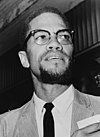
“If we criticize ourselves, then that begins to change things. I think groups that deal in power become impatient with groups who are strangers to power. I think even in individuals you can see this. A good example is Malcolm X. (I am reading his autobiography now.) When he talks about Uncle Toms, he puts it clearly. He's saying that these guys will go to work for the devil white man. He's saying a lot more (he doesn't make it clear but I'm sure this is his thinking), that the Negro thinks that if he gets ahead he is going to be getting his people ahead. Malcolm X knew about power although he didn't put it in those words. (Interviewer: Malcolm X had a tremendous effect on black organizers.) He knew what he was doing. They understood him, and they didn't understand the others. But he had a good base; he came right from the gutter so he wasn't compromised. The guys who don't come from the gutter have to compromise because they're going to school, they're getting a job, they're working for the government, all these little compromises which, by the time you get to be a leader, have got your hands tied up. You organize for power so that you can get something. You organize so that you can build power to do something with it, and so, when you look back, you've got to see some people out there doing something. What I'm trying to say is you can't organize by just speaking. The civil rights movement's biggest drawback is that they don't have a group that pays its own way. They don't have a membership group. This is the kind of power that is needed. Malcolm X was an organizer, but Stokely Carmichael is entirely different. I don't see any building. The approach that Malcolm X used was the house meeting. He was doing those things that we know pay: being patient and just accumulating, committing people and so forth. He's gone, but his spirit continues.”
Quotes About Cesar Chavez
Gain deeper perspective through quotes about Cesar Chavez from others.
Lalo Alcaraz on Cesar Chavez
“In college I was an editorial cartoonist for my school paper, The Daily Aztec...I did straight, news-oriented editorial cartoons. Occasionally, my Chicano background snuck in to the toons simply because I might do a César Chavez toon about how the School Student Board was too stupidly racist to allow him to speak on campus or other anti-frat toons on how they were so racist in doing fund-raisers for Tijuana kid charities--dressed in sombreros and begging with tin cups.”

Judy Baca on Cesar Chavez
“(How has the city changed over the decades?) In the 70's we were so engaged - that's a hard one for me, to try not to discount the losses, to see what is hopeful. I feel a lot of times that we've lost leadership. There's no Cesar Chavez or Robert Kennedy. We've lost the great inspiring role models that gave us ideas about a bigger self. We started to value the celebrity, the person who got his.”

Luke Cole on Cesar Chavez
“The farm-worker movement of the 1960s, led by Cesar Chavez, was perhaps the first nationally known effort by people of color to address an environmental issue.”
Roxanne Dunbar-Ortiz on Cesar Chavez
“From the beginning in 1962, Chávez, like Galarza before him, lobbied for strict control of the US-México border, arguing that a mass of noncitizen and politically powerless workers would make it difficult to recruit US citizens to the union. They also viewed undocumented Mexican workers as strikebreakers. The UFW maintained that stance in its early years, even reporting undocumented workers to the immigration service. But by 1974, important Chicano support organizations were openly criticizing the stance, making newspaper headlines. It came to a crisis when Attorney General William B. Saxbe announced that the Justice Department would deport a million "illegal aliens" and claimed to have the full support of the UFW. The UFW backed off the stance, and Chávez wrote a letter, published in the San Francisco Examiner, denying Saxbe's claim, writing that "illegal aliens are doubly exploited, first because they are farm workers, and second because they are powerless to defend their own interests. . . . If there were no illegals being used to break our strikes, we could win those strikes overnight and then be in a position to improve the living and working conditions of all farm workers." But he promised that the United Farm Workers would support legalization for the undocumented, "our brothers and sisters." By the late 1970s, Chávez's views had changed, and he was advocating the legalization of undocumented immigrants and encouraged their inclusion in the union movement.”

Dina Gilio-Whitaker As Long as Grass Grows on Cesar Chavez
“racial and ethnic minorities were being environmentally-and economically-exploited in ways that didn't involve incinerators or dumps. Between 1965 and 1971, for example, under the leadership of Cesar Chavez, Mexican farmworkers in California launched a historic resistance movement to organize a union not only in the interest of raising wages and improving working conditions but also to combat pesticide abuse, which was notorious for making workers sick.”
Dorothy Ray Healey on Cesar Chavez
“I was very impressed with Cesar Chavez's grasp of organizing strategy. He started organizing around small fruit to start with, where there was a semipermanent work force. That gave the union continuity. These workers didn't move around to follow the different crops. You didn't start fresh every time there was a strike.”
Dolores Huerta on Cesar Chavez 5 quotes
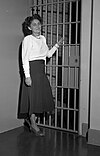
“Cesar, a priest, a minister, and nine farmworkers were arrested for going into a camp in Borrego Springs, just to get the workers’ clothes after the workers were fired for union activity. They were arrested, stripped naked, and chained by the officers.”
Jessie Lopez De La Cruz on Cesar Chavez
“[L]ate one night in 1962, there was a knock at the door and there were three men. One of them was Cesar Chavez. And the next thing I knew, they were sitting around our table talking about a union...Cesar said, "The women have to be involved. They're the ones working out in the fields with their husbands. If you can take the women out to the fields, you can certainly take them to meetings." So I sat up straight and said to myself, "That's what I want!"”
Martin Luther King on Cesar Chavez
“Our separate struggles are really one. A struggle for freedom, for dignity, and for humanity. ... You and your valiant fellow workers have demonstrated your commitment to righting grievous wrongs forced upon exploited people. We are together with you in spirit and determination that our dreams for a better tomorrow will be realized.”
Cherríe Moraga on Cesar Chavez
“Forty years ago, here in the United States, there were true activist visionaries and mass movements to enact those visions...There was a César Chávez and a viable farm workers' movement, propped up by the agit-prop of a teatro para un movimiento campesino.”

Jeffrey Moussaieff Masson on Cesar Chavez
“Many years ago, when I was merely a vegetarian, I met the great Cesar Chavez, and he said to me: "If you are interested in preventing animal suffering, the first thing you should give up is eggs and milk, because the animals who produce those foods lead the most unhappy lives. You would do better to eat meat and stop eating eggs and dairy products." I was shocked, since I had no intention of eating meat but had never thought of giving up eggs or dairy products. But when I looked into it I realized he was right, and now, years later, after I have studied the matter up close, I know for certain that he was completely correct about the cruel treatment of the animals raised for such products. The advantages of a vegan diet are enormous for our health, for the environment, for the animals themselves.”

Bernie Sanders on Cesar Chavez
“The reality is that many businesses, large and small, have long used undocumented workers to pad their bottom lines. Just consider the agricultural workforce. In California alone-where the $45 billion-a-year agricultural sector supplies more than half the produce consumed in the United States-between 40 and 50 percent of the workforce is made up of undocumented workers. No wonder California has been the site of some of the most important immigrant labor struggles, brought to the consciousness of many Americans in the 1960s and 1970s by the great United Farm Workers leader, Cesar Chavez. That struggle continues today.”

About Cesar Chavez
César Estrada Chávez (31 March 1927 – 23 April 1993) was an American farm worker, labor leader and civil rights activist, who, with Dolores Huerta, co-founded the National Farm Workers Association (later the United Farm Workers union, UFW).