In general the position as regards all such new calculi is this - That one cannot accomplish by them anything that could not be accomplished without them. However, the advantage is, that, provided such a calculus corresponds to the inmost nature of frequent needs, anyone who masters it thoroughly is able - without the unconscious inspiration of genius which no one can command - to solve the respective problems, yea to solve them mechanically in complicated cases in which, without such aid, even genius becomes powerless. Such is the case with the invention of general algebra, with the differential calculus, and in a more limited region with Lagrange's calculus of variations, with my calculus of congruences, and with Mobius's calculus. Such conceptions unite, as it were, into an organic whole countless problems which otherwise would remain isolated and require for their separate solution more or less application of inventive genius.
What It Means
This is a placeholder explanation generated by the low-overhead model. It interprets "In general the position as regards all such new calculi is this - That one cannot accomplish by them anything that could not be accomplished without them. However, the advantage is, that, provided such a calculus corresponds to the inmost nature of frequent needs, anyone who masters it thoroughly is able - without the unconscious inspiration of genius which no one can command - to solve the respective problems, yea to solve them mechanically in complicated cases in which, without such aid, even genius becomes powerless. Such is the case with the invention of general algebra, with the differential calculus, and in a more limited region with Lagrange's calculus of variations, with my calculus of congruences, and with Mobius's calculus. Such conceptions unite, as it were, into an organic whole countless problems which otherwise would remain isolated and require for their separate solution more or less application of inventive genius." in the context of "Carl Friedrich Gauss As quoted in Gauss, Werke, Bd. 8, page 298" to mean that wisdom is timeless.

Tags
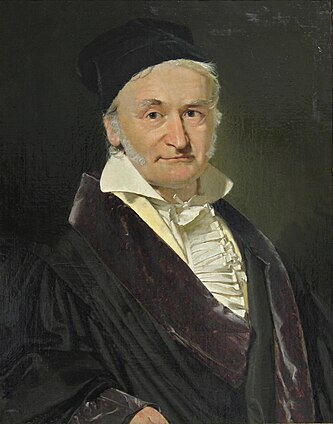
About Carl Friedrich Gauss