Link Copied!
Burhan al-Din al-Marghinani Quotes (1135-1197)
About Burhan al-Din al-Marghinani
Burhān al-Dīn Abu’l-Ḥasan ‘Alī bin Abī Bakr bin ‘Abd al-Jalīl al-Farghānī al-Marghīnānī (Arabic: برهان الدين المرغيناني) was an Islamic scholar of the Hanafi school of jurisprudence. He was born in Marghinan near Farghana in 530/1135 (in present day Uzbekistan) He died in 593/1197.
Best Burhan al-Din al-Marghinani Quotes
Shortest
Earliest
Explore our curated collection of the most famous and impactful Burhan al-Din al-Marghinani quotes.

“"It is not lawful to make war upon any people who have never before been called to the faith, without previously requiring them to embrace it, because the Prophet so instructed his commanders, directing them to call the infidels to the faith, and also because the people will hence perceive that they are attacked for the sake of religion, and not for the sake of taking their property, or making slaves of their children, and on this consideration it is possible that they may be induced to agree to the call, in order to save themselves from the troubles of war.”

“WHOREDOM and bastardy are defect with regard to a female slave, but not with regard to a male. because the object, in purchase of a female slave, is cohabitation and the generation of children, which must be affected by either of the above circumstances; whereas, the object in the purchase of a male slave is the use of his services, the value of which is not depreciated by his committing to whoredom.—IF, however, a male slave be much addicted to whoredom, our lawyers are of opinion that it is a defect, because in the pursuit of women he neglects the service of his master.”
“The Imam, with respect to captives, has it in his choice to slay them because the Prophet put captives to death and also because slaying them terminates wickedness; or, if he choose, he may make them slaves, because by enslaving them the wickedness of them is remedied, and at the same time the Muslims reap an advantage; or, if he please, he may release them so as to make them freemen and Zimmis, according to what is recorded of Omar. … but it is not lawful so to release the idolaters of Arabia, or apostates… If captives become Muslims, let not the Imam put them to death; … but yet he may lawfully make them slaves, after their conversion…”

“It is the duty of every free Muslim arrived at the age of maturity to offer a sacrifice, on the ‘Idu’l-Azha’, or ‘Festival of the Sacrifice’, provided he be then possessed of a Nisab (i.e., sufficient property), and be not a traveller. This is the opinion of Abu Hanifah, Muhammad, Zufar, and Hasan, and likewise of Abu Yusuf, according to one tradition. According to ash-Shafi’i, sacrifice is not an indispensable duty, but only laudable. At-Tahawi reports that, in the opinion of Abu Hanifah, it is indispensable, whilst the disciples hold it to be in a strong degree laudable. The offering of a sacrifice is incumbent on a man on account of himself, and on account of his infant child. This is the opinion of Abu Hanifah in one tradition. In another he has said that it is not incumbent on a man to offer a sacrifice for his child...”
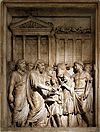
“CAPITATION-TAX is not imposed upon slaves, Mokátibs, Modabbirs, or Am-Walids, because capitation-tax is a substitute for destruction, with respect to them, and; with respect to us, it is substitute for aid [in the wars of the faith;] now in conformity with the first of these, it would, it would follo that capitation-taxt is due; a doubt therefore arises with respec to its being due; and as this is the case, it is determined not to be incumbent upon them: neither is it incumbent upon their owner to pay capitation-taxt for them, because he himself by their means pays an increased capitation-tax, as he through them becomes rich, or obtains a mediocrity of circumstances; and in either case he pays capitation-tax in a degree superior to the labouring poor.”
“CAPITATION-TAX is not imposed upon Ráhibs, (that is, Christian or Pagan monks and hermits, who do not mix with the rest of mankind:)—the same is mentioned by Kadooree: Mohammed, in the Jama-Sagbeer, reports from Haneefa that capitation-tax may be imposed upon those, where they are capable of labour, (and such is the opinion of Aboo Yoofaf;) because where, being capable of labour, they refrain from it, they waste their ability; capitation-taxt, therefore, is due from the,m. in the same manner as tribute from the landholder, where he (being able) suffers his land to remain unfilled.—The reason for what is related by Kadoore is that a monk is not to be destroyed where he does does not mix with mankind; and capitation-tax, with respect to them, would be for the purpose of warding off destruction.”
“"If the infidels, upon receiving the call, neither consent to it nor agree to pay capitation tax, it is then incumbent on the Muslims to call upon God for assistance, and to make war upon them, because God is the assistant of those who serve Him, and the destroyer of His enemies, the infidels, and it is necessary to implore His aid upon every occasion; the Prophet, moreover, commands us so to do. And having so done, the Muslims must then with God’s assistance attack the infidels with all manner of warlike engines (as the Prophet did by the people of Ta’if), and must also set fire to their habitations (in the same manner as the Prophet fired Baweera), and must inundate them with water and tear up their plantations and tread down their grain because by these means they will become weakened, and their resolution will fail and their force be broken; these means are, therefore, all sanctified by the law."”

“A man may gratify his passion with his female slave in whatever way he pleases—It is lawful for a man to perform the act of Azil with his female slave without her consent, whereas he cannot lawfully do so by his wife unless with her permission. –The reason of this is that the Prophet has forbidden the act of Azil with a free woman without her consent but has permitted it to a master in the case of his female slave. Besides, carnal connexion is the right of a free woman for the gratifying of her passion, and the propagation of children (whence it is that a wife is at liberty to reject a husband who is an eunuch or impotent); whereas a slave possesses no such right.—A man, therefore, is not at liberty to injure the right of his wife, whereas a master is absolute with respect to his slave. If, also, a man should marry the female slave of another, he must not perform the act of Azil with her without the consent of her master.”

“If the Imám should not bestow in gratuity the Sillib (or personal property) of one who is slain, upon the slayer, it becomes a part of the general plunder, in which the slayer and other have all an equal share. Shafei maintains that the personal effects of the person slain belong to the slayer, provided the latter be one of those who are entitled to share in the plunder, and that he killed the slain in open fight, because the prophet has said, "Whoever slays an INFIDEL is "entitled to his personal property."
OBJECTION.—It is possible that the prophet may have mentioned this merely in a gratious sense, and not as the award of the LAW.
REPLY.—It is evident, from the situation of the prophet, that he spoke this as an award of the LAW; since he was sent to enforce the awards of the LAW. A person, moreover, who kills another prepared to oppose him in open fight exposes himself in a superior degree, and hence the personal property of the slain goes to him, for the purpose of making a distinction between him and others.”
“"If a Muslim attack infidels without previously calling them to the faith, he is an offender, because this is forbidden; but yet if he do attack them before thus inviting them and slay them, and take their property, neither fine, expiation, nor atonement are due, because that which protects (namely, Islam) does not exist in them, nor are they under protection by place (namely the Daru ‘l-Islam, or Muslim territory), and the mere prohibition of the act is not sufficient to sanction the exaction either of fine or of atonement for property; in the same manner as the slaying of the women or infant children of infidels is forbidden, but if, notwithstanding, a person were to slay such, he is not liable to a fine. It is laudable to call to the faith a people to whom a call has already come, in order that they may have the more full and ample warning; but yet this is not incumbent, as it appears in the Traditions that the Prophet plundered and despoiled the tribe of al-Mustaliq by surprise, and he also agreed with Asamah to make a predatory attack upon Qubna at an early hour, and to set it on fire, and such attacks are not preceded by a call. (Qubna is a place in Syria: some assert it is the name of a tribe).”
“"It is no objection to shooting arrows or other missiles against the infidels that there may chance to be among them a Muslim in the way either of bondage or of traffic, because the shooting of arrows and so forth among the infidels remedies a general evil in the repulsion thereof from the whole body of Muslims, whereas the slaying of a Muslim slave or a trader is only a particular evil, and to repel a general evil a particular evil must be adopted, and also because it seldom happens that the strongholds of the infidels are destitute of Muslims, since it is most probable that there are Muslims residing in them, either in the way of bondage or of traffic, and hence, if the use of missile weapons were prohibited on account of these Muslims, war would be obstructed. If the infidels in time of battle should make shields of Muslim children, or of Muslims, who are prisoners in their hands, yet there is no need on that account to refrain from the use of missile weapons, for the reason already mentioned. It is requisite, however, that the Muslims in using such weapons aim at the infidels, and not at the children or the Muslim captives, because, as it is impossible in shooting to distinguish precisely between them and the infidels, the person who discharges the weapon must make this distinction in his intention and design by aiming at the infidels, and not at the others, since this much is practicable, and the distinction must be made as far as is practicable."”
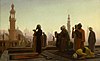
“CAPITATION-TAX is to be imposed upon Kitabees, because this is mentioned in the Koran: and it is in the same manner to be imposed upon Majoosees, as the prophet imposed capitation-tax upon Majoosees.—Capitation-tax is also imposed upon the idolaters of Ajim, [Persia.] This is contrary to the opinion of Shafei, for he argues that destruction is incurred by all infidels; but the legality of abstaining from it, in consideration of a capitation-tax, with respect to Kitabees. is known from the word of KORAN, and with respect to Majoosees, from the traditions; any others, therefore, than those, (namely, idolaters,) remain subject to the original penalty, which is destruction. The argument of our doctors is that it is lawful to make slaves of the Idolaters of Ajim, it follows that it is also lawful to impose capitation-tax upon them because, in the same manner as, by reducing them to slavery, they are deprived of power over their own persons, so also, they are deprived of power over their own persons by the imposition of capitation-tax, since they must in this case work, and pay the Mussalmans the produce of their labour, and their subsistence is furnished from their labour. If a Mussulman army subdue an infidel territory before any capitation-tax be established, the inhabitants, together with their wives and children, are all plunder, and the property of the state, as it is lawful to reduce to slavery all infidels, whether they be Kitcbees, Majoofees, or idolaters''.”
“"If the Imam make peace with the aliens in return for property, there is no scruple; because since peace may be lawfully made without any such gratification it is also lawful in return for a gratification. This, however, is only where the Muslims stand in need of the property thus to be acquired; for if they be not in necessity, making peace for property is not lawful, since peace is a desertion of war both in appearance and in effect. It is to be observed that if the Imam receive this property by sending a messenger and making peace without the Muslim troops entering the enemy’s territory, the object of disbursement of it is the same as that of jizyah or capitation-tax; that is, it is to be expended upon the warriors and not upon the poor. If, however, the property be taken after the Muslims have invaded the enemy in this case it is as plunder, one-fifth going to the Imam and the remainder to be divided among the troops, as the property has in fact been taken by force in this instance. It is incumbent on the Imam to keep peace with apostates, and not to make war upon them, in order that they may have time to consider their situation, since it is to be hoped that they may again return to the faith. It is, therefore, lawful to delay fighting with them in a hope that they may again embrace Islam; but it is not lawful to take property from them. If, however, the Imam should take property from them, it is not incumbent upon him to return it, as such property is not in protection. If infidels harass the Muslims, and offer them peace in return for property, the Imam must not accede thereto as this would be a degradation of the Muslim honour, and disgrace would be attached to all the parties concerned in it; this, therefore, is not lawful except where destruction is to be apprehended, in which case the purchasing a peace with property is lawful, because it is a duty to repel destruction in every possible mode."”

“Zimmies may testify concerning each other--THE testimony of Zimmiees with respect to each other is admissible, notwithstanding they be of different religion.--Malik and Shafei have said that their evidence is absolutely inadmissible, because, as infidels are unjust, it is requisite to be slow in believing any thing they may advance, GOD having said (in the Koran). WHEN AN UNJUST PERSON TELLS YOU ANY THING: BE SLOW IN BELIEVING HIM;"--whence it is that the evidence of an infidel is not admitted concerning a Mussulman; and consequently, that an infidels stands (in this particular) in the same predicament with an apostate.--The arguments of our doctors upon this point are twofold--FIRST, it is related of the Prophet, that he permitted and held lawful the testimony some Christians concerning other of their sect.--SECONDLY, and infidel having power over himself, and his minor children is on that account qualified to be a witness with regard to his own sect; and the depravity which proceeds from his faith is not destructive of this qualification, because he is supposed to abstain from everything prohibited in his own religion, and falsehood is prohibited in every religion. It is otherwise with respect to an apostate, as he possesses no power, either over his own person, or over that of another; and it is also otherwise with respect to a Zimme in relation to a Mussulman because a Zimme has no power over the person of a Mussulman--Besides, a Zimme may be suspected of inventing falsehoods against a Mussulman from the hatred he bears to him on account of the superiority of the Mussulmans over him.
OJECTION.--In the same manner as there subsists an enmity between Musulmans and Zimmees, so also is there an enmity between the followers of other religions, sects as the Jews, the Christians, and the Magians: it would follow, therefore, that amongst these testimony of those of one religion cannot be admitted with relation to other of a different religion; whereas it hath been declared admissible.
REPLY.--Although the religions of these be different, yet none of them being under subjection to another, so as to engender reciprocal hatred; there is no cause to suspect that they will invent falsehoods against each other.”

“The following is the teaching of the Hanafi school of Sunnis on the subject of Jihad, as given in the Hidayah...:--
"The sacred injunction concerning war is sufficiently observed when it is carried on by any one party or tribe of Muslims, and it is then no longer of any force with respect to the rest. It is established as a divine ordinance, by the word of God, who said in the Qur’an, ‘Slay the infidels,’ and also by a saying of the Prophet, ‘War is permanently established until the Day of Judgment’ (meaning the ordinance respecting war). The observance, however, in the degree above mentioned, suffices, because war is not a positive injunction, as it is in its nature murderous and destructive, and is enjoined only for the purpose of advancing the true faith or repelling evil from the servants of God; and when this end is answered by any single tribe or party of Muslims making war, the obligation is no longer binding upon the rest, in the same manner as in the prayers for the dead-(if, however, no one Muslim were to make war, the whole of the Muslim, would incur the criminality of neglecting it) – and also because if the injunction were positive, the whole of the Muslims must consequently engage in war, in which case the materials for war (such as horses, armour, and so forth) could not be procured. Thus it appears that the observance of war as aforesaid suffices, except where there is a general summons (that is, where the infidels invade a Muslim territory, and the Imam for the time being issues a general proclamation requiring all persons to go forth to fight), for in this case war becomes a positive injunction with respect to the whole of the inhabitants, whether men or women, and whether the Imam be a just or an unjust person; and if the people of that territory be unable to repulse the infidels, then war becomes a positive injunction with respect to all in that neighbourhood; and if these also do not suffice it, then comes a positive injunction with respect to the next neighbours; and in same manner with respect to all the Muslims from east to west. The destruction of the sword is incurred by infidels, although they be not the first aggressors, as appears from various passages in the traditions which are generally received to this effect.”
"The sacred injunction concerning war is sufficiently observed when it is carried on by any one party or tribe of Muslims, and it is then no longer of any force with respect to the rest. It is established as a divine ordinance, by the word of God, who said in the Qur’an, ‘Slay the infidels,’ and also by a saying of the Prophet, ‘War is permanently established until the Day of Judgment’ (meaning the ordinance respecting war). The observance, however, in the degree above mentioned, suffices, because war is not a positive injunction, as it is in its nature murderous and destructive, and is enjoined only for the purpose of advancing the true faith or repelling evil from the servants of God; and when this end is answered by any single tribe or party of Muslims making war, the obligation is no longer binding upon the rest, in the same manner as in the prayers for the dead-(if, however, no one Muslim were to make war, the whole of the Muslim, would incur the criminality of neglecting it) – and also because if the injunction were positive, the whole of the Muslims must consequently engage in war, in which case the materials for war (such as horses, armour, and so forth) could not be procured. Thus it appears that the observance of war as aforesaid suffices, except where there is a general summons (that is, where the infidels invade a Muslim territory, and the Imam for the time being issues a general proclamation requiring all persons to go forth to fight), for in this case war becomes a positive injunction with respect to the whole of the inhabitants, whether men or women, and whether the Imam be a just or an unjust person; and if the people of that territory be unable to repulse the infidels, then war becomes a positive injunction with respect to all in that neighbourhood; and if these also do not suffice it, then comes a positive injunction with respect to the next neighbours; and in same manner with respect to all the Muslims from east to west. The destruction of the sword is incurred by infidels, although they be not the first aggressors, as appears from various passages in the traditions which are generally received to this effect.”

“The construction of churches or synagogues in the Mussulman territory is unlawful, this being forbidden in the traditions:—but if places of worship originally belonging to Jews or Christians be destroyed, or fall to decay, they are at liberty to repair them,—because buildings cannot endure for ever, and as the Imán has left these people to the exercise of their own religion, it is a necessary inference that he has engaged not to prevent them from rebuilding or repairing their church and synagogues. If, however, they attempt to remove these, and to build them in a place different from their former situation, the Imán must prevent them, since this is and actual construction: and the places which they use as bermitages are held in the same light as their churches, wherefore the construction of those also is unlawful. It is otherwise with respect to such places of prayer as are within their dwellings, which they are not prohibited from constructing, because these are an appearance to the habitation. What is here said is the rule with respect to the cities; but not with respect to villages or hamlets; because as the tokens of Islám (such as public prayer, festivals, and so forth) appear in cities, Zimmees should not be permitted to celebrate the tokens of infidelity there, in the face of them; but as tokens of Islám do not appear in villages or hamlets, there is no occasion to prevent the construction of synagogues, not only in cities, but also in villages and hamlets; because in the villages of our country various tokens of Islám appear; and what is recorded from Haneefa, (that the prohibition against building churches and synagogues is confined to cities, and does not extend to villages and hamlets) relates solely to the villages of Koofa, because the greater part of the inhabitants of the villages are Zimmes, there being few Mussulmans among them, wherefore the tokens of Islám do not there appear: moreover, in the territory of Arabia, Zimmees are prohibited from constructing churches or synagogues either in cities or villages, because the prophet has said "Two religions cannot be professed together in the peninsula of Arabia."”

“If a Mussulman woman become an apostate, she is not put to death, but imprisoned, until the return to the faith. Shafei maintains that she is to be put to death; because of the tradition before cited;—and also because, as men are put to death for apostacy solely for this reason, that it is a crime of great magnitude and therefore requires that its punishment be proportionably severe, (namely, death,) so the apostacy of a woman being likewise (like that of man) a crime of great magnitude, it follows that her punishment should be the same as the of a man. The arguments of our doctors upon this point are twofold.—FIRST, the prophet has forbidden the slaying of women, without making any distinction between those who are apostates, and those who are original infidels, SECONDLY, the original principle in the retribution of offences is to delay to a future state, (in other words, not to inflict punishment here, but to refer it to hereafter,) since it retribution were executed in this world, it would render defective in the state of trial. as men would avoid committing sin from apprehension of punishment, and therefore would be in the state of persons acting under compulsion, and not of free agents: but in the case of apostacy of men the punishment is not deferred to a future state, because it is indispensably requisite to repel their present wickedness, (namely, their becoming enemies to the faith,) wicch wickedness cannot be conceived of women, who are, by natural weakness of frame, in incapable thereof: contrary to men.—A female apostate, therefore, is the fame as an original female infidel; as the killing of the one is forbidden, so the killing of the other also. She is however to be imprisoned, until return to the faith; because, as she refuses the right of GOD after having acknowledged it, she must be compelled, by means of imprisonment, to render GOD his right, in the same manner as she would be imprisoned on account of the right of the individual. It is written in the Jama Sagbeer,—"A female apostate is to be compelled to return to the faith, whether she be free', or a slave.—The slave is to be compelled by her master:—she is to be compelled, for the reasons already recited; and this is compulsion is to be executed by her master, because in this regard is had to the right both of GOD and of the master. It is elsewhere mentioned that a female apostate must be daily beaten with severity until she return to the faith.”

“Definition of the term.—Nifka, in the language of the law, signifies all those things which are necessary to the support of life, such as food, clothes, and lodging: many confine it solely to food and the latter poor; and as the Prophet in his decision left this to the judgment of the parties themselves, the proportion is not specifically determined by the law.— Shafei has so determined it, saying that the Nifka or maintenance incumbent upon a husband in behalf of his wife, if he be opulent, is two Mids, or about one thousand Dirms annually,— if he be poor, one Mid: and if in middling circumstances, one and a half: this, however, is not admitted, because a thing declared to be incumbent "so far as may suffice" cannot be legally fixed at any specific rate, as the proportion must neces- sarily vary according to circumstances. And this, although she withhold herself on account of her dower. — If a woman refuse to surrender herself to her husband, on account of her dower (that is, on account of its not having been paid to her), her maintenance does not drop, but is incumbent upon the husband, although she be not yet within his custody, since her refusal is only in pursuance of her right, and consequently the object; on to the matrimonial custody originates with the husband. But not if she be refractory. — If a wife be disobedient or refractory, and go abroad without her husband's consent, she is not entitled to any support from him, until she return and make submission, because the rejection of the matrimonial restraint in this instance originates with her; but when she returns home, she is then subject to it, for which reason she again becomes entitled to her support as before. It is otherwise where a woman, residing in the house of her husband, refuses to admit him to the conjugal embrace, as she is entitled to maintenance, notwithstanding her opposition, because being then in his power, he may, if he please, enjoy her by force. But not if she be refractory.—If a wife be disobedient or refractory and go abroad without her husband’s consent, she is not entitled to any support from him, until she return and make submission, because the rejection of the matrimonial restraint in this instance originates with her; but when she returns home, she is then subject to it, for which reason she again becomes entitled to her support as before. It is otherwise where a woman, residing in the house of her husband, refuses to admit him to the conjugal embrace, as she is entitled to maintenance, notwithstanding her opposition, because being then in his power, he may, if he please, enjoy her by force.”
“WHEN a '''Mussulman apostizes from the faith, and exposition thereof is to be laid before him, in such manner that if his apostacy should have arisen from any religious doubts or scruples, those may be removed. The reason for laying an exposition of the faith before him is that it is possible some doubt or errors may have arisen in his mind, which may be removed by such exposition; and as there are only two modes of repelling the sin of apostacy, namely, destruction or Islám, and Islám is preferable to destruction, the evil is rather to be removed by means of an exposition of the faith;—but yet this exposition of the faith is not incumbent, (according to what the learned have remarked upon this head,) since a call to the faith has already reached the apostate. AN apostate is to be imprisoned for three days, within which time if he return to the faith, it is well: but if not, he must be slain.—It is recorded in the Jama Sagbeer that "an exposition of the faith is to be laid before an apostate, and if he refuse the faith, he must be slain:"—and with respect to what is above stated, that "he is to be imprisoned for three days," it only implies that if he require a delay, three days may be granted him, as such is the term generally admitted and allowed for the purpose of consideration. It is recorded from Haneefa and Aboo Yoosaf that the granting of a delay of three days is laudable, whether the apostate require it or not: and it is recorded from Shafei that it is incumbent on the Iman to delay for three days, and that it is not lawful for him to put the apostate to death before the lapse of that time; since it is most probable that a Mussulman will not apostatise but from some doubt or error arising in his mind; wherefore some time is necessary for consideration; and this is fixed at three days. THe arguments of our doctors upon this point are twofold.—FIRST, GOD says, in the Korán, "SLAY THE UNBELIEVERS," without any reserve of a delay of three days being granted to them; and the prophet has also said "Slay the man who changes his religion," without mentioning any thing concerning a delay: SECONDLY, an apostate is an infidel enemy, who has received a call to the faith, wherefore he may be slain upon the instant, without delay. An apostate is termed on this occasion and infidel enemy, because he is undoubtedly such; and he is not protected, since he has not requered a protection, neither is he a Zimmee, because capitation-tax has not been accepted from him; hence is proved that he is an infidel enemy. It is to be observed that, in these rules, there is no difference made between an apostate who is a freeman, and one who is a slave'', as the arguments upon which they are established apply equally to both descriptions.”
“"If the Imam make peace with aliens, or with any particular tribe or body of them, and perceive it to be eligible for the Muslims, there need be no hesitation, because it is said in the Qur’an: ‘If the infidels be inclined to peace do ye likewise consent thereto,’ and also because the Prophet in the year of the punishment of Eubea, made a peace between the Muslims and the people of Mecca for the space of ten years; peace, moreover is war in effect where the interest of the Muslims requires it, since the design of war is the removal of evil, and this is obtained by means of peace: contrary to where peace is not to the interest of the Muslims, for it is not in that case lawful, as this would be abandoning war both apparently and in effect. It is here, however, proper to observe that it is not absolutely necessary to restrict a peace to the term above recorded (namely, ten years), because the end for which peace is made may be sometimes more effectually obtained by extending it to a longer term. If the Imam make peace with the aliens for a single term (namely, ten years), and afterwards perceive that it is most advantageous for the Muslim’s interest to break it, he may in that case lawfully renew the war after giving them due notice, because, upon a change of the circumstances which rendered peace advisable, the breach of peace is war, and the observance of it a desertion of war, both in appearance and also in effect, and war is an ordinance of God, and the forsaking of it is not becoming (to Muslims). It is to be observed that giving due notice to the enemy is in this case indispensably requisite in such a manner that treachery may not be induced, since this is forbidden. It is also requisite that such a delay be made in renewing the war with them, as may allow intelligence of the peace being broken off to be universally received among them, and for this such a time suffices as may admit of the king or chief of the enemy communicating the same to the different parts of their dominion, since by such a delay the charge of treachery is avoided.".."If the infidels act with perfidy in a peace, it is in such case lawful for the Imam to attack them without any previous notice, since the breach of treaty in this instance originates with them, whence there is no occasion to commence the war on the part of the Muslims by giving them notice. It would be otherwise, however, if only a small party of them were to violate the treaty by entering the Muslim territory and there committing robberies upon the Muslims, since this does not amount to a breach of treaty. If, moreover, this party be in force so as to be capable of opposition, and openly fight with the Muslims, this is a breach of treaty with respect to that party only, but not with respect to the rest of their nation or tribe, because, as this party have violated the treaty without any permission from their prince, the rest are not answerable for their act; whereas if they made their attack by permission of their prince, the breach of treaty would be regarded as by the whole, all being virtually implicated in it.”

“If a person becomes a Mussulman, who is indebted for any arrear of capitation-tax, such arrear is remitted: and in the same manner, the arrear of capitation-tax due from Zimmee is remitted upon his dying in a state of infidelity. Shafei holds that the tax is not remitted in either case; because it was due either in return for protection to the person, or in return for permission to reside in the mussulman territory; and the Zimmee or convert has continued under protection, and resided in the Mussulman territory: the return from him, therefore, is not to be remitted in consequence of the supervenient circumstance of death, or convention of the faith; in the same manner, as in case of hire, or of composition for blood;—in other words, if capitation tax be a return for residence, it comes under the construction hire, and is not remitted in consequence of death, or conversion to the faith, in the same manner as if a Zimme were to hire a house and reside therein for the period agreed upon, and then die, or embrace the faith, in which case the rent of the house does not cease; and so likewise with respect to capitation-tax:—or, if capitation-tax be a return for protection to the person, it comes under the construction of a composition for blood, and is not remitted in consequence of death or conversion to the faith, in the same manner as if a Zimme were wilfully to kill a person, and afterwards enter into composition for the murder with the friends of the deceased, for a certain consideration, and them become a Mussulman, or die, in which case the consideration is not remitted from him;—and so likewise capitation-tax, (which is the consideration for protection to his person,) is not remitted. The arguments of our doctors upon this point are threefold.—First, the prophet has declared that "capitation-tax is not incumbent upon Mussulmans:"—Secondly, capitation-tax is a species of punishment, inflicted upon infidels on account of their infidelity, whence it is termed Yizyat, which is derived from Yizya, meaning retribution; now the temporal punishment of infidelity is remitted in consequence of conversion to the faith; and after death it cannot be inflicted, because temporal punishments are instituted solely for the purpose of removing evil, which is removed by either death or Islám:—THIRDLY, capitation-tax is a substitute for aid to the Mussulmans, and as the infidel in question, upon embracing the faith, becomes enabled to aid them in his own person, capitation-tax consequently drops upon his Islám.—With respect to the a to the argument adduced by Shafei, we reply that capitation-tax is neither consideration for protection to person, nor residence, because protection to the person is established in virtue of humanity, and a Zimme resides, in the mussulman territory, within his own dwelling; wherefore the case does not admit that a consideration, for protection to his person, or for residence, should be exacted from him.”
“JIZYAT, or capitation-tax, is or two kinds. The first species is that which is established voluntarily, and by composition,—the rate of which si such as may be agreed upon by both parties,—because the prophet entered into a composition with the tribe of Bimmey Birán, for twelve hundred pieces of cloth, and not more,—and also, because the fixing of tribute in this mode is mutual act of both parties, and therefore is not lawful to swerve from what has been so mutually agreed upon. The second species is that which the Imán himself imposes, where he conquers infidels, and then confirms them in their possessions, the common rate of which is fixed by his imposing upon every avowedly rich person a tax of forty-eight dirms per annum, or four dirms per month;—and upon every person in middling circumstances, twenty-four dirms per annum, or two dirms per month;—and upon the labouring poor twelve dirms per annum, or one dirm per month. This is according to our doctors. Shafei maintains that he should exact from each sane and adult person, one deenar, or something to that amount;—and the poor and wealthy are on an equal footing in this point; because the prophet said to Máaz, "Take from every male and female adult one DEENAR, or cloth to that value, —from wich it appears that there is no manner of difference between the rich and the poor, as the prophet spoke generally, without making any distinction: moreover, capitation-tax is due only in lieu of destruction, (whence is that it is not due from persons the destruction of whom on account of infidelity is illegal, namely women and children,) and in this sense it applies equally to the rich and the poor.—The arguments of our doctors upon this head are twofold.—FIRST, their doctrine is adopted from Omar, Othman, and Ali, with whom all the companions agreed upon this point: SECONDLY, capitation-tax serves as an aid to the troops, and therefore differs in its rate, according to the difference of men's circumstances, in the same manner as tribute upon land. The ground of this is the capitation-tax is due in lieu of assistance, with person and property; but as property is different with respect to being more or less, so in the same manner that is different, which is a substitute for it.—With respect to the tradition adduced by Shafei, we are only to understand from it that the taking of deenars, and so forth, from the tribe to whom he alluded was in the way of a composition, in which there is no difference between the poor and the rich, as is further proved by the term female adults, im the saying referred to, since capitation-tax is not incumbent upon women. It is to be observed that in the exaction of capitation-tax from the labouring poor, it is a condition that the person upon whom it is levied be in state or health for greater part of the year. ... Whence it is that it cannot be accepted of the infidel if he send it by the hands of a messenger, but must be exacted in a mortifying and humiliating manner, by the collector sitting and receiving it from him in a standing posture; (according to one tradition), the collector is to seize him by the throat, and shake him saying ‘Pay your tax, Zimmee’.”
“"It is not incumbent upon infants to make war, as they are objects of compassion; neither is it incumbent upon slaves or women, as the rights of the master, or of the husband, have precedence; nor is it so upon the blind, the maimed, or the decrepid, as such are incapable. If, however, the infidels make an attack upon a city or territory, in this case the repulsion of them is incumbent upon all Muslims, insomuch that a wife may go forth without consent of her husband, and a slave without the leave of his master, because war then becomes a positive injunction; and possession, either by bondage or by marriage, cannot come in competition with a positive injunction, as in prayer (for instance) or fasting. This is supposing a general summons; for without that it is not lawful for a woman or slave to go forth to make war without the consent of the husband or master, as there is in this case no necessity for their assistance, since others suffice, and hence no reason exists for destroying the right of the husband or master on that account. If there be any fund in the public treasury, so long as the fund lasts any extraordinary exaction for the support of the warriors is abominable, because such exaction resembles a hire for that which is a service of God as much as prayer or fasting, and, hire being forbidden in these instances, so is it in that which resembles them. In this case, moreover, there is no occasion for any extraordinary exactions, since the funds of the public treasury are prepared to answer all emergencies of the Muslims, such as war, and so forth. If, however, there be no funds in the public treasury, in this case the Imam need not hesitate to levy contributions for the better support of the warriors, because in levying a contribution the greater evil (namely, the destruction of the person) is repelled, and the contribution is the smaller evil, and the imposition of a smaller evil to remedy a greater is of no consequence. A confirmation of this is found in what is related of the Prophet, that he took various articles of armour, and so forth, from Safwan and ‘Umar; in the same manner also he took property from married men, and bestowed it upon the unmarried, in order to encourage them and enable them to go forth to fight with cheerfulness; and he also used to take the horses from those who remained at home, and bestowed them upon those who went forth to fight on foot. When the Muslims enter the enemy’s country and besiege the cities or strongholds of the infidels, it is necessary to invite them to embrace the faith, because Ibn ‘Abbas relates of the Prophet that he never destroyed any without previously inviting them to embrace the faith. If, therefore, they embrace the faith, it is unnecessary to war with them, because that which was the design of the war is then obtained without war. The Prophet, moreover, has said we are directed to make war upon men only until such time as they shall confess, ‘There is no God but one God.’ But when they repeat this creed, their persons and properties are in protection (aman). If they do accept the call to the faith, they must then be called upon to pay jizyah, or capitation tax, because the Prophet directed the commanders of his armies so to do, and also because by submitting to this tax war is forbidden and terminated upon the authority of the Qur’an. (This call to pay capitation tax, however, respects only those from whom the capitation tax is acceptable, or, as to apostates and the idolaters of Arabia, to call upon them to pay the tax is useless, since nothing is accepted from them but embracing the faith, as it is thus commanded in the Qur’an). If those who are called upon to pay capitation tax consent to do so, they then become entitled to the same protection and subject to the same rules as Muslims because ‘Ali had declared infidels agree to a capitation tax only in order to render their blood the same as Muslims’ blood, and their property the same as Muslims’ property.”
Burhan al-Din al-Marghinani Quotes by Topic
Find exactly what you are looking for by browsing this categorized list of Burhan al-Din al-Marghinani quotes by topic.
Burhan al-Din al-Marghinani on Khums
“If a Mussulman army subdue an infidel territory before any capitation-tax be established, the inhabitants, together with their wives and children, are all plunder, and the property of the state, as it is lawful to reduce to slavery all infidels, whether they be Kitcbees, Majoofees, or idolaters.”

Quotes About Burhan al-Din al-Marghinani
Gain deeper perspective through quotes about Burhan al-Din al-Marghinani from others.
Mohammad Mujeeb on Burhan al-Din al-Marghinani
Ashraf-ul-Hidayah on Burhan al-Din al-Marghinani
K.S. Lal on Burhan al-Din al-Marghinani
“He (Muhammad Ghauri) now possessed Alberuni's India and Burhanuddin's Hidayah, works which were not available to his predecessor invader. Alberuni's enecyclopedic work provided to the Islamic world in the eleventh century all that was militarily advantageous to know about India. Equally important was the Hidayah, the most authentic work on the laws of Islam compiled by Shaikh Burhanuddin Ali in the twelfth century. These and similar works, and the military manuals like the Siyasat Nama and Adab-ul-Harb, made the Ghauris and their successors better equipped for the conquest and governance of non-Muslim India. There need be no doubt that such works were made available, meticulously studied and constantly referred to by scholars attached to the courts of Muslim conquerors and kings.”
A Treatise on Jihad on Burhan al-Din al-Marghinani
“The Fateh - ul - Qadir comment on the Hidaya also states that the object of Jihad is not only to test his creatures but also to give glory to Islam and prevent Mobammedans from being oppressed by non - believers.”
Tariq Rahman - Interpretations of Jihad on Burhan al-Din al-Marghinani
“Perhaps the most well known book on jurisprudence available in India was the al-Hidāyah fī sharh bidayāt al-mubtadī by Burhān al-Dīn al-Farghānī al-Marghinānī (530/1136–593/1197) which contains Islamic law as interpreted by Abū Ḥanīfah. Indeed, it was used, along with its commentary called the Sharh al-Wiqāyā by ‘Ubayd Allāh bin Mas ‘ūd al-Maḥbūbī (d. 1346–7), in Indian seminaries for teaching the law by all sub-sects and is still a textbook in madrasahs. The Hidāyah was translated into Urdu in the nineteenth century and published from Calcutta. It was also used by the British as a source of Muslim law in the courts. Since most Indian Muslims were and remain Sunnis, it is an important source about jihad. The Urdu translation of this work has several sections dealing with the subject. Ch 3”
About Burhan al-Din al-Marghinani
Burhān al-Dīn Abu’l-Ḥasan ‘Alī bin Abī Bakr bin ‘Abd al-Jalīl al-Farghānī al-Marghīnānī (Arabic: برهان الدين المرغيناني) was an Islamic scholar of the Hanafi school of jurisprudence. He was born in Marghinan near Farghana in 530/1135 (in present day Uzbekistan) He died in 593/1197.