Brian Greene on Symmetry
← Back to Brian Greene Profile
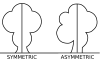
“Physicists describe the two properties of physical laws—that they do not depend on when or where you use them—as symmetries of nature. By this usage physicists mean that nature treats every moment in time and every location in space identically—symmetrically—by ensuring that the same fundamental laws are in operation. Much in the same manner that they affect art and music, such symmetries are deeply satisfying; they highlight an order and coherence in the workings of nature. The elegance of rich, complex, and diverse phenomena emerging from a simple set of universal laws is at least part of what physicists mean when they invoke the term "beautiful."”
“One overarching lesson... during the past hundred years is that the known laws of physics are associated with principles of symmetry. Special relativity is based on the symmetry embodied in the principle of relativity—the symmetry between all constant-velocity vantage points. The gravitational force, as embodied in the general theory of relativity, is based on the equivalence principle—the extension of the principle of relativity to embrace all vantage points regardless of the complexity of their states of motion. And the strong, weak, and electromagnetic forces are based on the... gauge symmetry principles. ...String theory takes us down another notch on the scale of explanatory depth because all of these symmetry principles, as well as another—supersymmetry—emerge from its structure.”