Link Copied!
Boris Pasternak Quotes (1890-1960)
Writer, Poet


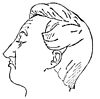
About Boris Pasternak
Boris Leonidovich Pasternak Борис Леонидович Пастернак (10 February 1890 – 30 May 1960) was a Russian poet and writer famous for his 1957 novel Doctor Zhivago. His first book of poems, My Sister, Life (1917), is one of the most influential collections ever published in the Russian language. He was awarded the Nobel Prize for Literature in 1958, an event which enraged the Communist Party of the Soviet Union, which forced him to decline the prize, though his descendants were later to accept it in his name in 1988.
Best Boris Pasternak Quotes
Shortest
Earliest
Explore our curated collection of the most famous and impactful Boris Pasternak quotes.
“I love you madly, irrationally, infinitely.”
“That's metaphysics, my dear fellow. It's forbidden me by my doctor, my stomach won't take it.”




“Poetry is a rich, full-bodied whistle, cracked ice crunching in pails, the night that numbs the leaf, the duel of two nightingales, the sweet pea that has run wild, Creation’s tears in shoulder blades.”

“It is no longer possible for lyric poetry to express the immensity of our experience. Life has grown too cumbersome, too complicated. We have acquired values which are best expressed in prose.”

“Gregariousness is always the refuge of mediocrities, whether they swear by Solovyov or Kant or Marx. Only individuals seek the truth.”
“The main misfortune, the root of all evil to come, was loss of the confidence in the value of one's own opinion. People imagined that it was out of date of follow their own moral sense, that they must all sing in chorus, and live by other people's notions, notions that were crammed down everybody's throat.”
“Не спи, не спи, художник,
Не предавайся сну.
Ты – вечности заложник
У времени в плену.
• Don't sleep, don't sleep, artist,
Don't give in to sleep.
You are eternity's hostage
A captive of time.”
Не предавайся сну.
Ты – вечности заложник
У времени в плену.
• Don't sleep, don't sleep, artist,
Don't give in to sleep.
You are eternity's hostage
A captive of time.”
“Мое собственное сердце скрыло бы это от меня, потому что нелюбовь почти как убийство, и я никому не в силах была бы нанести этого удара.
• My own heart would have concealed it from me, for failure to love is almost like murder and I would have been incapable of inflicting such a blow on anyone.”
• My own heart would have concealed it from me, for failure to love is almost like murder and I would have been incapable of inflicting such a blow on anyone.”
“The great majority of us are required to live a life of constant duplicity. Your health is bound to be affected if, day after day, you say the opposite of what you feel, if you grovel before what you dislike, and rejoice at what brings you nothing but misfortune. Our nervous system isn't just a fiction, it's part of our physical body, and our souls exists in space and is inside us, like the teeth in the mouth. It can't forever be violated with impunity.”
“И вот оказалось, что только жизнь, похожая на жизнь окружающих и среди нее бесследно тонущая, есть жизнь настоящая, что счастье обособленное не есть счастье...
• And so it turned out that only a life similar to the life of those around us, merging with it without a ripple, is genuine life, and that an unshared happiness is not happiness...”
• And so it turned out that only a life similar to the life of those around us, merging with it without a ripple, is genuine life, and that an unshared happiness is not happiness...”

“I think that if the beast who sleeps in man could be held down by threats — any kind of threat, whether of jail or of retribution after death — then the highest emblem of humanity would be the lion tamer in the circus with his whip, not the prophet who sacrificed himself. But don’t you see, this is just the point — what has for centuries raised man above the beast is not the cudgel but an inward music: the irresistible power of unarmed truth, the powerful attraction of its example. It has always been assumed that the most important things in the Gospels are the ethical maxims and commandments. But for me the most important thing is that Christ speaks in parables taken from life, that He explains the truth in terms of everyday reality. The idea that underlies this is that communion between mortals is immortal, and that the whole of life is symbolic because it is meaningful.”

Boris Pasternak Quotes by Topic
Find exactly what you are looking for by browsing this categorized list of Boris Pasternak quotes by topic.
Boris Pasternak on Despise
Boris Pasternak on Individualism
“Gregariousness is always the refuge of mediocrities, whether they swear by Solovyov or Kant or Marx. Only individuals seek the truth.”

Boris Pasternak on Art
“Art has two constant, two unending concerns: It always meditates on death and thus always creates life. All great, genuine art resembles and continues the Revelation of St John.”
What Boris Pasternak Said About Others
Discover personal opinions Boris Pasternak shared regarding contemporaries.
Boris Pasternak on Vladimir Mayakovsky
“With this man, the newness of our times was climatically and uniquely in his blood. His very strangeness was one with the strangeness of the age, an age still half unrealised.”

Boris Pasternak on William Faulkner
“The greatness of a writer has nothing to do with subject matter itself, only with how much the subject matter touches the author. It is the density of style which counts. Through Hemingway's style you feel matter, iron, wood. I admire Hemingway but I prefer what I know of Faulkner. Light in August is a marvelous book.”

Boris Pasternak on Joseph Stalin
“If, in a bad dream, we had seen all of the horrors in store for us after the war, we should have been sorry not to see Stalin go down together with Hitler: an end to the war in favour of our allies, civilized countries with democratic traditions, would have meant a hundred times less suffering for our people than that which Stalin again inflicted on it after his victory.”

Quotes About Boris Pasternak
Gain deeper perspective through quotes about Boris Pasternak from others.
Anita Desai In Interviews with Writers of the Post-Colonial World edited by Feroza Jussawalla on Boris Pasternak
“I think the first discovery I made for myself which I didn't necessarily share with my family or my friends, but came upon myself, was Russian literature. I've always felt very much enthralled to writers like Dostoevsky, especially, and Chekhov. In later years, modern Russian poets like Pasternak and Mandelstam and Akhmatova have meant a great deal to me. Poetry more than prose.”
Ronald Reagan on Boris Pasternak
“But I hope you know I go on about these things not simply to extol the virtues of my own country but to speak to the true greatness of the heart and soul of your land. Who, after all, needs to tell the land of Dostoyevsky about the quest for truth, the home of Kandinsky and Scriabin about imagination, the rich and noble culture of the Uzbek man of letters Alisher Navoi about beauty and heart? The great culture of your diverse land speaks with a glowing passion to all humanity. Let me cite one of the most eloquent contemporary passages on human freedom. It comes, not from the literature of America, but from this country, from one of the greatest writers of the 20th century, Boris Pasternak, in the novel "Dr. Zhivago." He writes: "I think that if the beast who sleeps in man could be held down by threats -- any kind of threat, whether of jail or of retribution after death -- then the highest emblem of humanity would be the lion tamer in the circus with his whip, not the prophet who sacrificed himself. But this is just the point -- what has for centuries raised man above the beast is not the cudgel, but an inward music -- the irresistible power of unarmed truth." The irresistible power of unarmed truth. Today the world looks expectantly to signs of change, steps toward greater freedom in the Soviet Union. We watch and we hope as we see positive changes taking place.”

Source on Boris Pasternak
“The glass in the official picture was also being shattered by literary writers. Two Soviet accounts in particular captivated Western opinion. The poet Boris Pasternak wrote a novel, Doctor Zhivago, which was banned in Moscow but appeared abroad in translations from 1957. Its panoramic viewpoint on the civil war cast a shadow over the motives and practices of the early communists. This plunged Pasternak into political hot water and he had to refuse the Nobel Prize in 1958. His role as a leading critic of the Soviet regime was picked up by Alexander Solzhenitsyn, whose later works were published in the West from the end of the 1960s. His documentary account of the labour-camp system, The Gulag Archipelago, was a bestseller in 1974. It pulled no punches. Solzhenitsyn had talked to survivors of the camps and assembled such documentation as was available despite the censorship. The gruesome techniques of arrest, interrogation, ‘confession’ and forced labour were traced from the October Revolution. When he was deported from the USSR in 1974, Solzhenitsyn continued his campaign against the iniquities of communist repression. Every year, too, novels and poems by other writers were smuggled out of eastern Europe and China with searing messages about the behaviour of communist regimes.”
Robert Service on Boris Pasternak
I. F. Stone on Boris Pasternak
“Pasternak has universal meaning, for he embodies the fight the artist and the seeker after truth must wage everywhere against official dogma and conformist pressures.”
About Boris Pasternak
Boris Leonidovich Pasternak Борис Леонидович Пастернак (10 February 1890 – 30 May 1960) was a Russian poet and writer famous for his 1957 novel Doctor Zhivago. His first book of poems, My Sister, Life (1917), is one of the most influential collections ever published in the Russian language. He was awarded the Nobel Prize for Literature in 1958, an event which enraged the Communist Party of the Soviet Union, which forced him to decline the prize, though his descendants were later to accept it in his name in 1988.