Link Copied!
Bonnie Greer Quotes (1948-)
President, King, Playwright

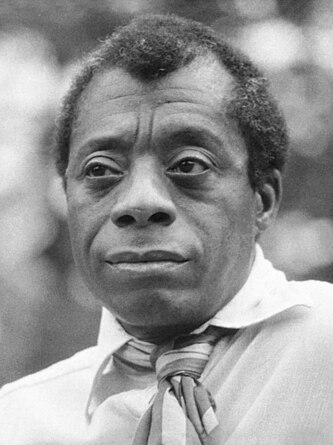
About Bonnie Greer
Bonnie Greer, OBE FRSL (born 16 November 1948) is an American-British playwright, novelist, critic and broadcaster, who has lived in the UK since 1986. She has appeared as a panellist on television programmes such as Newsnight Review and Question Time and has served on the boards of several leading arts organisations, including the British Museum, the Royal Opera House and the London Film School. She is Vice President of the Shaw Society. She is former Chancellor of Kingston University in Kingston upon Thames, London. In July 2022, she was appointed a Fellow of the Royal Society of Literature.
Best Bonnie Greer Quotes
Shortest
Earliest
Explore our curated collection of the most famous and impactful Bonnie Greer quotes.
“[On the early years of the AIDS crisis in New York City.] It was 1982 when we figured that something was really wrong. It was terrible — a kind of plague. I was 33 and the average age of the guys I knew was 36. Between 1979 and 84, about 35 of them died. All in the most horrific way. What was so awful was that everyone thought it was contagious, so they weren’t allowed in the hospital. People stopped shaking hands or kissing when they saw each other. Ivan got ill in 1983. That’s when the lesions started showing up on his face and people would run from us in the street.”
“Nick Griffin and many viewers, I’m sure, would have wanted, even expected, me to come across as an abrasive, point-scoring, shouty, finger-pointing black woman. That would have played into Griffin’s game plan, because that is the view of his party. The BNP portrayed me as a "black history fabricator" on its website. There was no way that I was going to live up to any negative mental pictures that it would have had about me, or of any other black woman. Even at the risk of looking "ineffective".”
“The last time I saw him was at the Columbia medical centre. I walked past this room and saw a guy who looked about 75 and really sick — all shrivelled up, with no hair or teeth. It took me a moment to realise it was Ivan. His body looked lifeless, like there was no blood or sweat in him. But even when he was this bag of bones that could hardly move, he still said that all he needed was rehabilitation and he would get better. Inside I was screaming and thinking: "How could this happen?" But on the outside I was saying: "Yeah, we’ll see what we can do."
After the funeral I left for London. The theatre scene in New York had been decimated, and with so many people dying around me I felt it was important that I made the most of my life. I needed to escape the shadow of death.”
After the funeral I left for London. The theatre scene in New York had been decimated, and with so many people dying around me I felt it was important that I made the most of my life. I needed to escape the shadow of death.”
“Too often, America - the Atlantic model - is cited in policymaking for black Britain. Aside from our similar racial origins, however, black America and black Britain have less in common than meets the eye.
Black America is largely monolithic and our roots tend to be Southern Baptist and rural. We have roughly the same accent as a result of segregation and its consequent restriction of movement. We have lived continuously on American soil, most of that time in slavery, for more than half a millennium. (These, by the way, are some of the elements that make Barack Obama seem alien to many black Americans.)
Black Britain, on the other hand, is international. It is urban. It has no rural history in this country. Within the living experience and memory of all black Britons are other countries, other cultures. And ironically, because of the impact of biraciality, the term "black" may not define black Britain in the future at all.
Therefore, black Britain should concentrate on life as lived here.”
What Bonnie Greer Said About Others
Discover personal opinions Bonnie Greer shared regarding contemporaries.
Bonnie Greer on James Baldwin
“The person who first moved me and still does is the late African-American author James Baldwin. I was 12 when I read his first book, Go Tell It On the Mountain, about his childhood in Harlem in the Thirties. He nailed the emotions I felt right on the head and I read all his subsequent books.”
About Bonnie Greer
Bonnie Greer, OBE FRSL (born 16 November 1948) is an American-British playwright, novelist, critic and broadcaster, who has lived in the UK since 1986. She has appeared as a panellist on television programmes such as Newsnight Review and Question Time and has served on the boards of several leading arts organisations, including the British Museum, the Royal Opera House and the London Film School. She is Vice President of the Shaw Society. She is former Chancellor of Kingston University in Kingston upon Thames, London. In July 2022, she was appointed a Fellow of the Royal Society of Literature.