Bob Woodward on Jim Mattis
← Back to Bob Woodward Profile
“White House Press Secretary Sean Spicer, who was a commander in the Naval Reserves, tried several times to persuade Mattis to appear on Sunday talk shows on behalf of the administration. The answer was always no. "Sean," Mattis finally said, "I've killed people for a living. If you call me again, I'm going to fucking send you to Afghanistan. Are we clear?"”
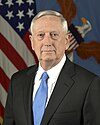
“Mattis, Tillerson and Coats are all conservatives or apolitical people who wanted to help him and the country. Imperfect men who answered the call to public service. They were not the deep state. Yet each departed with cruel words from their leader. They concluded that Trump was an unstable threat to their country. Think about that for a moment: The top national security leaders thought the president of the United States was a danger to the country.”
“"Were you trying to make it fair for the enemy?" she asked. There was no anger in her voice, just sorrow, as if the wounds of the loss would never heal. All of a sudden the father became enraged and looked directly at Mattis- an unforgettable look. "We certainly weren't trying to do that," Mattis answered defensively. "We've studied you," said the mother. "We've read all the things you've done." Mattis was not the problem. "We know you were trying to be loyal." The father stood and shook Mattis's hand, holding it for what seemed like 30 seconds, straining for some connection. The mother- cultured, refined, proper, educated- had one final thought about Washington: "General, no one in that town back there gives a fuck about what our family lost."”
“Mattis still saw Iran as the key destabilizing influence in the region. In private, he could be pretty hard-line, but he had mellowed. Push them back, screw with them, drive a wedge between the Russians and Iranians, but no war. Russia had privately warned Mattis that if there was a war in the Baltics, Russia would not hesitate to use tactical nuclear weapons against NATO. Mattis, with agreement from Dunford, began saying that Russia was an existential threat to the United States. Mattis had formed a close relationship with Tillerson. They tried to have lunch most weeks. Mattis's house was near the State Department and several times Mattis told his staff, "I'll walk down and say hello to him." McMaster considered Mattis and Tillerson "the team of two" and found himself outside their orbit, which was exactly the way they wanted it.”
“In 2013, after being fired by Obama, Mattis returned to Richland, Washington, a civilian for the first time in over four decades. Over the years, he had written more than 800 letters to the families of those who had died under his command. These were the Gold Star families. He would often get replies from the families asking him to come see them. Or someone in the fallen Marine's unit would forward a copy of a handwritten note or letter. Mattis would have someone investigate to make sure it was authentic, and if so, would forward it to the family with a note from him: Here's what we found out about your son or husband. Often the family would then say, please come see us. Then, with time on his hands, Mattis hit the road in his light brown 1998 Lexus sedan. He would stop to speak at organized groups of veterans or Gold Star families, or to an individual family. He would pull into a town, get a hotel room, read the folder about the fallen Marine or soldier, put on a suit and go pay his respects. Sometimes this led him to a mobile home, sometimes to the home of a very wealthy family.”
“He especially remembered a visit to a family in Utah with a large, beautiful home. He drove up a winding hill. Inside, he took a seat. Tall windows fronted the house. The father, a doctor, was home early. The mother, a professor at a local college, had perfectly painted nails and every hair just right. They were stoic. Their son had a four-year college football scholarship but had joined the Marines instead. He had died in combat years earlier. The mother talked about their deceased son, the mountains he had climbed. They took Mattis to a boy's bedroom still fully intact, preserved almost as a museum. They showed Mattis all the pictures- their son as a baby, grammar school, high school, the prom. The full American story. Mattis could only listen so long. There was only so much to say. After an hour, the visit was petering out. The mother said General Stanley McChrystal, the commander in Afghanistan, had asked for 40,000 more troops in 2009, and President Obama had given 30,000. She had her history correct. If there were more, a million troops available, she asked, why didn't McChrystal get 80,000? Mattis mumbled something about how the president had to weigh options. Finally, Mattis said, "You know, I can't give you a good answer other than we thought that was probably sufficient."”
“At the White House, Mattis found the president in a good mood. They walked into the Oval Office and sat down. "Mr. President, we've got to come to an understanding here. This enemy is not going away." He noted that he had been through this before, when Obama walked away in Iraq. "These terrorist groups regenerate." The U.S. military had to win not just the fighting but the peace. "Our allies are there, and we can force this thing to closure now if we still have traction, if we still have our troops there." Mattis was like a broken record, repeating that the strongest military presence gave the diplomats the leverage to speak with authority- work with the diplomats, avoid the use of additional military force. "You guys will have us fighting forever," Trump said. "No," Mattis said. "The Kurds have done the fighting. Let's be right up front." "It's cost us billions." "Well, a lot of other nations too- 77 nations plus Interpol, Arab League, NATO." Trump was not moving, Mattis could see. There was no give. He had decided, and that was it. Mattis had seen it before. Nothing. It was over. "We beat them," Trump said. "There's no need." "We're not taking casualties," Mattis said. "But we haven't beaten them. We've done the military part. Now we have to win the part that's going to make sure we don't have to go back in, like your predecessor who pulled out of Iraq too early and we have to go back in." Trump did not agree. Mattis knew he could only quit once. "Mr. President, it's probably best you read this."”
“"We must not declare victory," said France's Minister of the Armed Forces Florence Parly, leaning forward, "and walk away and wonder why it comes right back at it." On the verge of victory was the time to stay the course and avoid the temptation of a premature withdrawal. Everyone seemed to be nodding. Perfect, thought Mattis. Everyone was on board. He could ignore his written talking points. He wouldn't have to say a word. The sale was made. Finally the meeting was turned over to him as the representative of the lead nation. Mattis summarized the others' points and said he couldn't agree more strongly. Then they all discussed how they would keep their troops there, the exact words to explain the essential rationale underlying their plans: They had to persist because the fight against ISIS was not over. My God, this is great, Mattis thought. He called White House chief of staff John Kelly. "John, the nations are with us. They're not pulling. They're going to stay on the ground. It's time to force it into the Geneva peace process"- to support the Kurds, who had done most of the fighting. "I'll talk t o Mike Pompeo." Back in Washington on Wednesday, December 19, Mattis saw a tweet pop up from the president: "We have defeated ISIS in Syria, my only reason for being there during the Trump Presidency." Later that day, Trump released a one-minute video and tweet underscoring his earlier message: "After historic victories against ISIS, it's time to bring our great young people home!" The United States was withdrawing from Syria.”
“Mattis was shocked. Once again Trump had not consulted his secretary of defense and made a major announcement with no warning. His first thought: How could we break with our allies? His second was the timing: It was just two weeks after the Ottawa meeting with all the commitments and pledges. He sat there and thought, my God, they're going to think I lied to them. They won't believe I had no idea about this. And now we're going to leave them high and dry. We're going to do what Obama did when he said we're going after the Syrians for the chemical weapons use and the French planes were armed, and they were ready to go when he walked. And the Kurds were going to be left unprotected and possibly slaughtered by Turkey. "John," Mattis said in a call to John Kelly, "I need an hour with the boss." "You got it," said Kelly. Mattis figured that Kelly knew what it was about, but the chief of staff, who had been blindsided by the president so many times and announced ten days earlier that he would soon be leaving, did not ask. Nine months earlier, Mattis had watched Rex Tillerson fired by tweet. The decision announcements by tweet were all wrong, in Mattis's view. Trump lived in his own head and if he wanted, out came an idea or a decision. It did not matter what anybody else thought. Mattis once said, "In any organization you become complicit with what the organization is doing." For nearly two years Mattis had gone along. As commander in chief, Trump called the shots. Mattis decided he was no longer going to be complicit. He went to his Pentagon office and began writing his resignation letter.”