Link Copied!
Benjamin Peirce Quotes (1809-1880)
Mathematician

About Benjamin Peirce
Benjamin Peirce (4 April 1809 – 6 October 1880) was an American mathematician who taught at Harvard University for forty years. He made contributions to celestial mechanics, number theory, algebra, and the philosophy of mathematics. He was the father of Charles Sanders Peirce.
Best Benjamin Peirce Quotes
Shortest
Earliest
Explore our curated collection of the most famous and impactful Benjamin Peirce quotes.
“Ideality is preëminently the foundation of Mathematics.”
“Mathematics is the science which draws necessary conclusions.”
“What is man? … What a strange union of matter and mind! A machine for converting material into spiritual force.”
“There are many cases of these algebras which may obviously be combined into natural classes, but the consideration of this portion of the subject will be reserved to subsequent researches.”

“Gentlemen, that is surely true, it is absolutely paradoxical; we cannot understand it, and we don't know what it means. But we have proved it, and therefore we know it must be the truth.”
“The branches of mathematics are as various as the sciences to which they belong, and each subject of physical enquiry has its appropriate mathematics. In every form of material manifestation, there is a corresponding form of human thought, so that the human mind is as wide in its range of thought as the physical universe in which it thinks.”
“The strongest use of the symbol is to be found in its magical power of doubling the actual universe, and placing by its side an ideal universe, its exact counterpart, with which it can be compared and contrasted, and, by means of curiously connecting fibres, form with it an organic whole, from which modern analysis has developed her surpassing geometry.”

“I presume that to the uninitiated the formulae will appear cold and cheerless; but let it be remembered that, like other mathematical formulae, they find their origin in the divine source of all geometry. Whether I shall have the satisfaction of taking part in their exposition, or whether that will remain for some more profound expositor, will be seen in the future.”
“Some definite interpretation of a linear algebra would, at first sight, appear indispensable to its successful application. But on the contrary, it is a singular fact, and one quite consonant with the principles of sound logic, that its first and general use is mostly to be expected from its want of significance. The interpretation is a trammel to the use. Symbols are essential to comprehensive argument.”
“Descend from the infinite to the infinitesimal. Long before . . . observation had begun to penetrate the veil under which Nature has hidden her mysteries, the restless mind sought some principle of power strong enough and of sufficient variety to collect and bind together all parts of a world. This seemed to be found, where one might least expect it, in abstract numbers. Everywhere the exactest numerical proportion was seen to constitute the spiritual element of the highest beauty.”

“There is proof enough furnished by every science, but by none more than geometry, that the world to which we have been allotted is peculiarly adapted to our minds, and admirably fitted to promote our intellectual progress. There can be no reasonable doubt that it was part of the Creator's plan. How easily might the whole order have been transposed! How readily might we have been assigned to some complicated system which our feeble and finite powers could not have unravelled!”

“All relations are either qualitative or quantitative. Qualitative relations can be considered by themselves without regard to quantity. The algebra of such enquiries may be called logical algebra, of which a fine example is given by Boole.
Quantitative relations may also be considered by themselves without regard to quality. They belong to arithmetic, and the corresponding algebra is the common or arithmetical algebra.
In all other algebras both relations must be combined, and the algebra must conform to the character of the relations.”

“The Key! it is of wonderful construction, with its infinity of combination, and its unlimited capacity to fit every lock. … it is the great master-key which unlocks every door of knowledge and without which no discovery which deserves the name — which is law, and not isolated fact — has been or ever can be made. Fascinated by its symmetry the geometer may at times have been too exclusively engrossed with his science, forgetful of its applications; he may have exalted it into his idol and worshipped it; he may have degraded it into his toy . . . when he should have been hard at work with it, using it for the benefit of mankind and the glory of his Creator.”

“Ascend with me above the dust, above the cloud, to the realms of the higher geometry, where the heavens are never clouded; where there is no impure vapour, and no delusive or imperfect observation, where the new truths are already arisen, while they are yet dimly dawning on the world below; where the earth is a little planet; where the sun has dwindled to a star; where all the stars are lost in the Milky Way to which they belong; where the Milky Way is seen floating through space like any other nebula; where the whole great girdle of nebulae has diminished to an atom and has become as readily and completely submissive to the pen of the geometer, and the slave of his formula, as the single drop, which falls from the clouds, instinct with all the forces of the material world.”

“Throughout nature the omnipresent beautiful revealed an all-pervading language spoken to the human mind, and to man's highest capacity of comprehension. By whom was it spoken? Whether by the gods of the ocean, or the land, by the ruling divinities of the sun, moon, and stars, or by the dryads of the forest and the nymphs of the fountain, it was one speech and its written cipher was cabalistic. The cabala were those of number, and even if they transcended the gemetricl skill of the Rabbi and the hieroglyphical learning of the priest of Osiris, they were, distinctly and unmistakably, expressions of thought uttered to mind by mind; they were the solutions of mathematical problems of extraordinary complexity.”

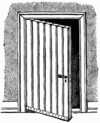
“Geometry, to which I have devoted my life, is honoured with the title of the Key of Sciences; but it is the Key of an ever open door which refuses to be shut, and through which the whole world is crowding, to make free, in unrestrained license, with the precious treasures within, thoughtless both of lock and key, of the door itself, and even of Science, to which it owes such boundless possessions, the New World included. The door is wide open and all may enter, but all do not enter with equal thoughtlessness. There are a few who wonder, as they approach, at the exhaustless wealth, as the sacred shepherd wondered at the burning bush of Horeb, which was ever burning and never consumed. Casting their shoes from off their feet and the world's iron-shod doubts from their understanding, these children of the faithful take their first step upon the holy ground with reverential awe, and advance almost with timidity, fearful, as the signs of Deity break upon them, lest they be brought face to face with the Almighty.”
“The sphere of mathematics is here extended, in accordance with the derivation of its name, to all demonstrative research, so as to include all knowledge strictly capable of dogmatic teaching. Mathematics is not the discoverer of laws, for it is not induction; neither is it the framer of theories, for it is not hypothesis; but it is the judge over both, and it is the arbiter to which each must refer its claims ; and neither law can rule nor theory explain without the sanction of mathematics. It deduces from a law all its consequences, and develops them into the suitable form for comparison with observation, and thereby measures the strength of the argument from observation in favor of a proposed law or of a proposed form of application of a law.
Mathematics, under this definition, belongs to every enquiry, moral as well as physical. Even the rules of logic, by which it is rigidly bound, could not be deduced without its aid. The laws of argument admit of simple statement, but they must be curiously transposed before they can be applied to the living speech and verified by, observation.”
Mathematics, under this definition, belongs to every enquiry, moral as well as physical. Even the rules of logic, by which it is rigidly bound, could not be deduced without its aid. The laws of argument admit of simple statement, but they must be curiously transposed before they can be applied to the living speech and verified by, observation.”
“The familiar proposition that all A is B, and all B is C, and therefore all A is C, is contracted in its domain by the substitution of significant words for the symbolic letters. The A, B, and C, are subject to no limitation for the purposes and validity of the proposition; they may represent not merely the actual, but also the ideal, the impossible as well as the possible. In Algebra, likewise, the letters are symbols which, passed through a machinery of argument in accordance with given laws, are developed into symbolic results under the name of formulas. When the formulas admit of intelligible interpretation, they are accessions to knowledge; but independently of their interpretation they are invaluable as symbolical expressions of thought. But the most noted instance is the symbol called the impossible or imaginary, known also as the square root of minus one, and which, from a shadow of meaning attached to it, may be more definitely distinguished as the symbol of semi-inversion. This symbol is restricted to a precise signification as the representative of perpendicularity in quaternions, and this wonderful algebra of space is intimately dependent upon the special use of the symbol for its symmetry, elegance, and power.”
Benjamin Peirce Quotes by Topic
Find exactly what you are looking for by browsing this categorized list of Benjamin Peirce quotes by topic.
Benjamin Peirce on Quaternion 2 quotes
“[O]f possible quadruple algebras the one... by far the most beautiful and remarkable was practically identical with quaternions, and... it [is] most interesting that a calculus which so strongly appealed to the human mind by its intrinsic beauty and symmetry should prove to be especially adapted to the study of natural phenomena. The mind of man and that of Nature’s God must work in the same channels.”
Benjamin Peirce on Mathematics
“[Mathematics is] the science that draws necessary conclusions.”
Benjamin Peirce on Symmetry
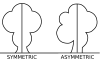
“Fascinated by its symmetry the geometer may at times have been too exclusively engrossed with his science, forgetful of its applications;...”
Benjamin Peirce on Truth
“Gentlemen, that is surely true, it is absolutely paradoxical; we cannot understand it, and we don't know what it means. But we have proved it, and therefore we know it must be the truth.”

Benjamin Peirce on Euler's identity
“Gentlemen, that is surely true, it is absolutely paradoxical; we cannot understand it, and we don't know what it means. But we have proved it, and therefore we know it must be the truth.”
Benjamin Peirce on Intelligibility
“In Algebra, [likewise], the letters are symbols which, passed through a machinery of argument in accordance with given laws, are developed into symbolic results under the name of formulas. When the formulas admit of intelligible interpretation, they are accessions to knowledge; but independently of their interpretation they are invaluable as symbolical expressions of thought.”

Benjamin Peirce on Calculus
“Of possible quadruple algebras the one that had seemed to him by far the most beautiful and remarkable was practically identical with quaternions, and that he thought it most interesting that a calculus which so strongly appealed to the human mind by its intrinsic beauty and symmetry should prove to be especially adapted to the study of natural phenomena. The mind of man and that of Nature’s God must work in the same channels.”

Benjamin Peirce on Arithmetic
“All relations are either qualitative or quantitative. Qualitative relations can be considered by themselves without regard to quantity. The algebra of such enquiries may be called logical algebra, of which a fine example is given by Boole. Quantitative relations may also be considered by themselves without regard to quality. They belong to arithmetic, and the corresponding algebra is the common or arithmetical algebra. In all other algebras both relations must be combined, and the algebra must conform to the character of the relations.”

Benjamin Peirce on History of algebra
“All relations are either qualitative or quantitative. Qualitative relations can be considered by themselves without regard to quantity. The algebra of such enquiries may be called logical algebra, of which a fine example is given by Boole. Quantitative relations may also be considered by themselves without regard to quality. They belong to arithmetic, and the corresponding algebra is the common or arithmetical algebra. In all other algebras both relations must be combined, and the algebra must conform to the character of the relations.”

What Benjamin Peirce Said About Others
Discover personal opinions Benjamin Peirce shared regarding contemporaries.
Benjamin Peirce on George Boole
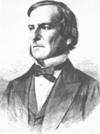
“All relations are either qualitative or quantitative. Qualitative relations can be considered by themselves without regard to quantity. The algebra of such enquiries may be called logical algebra, of which a fine example is given by Boole. Quantitative relations may also be considered by themselves without regard to quality. They belong to arithmetic, and the corresponding algebra is the common or arithmetical algebra. In all other algebras both relations must be combined, and the algebra must conform to the character of the relations.”
Quotes About Benjamin Peirce
Gain deeper perspective through quotes about Benjamin Peirce from others.
W. E. Byerly on Benjamin Peirce
“I always had the feeling that his attitude toward his loved science was that of a devoted worshipper, rather than a clear expounder. Although we could rarely follow him, we certainly sat up and took notice. … To him mathematics was not a humanly devised instrument of investigation, it was Philosophy itself, the divine revealer of TRUTH.”
Arnold B. Chace on Benjamin Peirce
“He was one of the most stimulating men I have ever known.”
Julian Lowell Coolidge on Benjamin Peirce
“Peirce stood alone — a mountain peak whose absolute height might be hard to measure, but which towered above the surrounding country.”
Charles William Eliot on Benjamin Peirce
“Benjamin Peirce's lectures dealt, to be sure, with the higher mathematics, but also with theories of the universe and the infinities of nature, and with man's power to deal with infinities and infinitesimals alike. His University Lectures were many a time way over the heads of his audience, but his aspect, his manner, and his whole personality held and delighted them.”
Helen Huntington Peirce Ellis on Benjamin Peirce
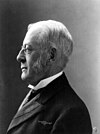
“He was such a great, big ray of Light and Goodness, always so simple, cheerful and showing more than amiability, that his great power did not seem to assert itself.”
Edward Waldo Emerson on Benjamin Peirce 3 quotes
“Of the great mathematician as an instructor several of his pupils who ventured on the higher planes of the science have written. These were youths who, though they could follow him but a few steps in that rarefied atmosphere, had the privilege of a glimpse now and then into shining infinities wherein this giant sped rejoicing on.”
Thomas Wentworth Higginson on Benjamin Peirce
“He gave us his "Curves and Functions", in the form of lectures; and sometimes, even while stating his propositions, he would be seized with some mathematical inspiration, would forget pupils, notes, everything, and would rapidly dash off equation after equation, following them out with smaller and smaller chalk-marks into the remote corners of the blackboard, forsaking his delightful task only when there was literally no more space to be covered, and coming back with a sigh to his actual students. There was a great fascination about these interruptions; we were present, as it seemed, at mathematics in the making; it was like peeping into a necromancer's cell, and seeing him at work; or as if our teacher were one of the old Arabian algebraists recalled to life.”
Abbott Lawrence Lowell on Benjamin Peirce
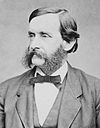
“Looking back over the space of fifty years since I entered Harvard College, Benjamin Peirce still impresses me as having the most massive intellect with which I have ever come in contact, and as being the most profoundly inspiring teacher I ever had. … As soon as he had finished the problem or filled the blackboard he would rub everything out and begin again. He was impatient of detail, and sometimes the result would not come out right; but instead of going over his work to find the error, he would rub it out, saying that he had made a mistake in a sign somewhere, and that we should find it when we went over our notes. Described in this way it may seem strange that such a method of teaching should be inspiring; yet to us it was so to the highest degree. We were carried along by the rush of his thought, by the ease and grasp of his intellectual movement. The inspiration came, I think, partly from his treating us as highly competent pupils, capable of following his line of thought even through errors in transformations; partly from his rapid and graceful methods of proof, which reached a result with the least number of steps in the process, attaining thereby an artistic or literary character; and partly from the quality of his mind which tended to regard any mathematical theorem as a particular case of some more comprehensive one, so that we were led onward to constantly enlarging truths.”
H. M. Pycior on Benjamin Peirce
“Benjamin Peirce deserves recognition, not only as a founding father of American mathematics, but also as a founding father of modern abstract algebra.”
Robert Rantoul on Benjamin Peirce
“It is not given to us — it is given to but few men of any generation — to roam those Alpine solitudes of science to which his genius reached.”
Franklin Benjamin Sanborn on Benjamin Peirce
“When this wizard stepped down from his post, crossed his moat, and opened his garden gate, nothing could be more attractive than the vistas and plantations he opened to our view. … Few men could suggest more while saying so little, or stimulate so much while communicating next to nothing that was tangible and comprehensible. The young man that would learn the true meaning of apprehension as distinct from comprehension, should have heard the professor lecture...”
About Benjamin Peirce
Benjamin Peirce (4 April 1809 – 6 October 1880) was an American mathematician who taught at Harvard University for forty years. He made contributions to celestial mechanics, number theory, algebra, and the philosophy of mathematics. He was the father of Charles Sanders Peirce.