Link Copied!
Benjamin Jowett Quotes (1817-1893)
Theologian




About Benjamin Jowett
Benjamin Jowett (15 April 1817 – 1 October 1893) was a theologian and classical scholar who became one of the great public figures of Victorian England. He was Regius Professor of Greek at Oxford from 1855, Master of Balliol College, Oxford from 1870, and Vice-Chancellor of the university from 1882.
Best Benjamin Jowett Quotes
Shortest
Earliest
Explore our curated collection of the most famous and impactful Benjamin Jowett quotes.


“[The office of the interpreter] is to read Scripture like any other book.”
“Learn just enough of the subject [metaphysics] to enable your mind to get rid of it.”

“Nowhere probably is there more true feeling, and nowhere worse taste, than in a churchyard (p. 244).”

“I hope our young men will not grow into such dodgers as these old men are. I believe everything that a young man says to me (p. 250).”
Benjamin Jowett Quotes by Topic
Find exactly what you are looking for by browsing this categorized list of Benjamin Jowett quotes by topic.
Benjamin Jowett on Logic
Benjamin Jowett on Doubt
Benjamin Jowett on University of Oxford
Benjamin Jowett on Education
“Plato is the first writer who distinctly says that education is to comprehend the whole of life, and to be a preparation for another in which education begins again... He has long given up the notion that virtue cannot be taught; and he is disposed to modify the thesis of the Protagoras, that the virtues are one and not many. He is not unwilling to admit the sensible world into his scheme of truth. Nor does he assert in the Republic the involuntariness of vice, which is maintained by him in the Timaeus, Sophist, and Laws... Still, we observe in him the remains of the old Socratic doctrine, that true knowledge must be elicited from within, and is to be sought for in ideas, not in particulars of sense. Education, as he says, will implant a principle of intelligence which is better than ten thousand eyes. The paradox that the virtues are one, and the kindred notion that all virtue is knowledge, are not entirely renounced; the first is seen in the supremacy given to justice over the rest; the second in the tendency to absorb the moral virtues in the intellectual, and to centre all goodness in the contemplation of the idea of good. The world of sense is still depreciated and identified with opinion, though omitted to be a shadow of the true. In the Republic he is evidently impressed with the conviction that vice arises chiefly from ignorance and may be cured by education; the multitude are hardly to be deemed responsible for what they do ... he only proposes to elicit from the mind that which is there already. Education is represented by him, not as the filling of a vessel, but as the turning the eye of the soul towards the light.”

What Benjamin Jowett Said About Others
Discover personal opinions Benjamin Jowett shared regarding contemporaries.
Benjamin Jowett on Henry John Stephen Smith 6 quotes
“In those days he was almost equally a lover of Classics and Mathematics. ...Even in the last years of his life he was in the habit of taking with him Greek books to read during the Vacation.”

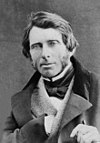
Benjamin Jowett on John Ruskin
“I should wish never to lose the impression of the kind welcome which I received from him. He is the gentlest and most innocent of mankind, of great genius but inconsecutive; and he has never rubbed his mind against others, so that he is ignorant of very obvious things.”
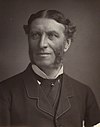
Benjamin Jowett on Matthew Arnold
“Mat. Arnold is a great loss to me. He was one of my firmest and dearest and best friends. Every year I had a higher opinion of him. No one ever united so much kindness and lightheartedness with so much strength. He was the most sensible man of genius whom I have ever known and the most free from personality, and his mind was very far from being exhausted.”
Benjamin Jowett on Bernard Mandeville
“I send you some books, one very good book among them, the works of a Saint, and one very bad book, Fable of the Bees—one of those books which are condemned equally by the world and the Church; by the world because it is partly true, and by the Church because it is partly false, or vice versa—one of those books which delight in turning out the seamy side of society to the light. (Don't read it if you object to the coarseness of parts.)”

Benjamin Jowett on Plato
“There have been, and will be again, many destructions of mankind arising out of many causes; the greatest have been brought about by the agencies of fire and water, and other lesser ones by innumerable other causes. There is a story, which even you have preserved, that once upon a time Phaethon, the son of Helios, having yoked the steeds in his father's chariot, because he was not able to drive them in the path of his father, burnt up all that was upon the earth, and was himself destroyed by a thunderbolt. Now this has the form of a myth, but really signifies a declination of the bodies moving in the heavens around the earth, and a great conflagration of things upon the earth, which recurs after long intervals; at such times those who live upon the mountains and in dry and lofty places are more liable to destruction than those who dwell by rivers or on the seashore. And from this calamity the Nile, who is our never-failing saviour, delivers and preserves us. When, on the other hand, the gods purge the earth with a deluge of water, the survivors in your country are herdsmen and shepherds who dwell on the mountains, but those who, like you, live in cities are carried by the rivers into the sea. Whereas in this land, neither then nor at any other time, does the water come down from above on the fields, having always a tendency to come up from below; for which reason the traditions preserved here are the most ancient. The fact is, that wherever the extremity of winter frost or of summer sun does not prevent, mankind exist, sometimes in greater, sometimes in lesser numbers. And whatever happened either in your country or in ours, or in any other region of which we are informed—if there were any actions noble or great or in any other way remarkable, they have all been written down by us of old, and are preserved in our temples.”

Quotes About Benjamin Jowett
Gain deeper perspective through quotes about Benjamin Jowett from others.
Evelyn Abbott on Benjamin Jowett
“In philosophy he was content to be critical; he saw that one philosophy had always been succeeded by another, and the leader of to-day was forgotten tomorrow; each therefore, he concluded, had grasped part of the truth, but not the whole truth. His speculations ended in compromise, and thus, here also, he was unfitted to be a leader. For himself he had almost a horror of falling under one set of ideas to the exclusion of others... Jowett only went a step beyond the philosopher who condemns all systems but his own. Yet indirectly he left his mark even on philosophy. By him his pupil T. H. Green was stimulated to the study of Hegel, and no influence has been greater in Oxford for the last thirty years than Green's. But the chief traces of Jowett's influence will be found in other spheres. His essays and translations must secure him a high place among the writers of his time, and in every history of English education in the second half of the nineteenth century he will occupy a prominent place.”
H. H. Asquith on Benjamin Jowett
“Jowett, in his day, did probably more than any other single man to let some fresh air into the exhausted atmosphere of the [Oxford] common rooms, and to widen the intellectual horizons of the place.”

Misattributed Quotes
Quotes mistakenly credited to Benjamin Jowett
“We cannot seek or attain health, wealth, learning, justice or kindness in general. Action is always specific, concrete, individualized, unique.”
About Benjamin Jowett
Benjamin Jowett (15 April 1817 – 1 October 1893) was a theologian and classical scholar who became one of the great public figures of Victorian England. He was Regius Professor of Greek at Oxford from 1855, Master of Balliol College, Oxford from 1870, and Vice-Chancellor of the university from 1882.